
Liver Transplant Anesthesiology Fellowship
About the Program
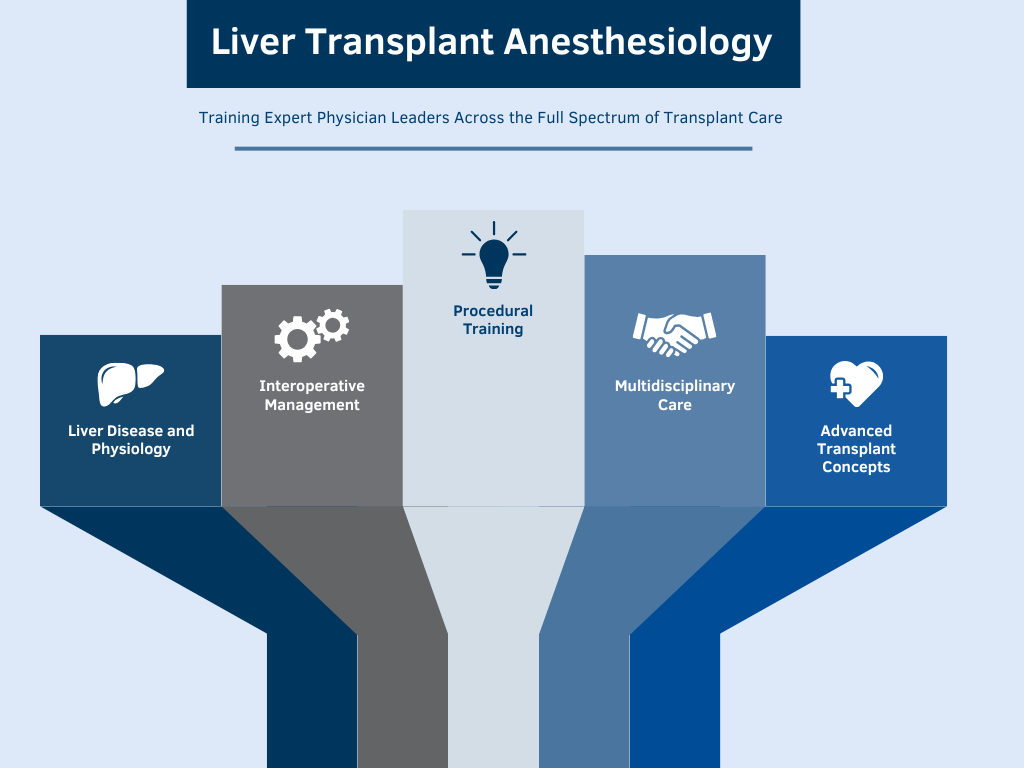
Our Liver Transplant Anesthesia Fellowship offers advanced, specialized training in the perioperative care of liver transplant patients. With a primary focus on intraoperative anesthetic management, fellows also gain comprehensive experience in the preoperative and postoperative care of liver transplant patients, as well as patients undergoing complex thoracic, abdominal, and vascular surgery. By the end of the fellowship, graduates are prepared to serve as clinical experts in the perioperative management of liver disease and as leaders at the forefront of the transplant community.
What You Will Learn
Fellows develop deep, specialized knowledge across every dimension of liver transplant anesthesiology, including:
- The pathophysiology of acute and chronic liver failure and its systemic effects
- Management of cirrhosis complications — including portal hypertension, hepatorenal syndrome, hepatopulmonary syndrome, portopulmonary hypertension, and cirrhotic cardiomyopathy
- Diagnosis and treatment of acute liver failure, including medical management and early transplantation
- Perioperative and anesthetic considerations during liver transplantation
- Pharmacokinetic and pharmacodynamic changes of perioperative medications in end-stage liver disease
- Recognition and management of potential perioperative complications of liver transplantation
- Donor and recipient considerations during living donor liver transplantation
- Immunosuppressive protocols, organ allocation, and prioritization guidelines
- Enhanced recovery after surgery models and evidence-based interventions

Clinical Training & Procedural Skills
Fellows participate directly in the management of liver transplant surgical patients. Clinical training objectives include:
- Conducting comprehensive preoperative assessments for end-stage liver disease and high-risk transplant candidates
- Participating in multidisciplinary liver transplant candidate selection committees
- Mastering the full spectrum of transplant indications, including re-transplantation, living-related transplantation, and combined transplantation, with a focus on anesthetic implications
- Understanding surgical techniques such as conventional cross-clamping and the piggyback technique, and their impact on hemodynamics and anesthetic management
- Familiarizing oneself with the intensive care protocols for both pre- and post-transplant patients
- Gaining proficiency in arterial and venous cannulations and pulmonary artery catheterization
- Obtaining basic transesophageal echocardiography (TEE) certification and developing hemodynamic monitoring skills
- Managing coagulopathy and bleeding using point-of-care viscoelastic coagulation testing and novel therapies
Didactics & Academic Curriculum
Fellows benefit from a robust academic curriculum designed to build knowledge and foster lifelong learning:
- Monthly liver transplant anesthesia lecture series
- Weekly liver transplant selection committee attendance
- Transplant anesthesia journal club — including opportunities to lead discussions
- Monthly echocardiography conference
- Basic TEE curriculum leading to certification
Elective Rotations
In addition to participation in the liver transplant cases, fellows will be required to complete rotations in transesophageal and transthoracic echocardiography, transfusion medicine, transplant hepatology and surgery, and the surgical intensive care unit. Other available electives include transplant nephrology, research, and cardiothoracic anesthesiology.
Program Structure & Call
This is a non-ACGME fellowship. Fellows divide their time equally — 50% on the liver transplant team and 50% as an attending on general cases. Fellows can expect to complete at least 50 liver transplants over the course of the year at our high-volume transplant program.
Benefits
- 20 days of PTO
- $1700 in Educational funds
- $1300 for conferences with accepted abstract