
Pediatric Genetics and Metabolism Research
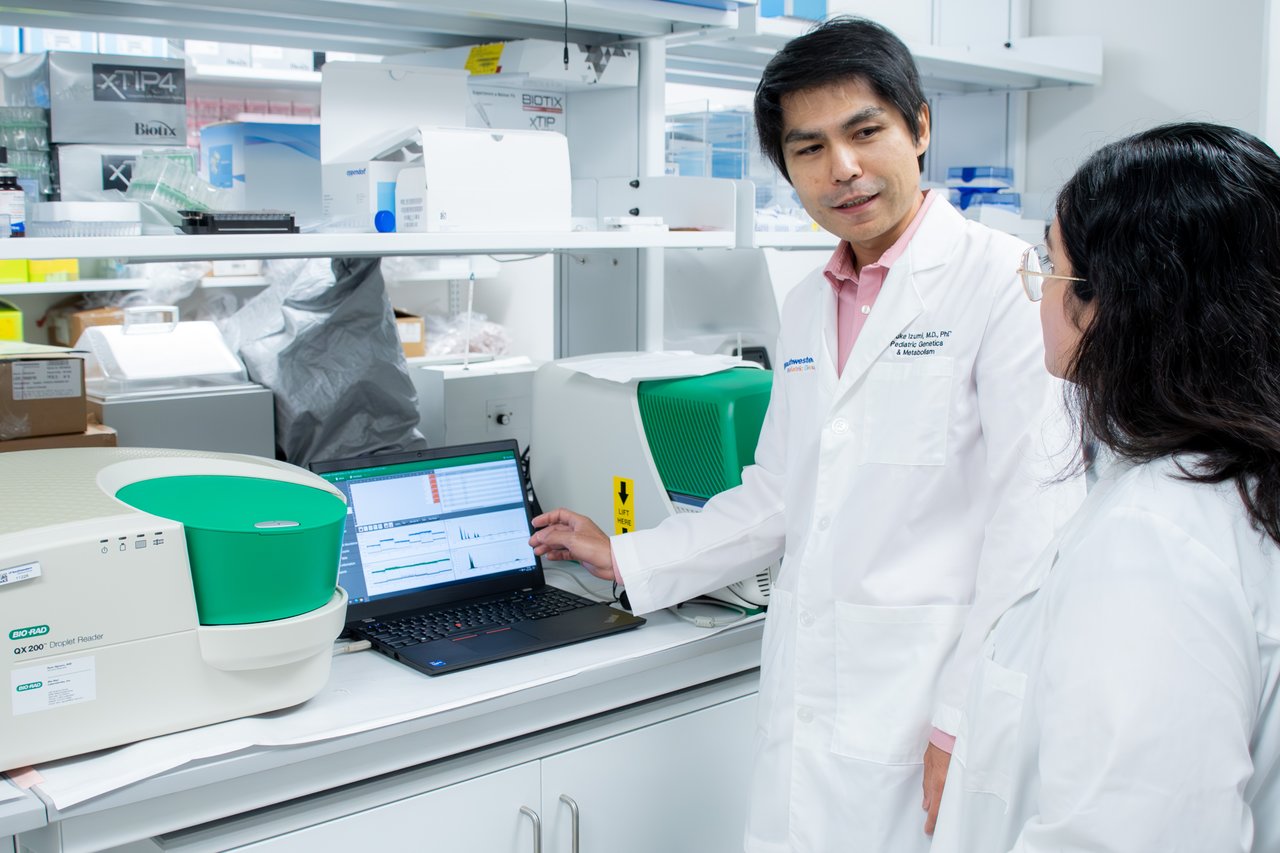
The Division of Genetics and Metabolism has been involved in clinical research projects involving clinical trials of new therapies, as well as multicenter studies in clinical and molecular genetics. We have been involved in translational research, helping to make a bridge between the basic science researchers in molecular genetics and the patients.
The Division manages a synchronized, state-of-the-art research program in the Children’s Medical Center Research Institute at UT Southwestern (CRI), a joint venture between UT Southwestern and Children’s Health. Our Genetic and Metabolic Disease Program (GMDP) within the CRI is composed of a team of scientists dedicated to identifying new genetic diseases and developing new ways to treat children with genetic disorders.
Our large and varied patient population gives us the ability to conduct studies in several areas.
- McDermott Center for Human Growth and Development
McDermott Center for Human Growth and Development
Much of our work occurs in cooperation with the McDermott Center for Human Growth and Development. Faculty and physicians conduct research here as well as expand their clinical education.
The McDermott Center has several core facilities that provide specialized services. These include:
- Faculty Labs
Faculty Labs
Ralph DeBerardinis, M.D., Ph.D.
The laboratory of Dr. DeBerardinis is interested in understanding the metabolic activities that support cell growth and proliferation in normal cells and in cancer. In order to produce daughter cells, which occur with each round of the cell cycle, cells need to double their biomass (proteins, lipids, and nucleic acids). This is a tremendous challenge requiring energy, building blocks, and the coordination of a large number of metabolic pathways.
Dr. DeBerardinis is exploring the idea that these metabolic activities are orchestrated by growth factor-stimulated signal transduction pathways, which direct cells to take up abundant nutrients and allocate them into the proper metabolic pathways. He wants to understand how signal transduction impacts metabolic fluxes during physiologic states of cell proliferation (e.g., embryogenesis, wound healing, activation of the immune system) and during pathological states (e.g., cancer).
To do this, the DeBerardinis Lab uses a combination of techniques in molecular biology, cell biology, and biochemistry, coupled with metabolic flux analysis using mass spectrometry and nuclear magnetic resonance, and animal models of metabolism and cancer. Current projects include developing imaging probes to identify abnormal metabolic activities in tumors and in children with metabolic diseases.
Kosuke Izumi, M.D., Ph.D.
With the ultimate goal of identifying druggable molecules/pathways in pediatric genetic disorders, Dr. Izumi’s lab investigates the molecular mechanisms of pediatric genetic disorders due to chromosomal abnormalities and chromatin protein mutations. They employ novel genetic approaches by using patient-derived samples, induced pluripotent stem cell models, and mutant mouse models. Visit the Izumi Lab to learn more.
Angela Scheuerle, M.D.
Dr. Scheuerle’s work with the Texas Department of State Health Services Birth Defects Epidemiology and Surveillance Branch (BDES) affords an excellent opportunity for both care and research at the public health level. In 2016, this became dramatically important in the state’s preparation for the Zika virus. Dr. Scheuerle participated with others in the BDES to define case ascertainment parameters, expand information collected about cases with microcephaly, and provide fast-track surveillance for relevant cases. This work continues as the state establishes a baseline for microcephaly incidence in anticipation of autochthonous Zika transmission.