
FDA expands use of kidney cancer drug developed from UTSW research
Research shows belzutifan may extend disease-free survival for earlier stages of some kidney cancers when combined with immunotherapy drug
DALLAS – June 15, 2026 – Belzutifan, a first-in-class drug that arose from scientific discoveries at UT Southwestern Medical Center, has been approved by the Food and Drug Administration to treat some patients with earlier stage kidney cancers in combination with an immunotherapy drug. This move marks the latest expansion of belzutifan’s indications after it was originally approved in 2021.
The latest FDA approval was based on results from LITESPARK-022, a phase three clinical trial that took place at 285 sites around the world, including UT Southwestern. The results, presented at the 2026 ASCO Genitourinary Cancer Symposium, evaluated belzutifan combined with pembrolizumab – a type of immunotherapy drug known as a checkpoint inhibitor – in patients with clear cell renal cell carcinoma after surgery to remove diseased kidneys. At a median follow-up of 28.4 months, results showed that this combination reduced the risk of disease recurrence by 28% compared with pembrolizumab with a placebo.
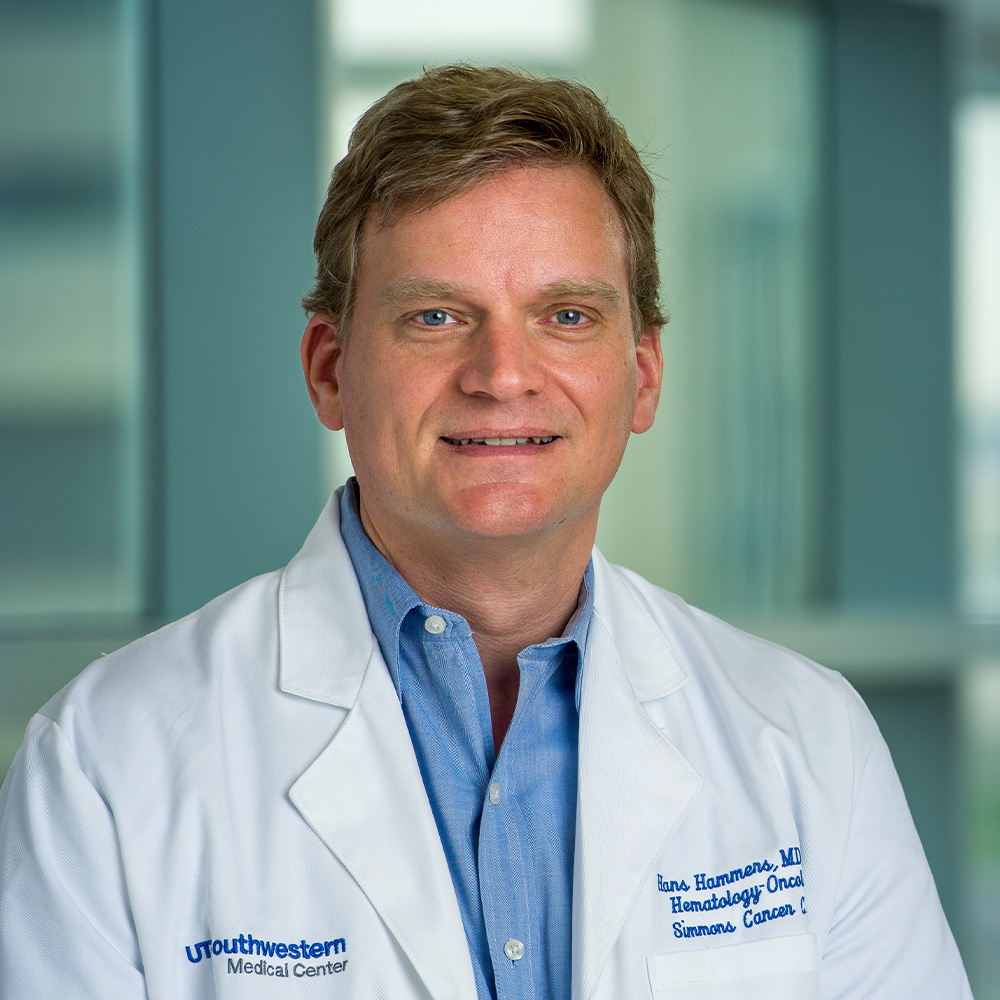
“LITESPARK-022 demonstrated an improvement in disease-free survival by 28% when belzutifan was combined with pembrolizumab in patients with higher risk for kidney cancer recurrence,” said Hans Hammers, M.D., Ph.D., Professor of Internal Medicine in the Division of Hematology and Oncology, co-leader of the Experimental Therapeutics Research Program in the Harold C. Simmons Comprehensive Cancer Center, and co-leader of clinical research in UTSW’s Kidney Cancer Program, who served as the site leader for the clinical trial at Simmons Cancer Center. “This trial showed an advance over pembrolizumab monotherapy in this setting, but overall survival was immature at the time of analysis.”
Belzutifan, which is manufactured by Merck, known as MSD outside of the United States and Canada, previously received regulatory approvals to treat patients with certain von Hippel-Lindau disease-associated tumors (a type of familial kidney cancer); later-stage renal cell carcinoma; and pheochromocytoma or paraganglioma, two types of rare neuroendocrine tumors.
Legacy of discovery
Belzutifan originated from 1990s research at UT Southwestern by Steven McKnight, Ph.D., Professor of Biochemistry, and David Russell, Ph.D., Professor Emeritus of Molecular Genetics, who discovered HIF-2α, the molecular target of belzutifan. Originally known for helping cells adapt to low oxygen, HIF-2α was later found to drive kidney cancer growth. UTSW scientists identified a druggable cavity in the HIF-2α protein and pursued inhibitors that bind to that cavity.
To develop an effective HIF-2α inhibitor, they founded Peloton Therapeutics. Discoveries at Peloton were followed by UTSW-led preclinical studies and first-in-human clinical trials with the drug that later became belzutifan. Merck acquired Peloton in 2019. Merck also manufactures pembrolizumab.
The Kidney Cancer Program at UTSW’s Simmons Cancer Center is one of only two National Cancer Institute-designated Specialized Programs of Research Excellence (SPOREs) in kidney cancer and a global leader in this disease. James Brugarolas, M.D., Ph.D., is the founding Director of the Kidney Cancer Program and Professor of Internal Medicine in the Division of Hematology and Oncology.
Simmons Cancer Center is one of 34 members of the National Comprehensive Cancer Network and one of 58 National Cancer Institute-Designated Comprehensive Cancer Centers. Simmons Cancer Center is ranked in the top 20 centers for cancer care by U.S. News & World Report. Its faculty members treat more than 11,000 new cancer cases a year, participate in over 500 active clinical trials, and have more than $120 million in extramural cancer-focused research funding.
Dr. Hammers is the inaugural Eugene P. Frenkel, M.D. Scholar in Clinical Medicine. Dr. McKnight holds the Distinguished Chair in Basic Biomedical Research. Dr. Brugarolas holds the Sherry Wigley Crow Cancer Research Endowed Chair in Honor of Robert Lewis Kirby, M.D.
UT Southwestern and some of its researchers will receive financial compensation, through prior agreements with Peloton, based on belzutifan’s FDA approval.
About UT Southwestern Medical Center
UT Southwestern, one of the nation’s premier academic medical centers, integrates pioneering biomedical research with exceptional clinical care and education. The institution’s faculty members have received six Nobel Prizes and include 27 members of the National Academy of Sciences, 25 members of the National Academy of Medicine, and 13 Howard Hughes Medical Institute Investigators. The full-time faculty of nearly 3,400 is responsible for groundbreaking medical advances and is committed to translating science-driven research quickly to new clinical treatments. UT Southwestern physicians in more than 80 specialties care for more than 143,000 hospitalized patients, attend to more than 470,000 emergency room cases, and oversee nearly 5.3 million outpatient visits a year.