
Autoantibodies could play key role in cancer progression and prevention
Research team suggests that studying immune proteins that target body’s own molecules could lead to new anti-cancer strategies

DALLAS – July 23, 2026 – Scientists have long sought to understand why some people with no known risk factors develop cancer while others with significant risk never do. The answer may lie in immune proteins known as autoantibodies (auto-Abs), suggests a commentary in Cell co-authored by a team that includes Jean-Laurent Casanova, M.D., Ph.D., Professor in the Center for the Genetics of Host Defense and Children’s Medical Center Research Institute at UT Southwestern (CRI).
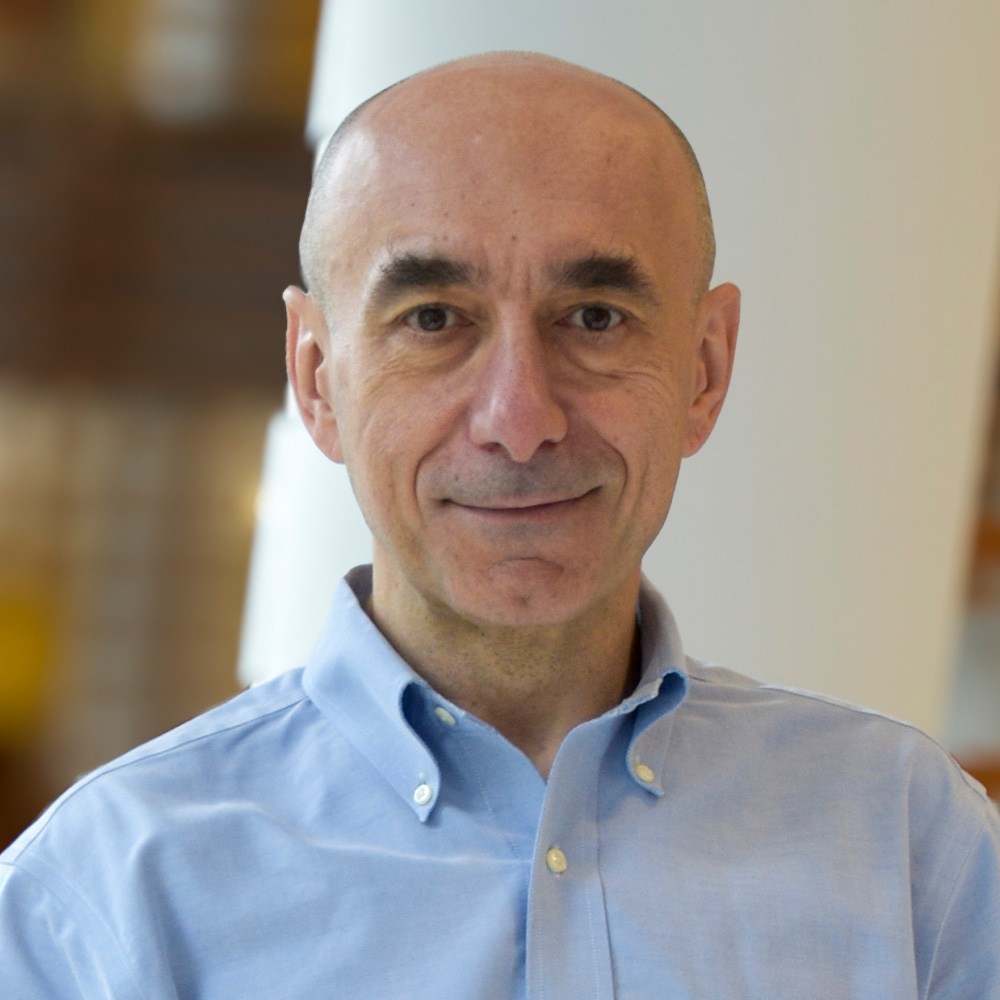
Dr. Casanova, who has dual appointments in Pediatrics and Immunology, joined UT Southwestern Medical Center from The Rockefeller University on July 1 and brought his entire lab with him, including more than 40 scientists, trainees, and students. The Casanova Lab is part of the ATLAS team – short for Antibody Tracking for Long-term Avoidance and Surveillance – one of five research groups that received a Cancer Grand Challenges grant of up to $25 million earlier this year. Together, the team will investigate the potential role of auto-Abs in promoting and preventing cancer.
“There is ample evidence that the immune system plays a significant role in cancer,” Dr. Casanova said. “Our job will be to determine if there are auto-Abs that could offer protection against cancer or drive cancer outcomes, knowledge that could have a profound impact on cancer risk assessment and treatment.”
Humans have billions of different antibodies, proteins randomly produced by the immune system that can bind to molecules known as antigens, including those found on bacteria, viruses, fungi, toxins, or allergens. Antibodies can neutralize these threats or mark them for destruction by immune cells, helping the body fight off infections. However, in people with autoimmune diseases, antibodies mistakenly bind to normal molecules in the body. These auto-Abs cause the immune system to attack healthy cells and tissues.
Research led by Dr. Casanova and others has shown that auto-Abs can target molecules called cytokines that the immune system uses to fight infectious diseases. He and other scientists have discovered auto-Abs that bind to about a dozen of the 50 or so known cytokines so far, with ongoing research in the Casanova Lab and elsewhere aiming to identify more. These auto-Abs have been linked to a growing range of infectious diseases, sometimes in significant proportions of patients, and even, more recently, to an inflammatory condition. As scientists have learned various ways the immune system interacts with cancer – findings that have resulted in immunotherapies such as checkpoint inhibitor drugs and chimeric antigen receptor (CAR) T-cells – a growing hypothesis has suggested that other auto-Abs could influence cancer development and growth.
To test this idea, the ATLAS team – led by Paul Bastard, M.D., Ph.D., in the Laboratory of Human Genetics of Infectious Diseases at Imagine Institute of the Necker Hospital for Sick Children in Paris – will catalog and study auto-Abs in a large and diverse group of volunteers. They will include people with genetic syndromes or behaviors known to promote cancer, such as heavy smokers, who have avoided the disease; aging individuals, including centenarians; identical and fraternal twins; and patients with cancers before, during, and after they receive immunotherapies. By better understanding the role of auto-Abs in cancer, Dr. Casanova explained, researchers can develop new ways to help patients reduce their cancer risk or treat existing disease more effectively.
This work is an extension of the Casanova Lab’s longstanding focus on inborn errors of immunity, genetic disorders that affect immune system function. Over three decades, Dr. Casanova and his colleagues have uncovered more than 80 genes that, when mutated, impair the body’s ability to fight off specific infections such as influenza, West Nile virus, and COVID-19. These inborn errors of immunity to infection led his lab to discover auto-Abs against cytokines, as their consequences mimic inborn errors of immunity. The lab will continue this research alongside the ATLAS project.
Dr. Casanova earned his medical degree at Paris Descartes University and went on to specialize in pediatrics. He completed his doctoral degree in immunology at the Pierre and Marie Curie University in Paris and co-founded the Laboratory of Human Genetics of Infectious Diseases at the Necker Hospital for Sick Children in Paris. He is a member of the National Academy of Sciences and the National Academy of Medicine and an Investigator of the Howard Hughes Medical Institute. His work has been recognized recently with two prestigious international awards: the 2026 Mechthild Esser Nemmers Prize in Medical Science and the 2025 Novo Nordisk Prize.
This year, he received a $5 million Governor’s University Research Initiative (GURI) grant as part of a program to recruit distinguished researchers to Texas colleges and universities.
ATLAS is funded by the Breast Cancer Research Foundation, Cancer Research UK, the Susan Wojcicki Foundation, and the Torrey Coast Foundation through Cancer Grand Challenges.
Dr. Casanova holds the Marilyn R. Corrigan Distinguished Chair in Pediatric Research. Dr. He holds the S. Roger and Carolyn P. Horchow Chair in Cardiac Research, in Honor of Jere H. Mitchell, M.D. Dr. Pomper holds the Effie and Wofford Cain Distinguished Chair in Diagnostic Imaging and is a member of the Chemistry, Biomedical Engineering, and Cancer Research Program in the Harold C. Simmons Comprehensive Cancer Center at UT Southwestern.
About UT Southwestern Medical Center
UT Southwestern, one of the nation’s premier academic medical centers, integrates pioneering biomedical research with exceptional clinical care and education. The institution’s faculty members have received six Nobel Prizes and include 28 members of the National Academy of Sciences, 26 members of the National Academy of Medicine, and 14 Howard Hughes Medical Institute Investigators. The full-time faculty of nearly 3,400 is responsible for groundbreaking medical advances and is committed to translating science-driven research quickly to new clinical treatments. UT Southwestern physicians in more than 80 specialties care for more than 143,000 hospitalized patients, attend to more than 470,000 emergency room cases, and oversee nearly 5.3 million outpatient visits a year.