
New research center set to explore treatments for Alzheimer’s
North Texas Alzheimer’s Disease Research Center oversees team of dementia experts focused on fundamental research, patient outreach, training, biomarker discovery
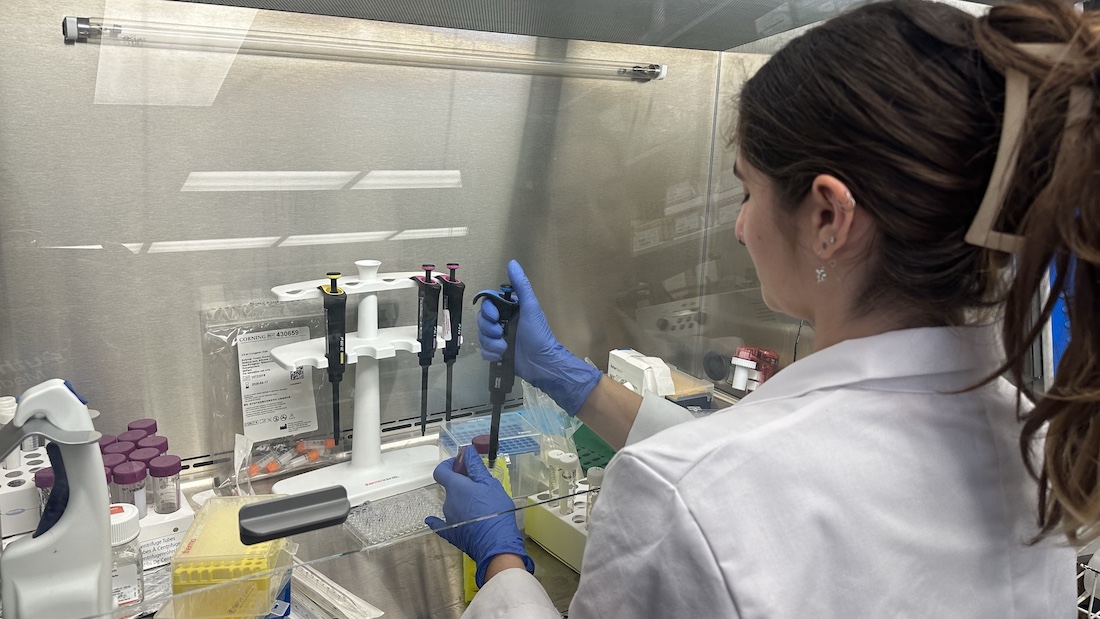
DALLAS – Aug. 06, 2026 – Since launching in April, the North Texas Alzheimer’s Disease Research Center (NT-ADRC) based at UT Southwestern Medical Center has quickly established the foundation needed to support cutting-edge research into Alzheimer’s and related dementias.
The NT-ADRC, a collaborative effort with UT Dallas and UT Arlington, is one of two ADRCs in Texas and 38 in the U.S. The Center is focused on advancing the national Alzheimer’s disease research agenda; facilitating ideas and approaches that accelerate the discovery of novel treatments and contributing risk factors; enhancing scientific and clinical collaborations locally and nationally; and creating educational opportunities for researchers, clinicians, learners, and caregivers in the North Texas community.
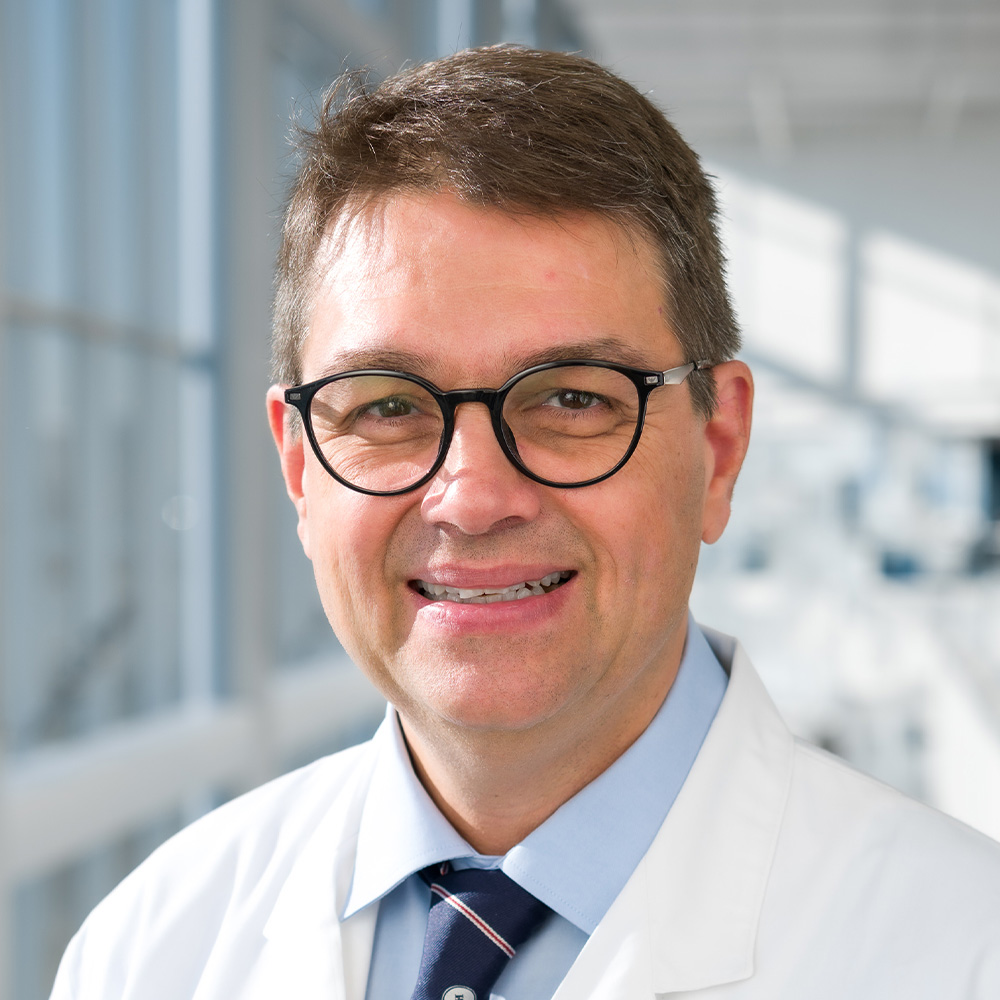
Under the leadership of Pedro Rosa-Neto, M.D., Ph.D., named new Director and Principal Investigator of the Center in May, UT Southwestern’s NT-ADRC team seeks to investigate cardiometabolic factors, such as high blood pressure, that contribute to Alzheimer’s and other dementias. Known as hypertension, high blood pressure affects nearly 120 million Americans. Researchers in the Center are also conducting several clinical trials.
“The NT-ADRC’s accomplishments thus far reflect the extraordinary commitment of our outstanding faculty, staff, and collaborators,” said Dr. Rosa-Neto, Professor in the Peter O’Donnell Jr. Brain Institute at UTSW and of Neurology and Radiology. “They would not have been possible without the outstanding institutional support of O’Donnell Brain Institute Director William Dauer, M.D., the Institute, and Elan Louis, M.D., M.S., Chair of Neurology. Their vision and leadership have been instrumental in the rapid and successful launch of the NT-ADRC.”
Established in 1984, Alzheimer’s Disease Research Centers are congressionally designated National Institutes of Health (NIH) Centers of Excellence funded by the National Institute on Aging (NIA). The Center at UTSW is receiving a five-year award expected to total $23 million. A history of innovative research and high-quality clinical care for Alzheimer’s disease and related dementias in North Texas laid the groundwork for the grant.
Dr. Rosa-Neto cited several multidisciplinary projects undertaken by the clinicians and scientists on UTSW’s NT-ADRC core teams during its initial months:
- Under the leadership of Amber Salter, Ph.D., and Justin Rousseau, M.D., the Data Management, Informatics, and Statistics Core has implemented a unique computational environment that enables data acquisition from other ADRCs. This foundation also integrates the legacy ADRC cases diagnosed by Charles White, M.D., and Elena Daoud, M.D., Ph.D., from the Neuropathology Core, creating a comprehensive platform for longitudinal clinical, imaging, biomarker, and neuropathological research.
- The Outreach, Recruitment, and Engagement Core, led by Ramona Rhodes, M.D., and Heather Kitzman, Ph.D., has begun actively engaging the Center’s clinical populations and the broader North Texas community, expanding awareness of NT-ADRC research opportunities through HealthStreet and other innovative community engagement initiatives.
- The Clinical Core, led by Brendan Kelley, M.D., and C. Munro Cullum, Ph.D., has recruited participants at a rapid pace since June, laying the foundation for a deeply phenotyped, longitudinal cohort of patients focused on understanding the relationships between cardiovascular health, aging, and memory and thinking disorders.
- The Biomarker and Imaging Core, led by Marc Diamond, M.D., and Joseph A. Maldjian, M.D., is implementing the latest PET imaging protocols through the CLARiTI initiative, enabling state-of-the-art in vivo detection and characterization of Alzheimer’s disease pathology.
- The Research Education Component (REC) Core, led by Rong Zhang, Ph.D., and Wanpen Vongpatanasin, M.D., has launched its first round of funding, supporting REC Scholars Barbara Stopschinski, M.D., Kexin Yu, Ph.D., and John Giacona, Ph.D., PA-C, as well as innovative developmental projects led by Wendy Wang, Ph.D., M.P.H., and Jaime Vaquer-Alicea, Ph.D. Together, these investigators bring new ideas, technologies, and therapeutic approaches that will advance understanding of Alzheimer’s disease and related dementias while fostering the next generation of NT-ADRC investigators.
Another major milestone has been establishment of the NT-ADRC Biospecimen Bank, which now incorporates the state-of-the-art ARGO-NULISA platform for ultra-high-sensitivity biomarker characterization. The biorepository is designed to provide high-quality, well-characterized biospecimens that will accelerate discovery of the next generation of fluid biomarkers for Alzheimer’s disease and related dementias, a research program led by Dr. Diamond and his team.
“As we continue to grow, we remain committed to advancing scientific discovery, training future leaders, and improving the lives of individuals and families affected by Alzheimer’s disease and related dementias,” said Dr. Rosa-Neto, who joined the UTSW faculty in 2025 and is an Investigator in the O’Donnell Brain Institute.
Texas, the country’s second-biggest state, has the third-most Alzheimer’s disease patients, the second-most Alzheimer’s-related deaths, and the highest dementia burden score, a measure used to assess the emotional and psychological impact of caregiving for individuals with dementia.
The other ADRC in Texas is a collaboration between UT Health San Antonio and UT Rio Grande Valley.
UT Southwestern is ranked No. 9 for Neurology & Neurosurgery on U.S. News & World Report’s annual Best Hospitals list for 2026-2027.
Dr. Dauer holds the Lois C.A. and Darwin E. Smith Distinguished Chair in Neurological Mobility Research. Dr. Louis holds the Linda and Mitch Hart Distinguished Chair in Neurology. Dr. Rosa-Neto holds the Dorothy L. and John P. Harbin Chair in Alzheimer’s Disease Research and is a Dear Scholar in Neurosciences.
About UT Southwestern Medical Center
UT Southwestern, one of the nation’s premier academic medical centers, integrates pioneering biomedical research with exceptional clinical care and education. The institution’s faculty members have received six Nobel Prizes and include 28 members of the National Academy of Sciences, 26 members of the National Academy of Medicine, and 14 Howard Hughes Medical Institute Investigators. The full-time faculty of nearly 3,400 is responsible for groundbreaking medical advances and is committed to translating science-driven research quickly to new clinical treatments. UT Southwestern physicians in more than 80 specialties care for more than 143,000 hospitalized patients, attend to more than 470,000 emergency room cases, and oversee nearly 5.3 million outpatient visits a year.