
Brain signaling mechanism may explain clozapine weight gain
UT Southwestern-led study identifies possible target for reducing metabolic side effects of antipsychotic used to treat schizophrenia
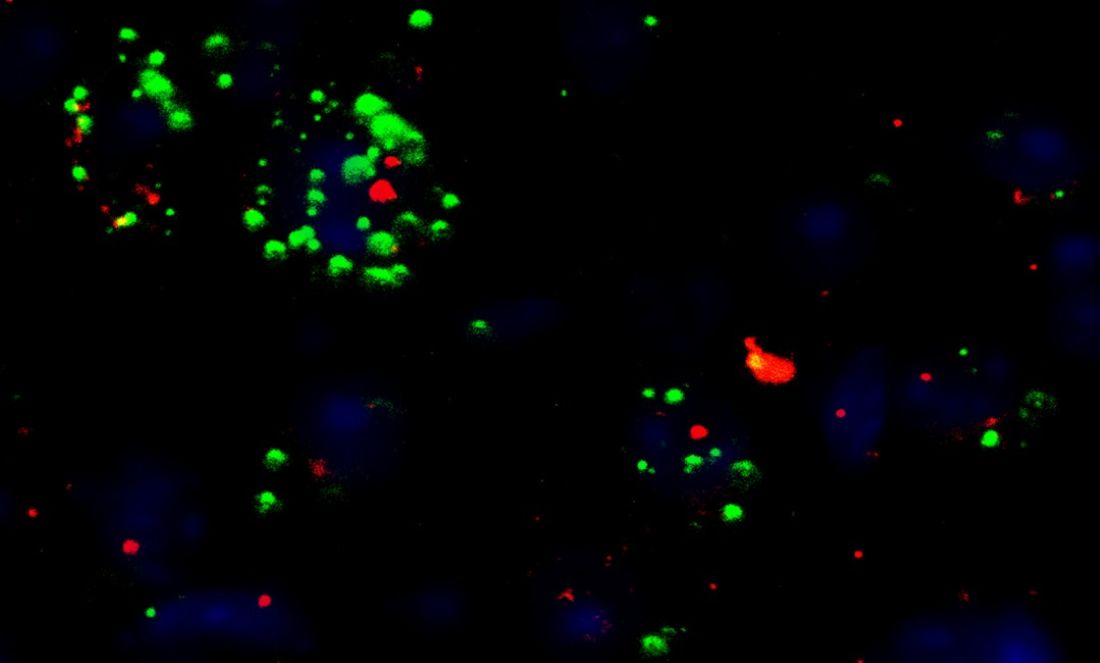
DALLAS – Sept. 03, 2026 – Researchers at UT Southwestern Medical Center have identified a key brain signaling pathway that appears to drive the substantial weight gain often associated with clozapine, a widely used antipsychotic medication. The preclinical findings, published in Nature Communications, point to a potential way to reduce the metabolic side effects of this medication, commonly prescribed for patients with treatment-resistant schizophrenia.
“Clozapine can be life-changing for people whose symptoms do not respond to other antipsychotics, but its metabolic side effects can make long-term treatment difficult,” said senior co-corresponding author Chen Liu, Ph.D., Associate Professor of Internal Medicine and Neuroscience and a Principal Investigator in the Center for Hypothalamic Research at UT Southwestern. “Our study identifies a specific brain pathway that is necessary for much of the weight gain in our mouse model. Blocking this pathway reduced eating and weight without weakening clozapine’s effects in a standard mouse model used to assess antipsychotic activity.”

Clozapine is among the most effective medicines for treatment-resistant schizophrenia, but it also can cause intense hunger, substantial weight gain, and problems with glucose and lipid metabolism. These effects can increase long-term health risks and lead patients to stop taking a medication that controls their psychiatric symptoms.
Because clozapine interacts with many receptors, its metabolic effects have been difficult to trace. To model these effects, UTSW researchers incorporated clozapine into a nutritionally matched diet in mice, producing blood concentrations within the therapeutic range reported in patients. They studied female mice because previous studies have shown they are particularly sensitive to the metabolic effects of antipsychotic drugs.
After switching diets, the mice rapidly ate more, especially at night. A small rise in energy expenditure did not offset the extra calories. Over 12 weeks, the mice gained fat, developed fatty liver changes, and showed impaired glucose control.
The team traced this response to the brain’s melanocortin system, which regulates hunger and fullness. The melanocortin 4 receptor (MC4R) is found on neurons in a brain region called the paraventricular hypothalamus. These MC4R neurons help suppress feeding. Kir7.1, a potassium channel in the same cells, acts like an electrical brake: When it opens, these neurons become less active, weakening their appetite-suppressing signal and allowing the animal to eat more.
By monitoring these neurons in mice, the researchers found that clozapine and risperidone, another antipsychotic medication, suppressed their activity, whereas ziprasidone, which is less likely to cause weight gain, did not. Electrical recordings in engineered cells indicated that clozapine and risperidone strengthened the inhibitory connection between MC4R and Kir7.1.
When Kir7.1 was genetically deleted only from MC4R-expressing neurons, clozapine-induced weight gain was markedly reduced. The mice still gained weight with olanzapine, also an antipsychotic, suggesting different antipsychotics act through distinct mechanisms.
The researchers also tested two treatments to determine if they would counteract the weight-related effects of clozapine. Setmelanotide, an MC4R-activating drug approved for certain rare genetic forms of obesity, reduced food intake and body weight in clozapine-treated mice. In mice that had already developed obesity, the experimental Kir7.1 blocker ML418 reduced eating, body weight, and fat mass and improved glucose tolerance.
“Clozapine acts on many receptors, so MC4R-Kir7.1 is not the whole story,” said Dr. Liu, who is also an Investigator in the Peter O’Donnell Jr. Brain Institute. “This pathway may be a convergence point where several signals reach the appetite-control circuit. Targeting it precisely could offer a way to manage metabolic side effects without broadly interfering with clozapine’s effects.”
Roger D. Cone, Ph.D., Tadataka Yamada Distinguished University Professor of Molecular and Integrative Physiology at the University of Michigan Medical School, is a co-corresponding author on the study. A companion Nature Communications study led by Dr. Cone mapped how ML418 interacts with Kir7.1 and showed that delivering the blocker directly to the brain activated MC4R-expressing hypothalamic neurons and reduced feeding. Together, the studies provide complementary functional and structural evidence that Kir7.1 is a central regulator of melanocortin-dependent appetite.
“These findings show, for the first time, that the MC4R-Kir7.1 complex as a whole plays a relevant and physiologically important role in regulating food intake,” said Dr. Cone, Research Professor at the U-M Life Sciences Institute, where his lab is located. “We now have a path forward for blocking the complex itself in mouse models, and not just the MC4R or Kir7.1 proteins, to reduce feeding.”
Li Li, Ph.D., former Instructor of Internal Medicine at UTSW, former postdoctoral research fellow in the Liu Lab, and current Assistant Professor of Zoology and Physiology at the University of Wyoming, is a co-first author on the study co-led by Dr. Liu. Other UTSW researchers who contributed to this study are Baijie Xu, Ph.D., an Instructor of Internal Medicine; Zan Wu, Ph.D., and Meilin Chen, Ph.D., postdoctoral researchers; Rong Wan, M.S., Research Associate in the Liu Lab; Swati, M.S., Research Associate and Lab Manager in the Liu Lab; and Shari Birnbaum, Ph.D., Associate Professor in the O’Donnell Brain Institute and of Psychiatry.
This research was funded by grants from the National Institutes of Health (R01DK114036, R01DK130892, R01DK136592, and P30DK127984) and the American Heart Association (23POST1019715 and 24CDA1257999). The UTSW Rodent Behavior Core is supported by the O’Donnell Brain Institute.
About UT Southwestern Medical Center
UT Southwestern, one of the nation’s premier academic medical centers, integrates pioneering biomedical research with exceptional clinical care and education. The institution’s faculty members have received six Nobel Prizes and include 28 members of the National Academy of Sciences, 26 members of the National Academy of Medicine, and 14 Howard Hughes Medical Institute Investigators. The full-time faculty of nearly 3,400 is responsible for groundbreaking medical advances and is committed to translating science-driven research quickly to new clinical treatments. UT Southwestern physicians in more than 80 specialties care for more than 143,000 hospitalized patients, attend to more than 470,000 emergency room cases, and oversee nearly 5.3 million outpatient visits a year.