
Search
https://www.utsouthwestern.edu/ctplus/stories/2022/barker-regents-award.html
A problem has occurred. This page could not be rendered: 500page Please notify your system administrator.
Student spotlights: Match Day insights from inspiring students of the Class of 2022
https://www.utsouthwestern.edu/ctplus/stories/2022/match-day-2022-student-spotlights.html
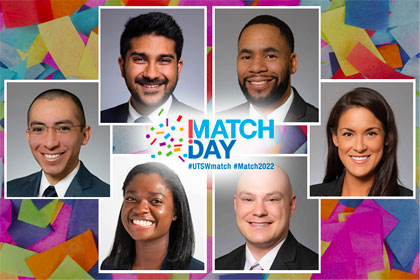
Match Day 2022: Student spotlights
C is for Coronavirus - CT Plus - UT Southwestern
https://www.utsouthwestern.edu/ctplus/stories/2020/c-for-coronavirus.html
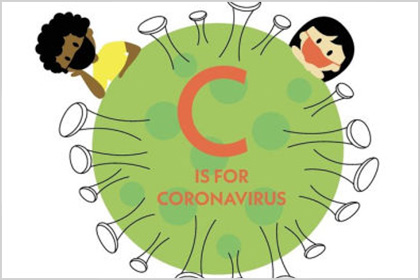
Dani Mathisen, a third-year UT Southwestern medical student, resolved to find a simple way to talk with kids about the pandemic after hearing this question from a young relative. One night when she couldn’t sleep, she came up with the idea to create an alphabet book to explain the disease and the safety precautions it requires.
President’s Lecture Series: New technology lets researchers identify the genes inside an individual brain cell - CT Plus - UT Southwestern
https://www.utsouthwestern.edu/ctplus/stories/2022/pls-lecture-konopka.html
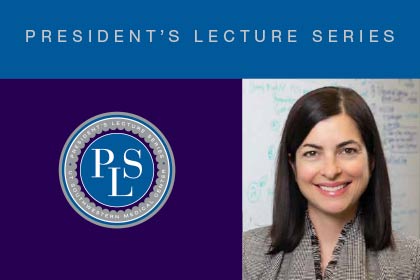
Dr. Konopka, Associate Professor of Neuroscience and a member of the Peter O’Donnell Jr. Brain Institute, will speak at 4 p.m. in the Tom and Lula Gooch Auditorium, with a reception to follow.
Pediatric Center for Pulmonary & Vascular Biology – Department of Pediatrics – UT Southwestern, Dallas, Texas
https://www.utsouthwestern.edu/departments/pediatrics/divisions/pulmonary-vascular-biology/
UT Southwestern's Pediatric Center for Pulmonary and Vascular Biology provides a home for pursuing basic research in pulmonary biology and vascular.
UTSW graduate students, postdoc honored with NSF fellowships - CT Plus - UT Southwestern
https://www.utsouthwestern.edu/ctplus/stories/2022/nsf-fellowship.html
The NSF Graduate Research Fellowship Program (GRFP) supports outstanding graduate students pursuing research-based master’s and doctoral degrees in STEM fields.
https://www.utsouthwestern.edu/ctplus/stories/2021/heed-diversity-award.html
A problem has occurred. This page could not be rendered: 500page Please notify your system administrator.
https://www.utsouthwestern.edu/ctplus/stories/2023/shine-academy.html
A problem has occurred. This page could not be rendered: 500page Please notify your system administrator.
President’s Lecture Series: Harnessing the power of light to treat cancer - CT Plus - UT Southwestern
https://www.utsouthwestern.edu/ctplus/stories/2023/pls-achilefu.html
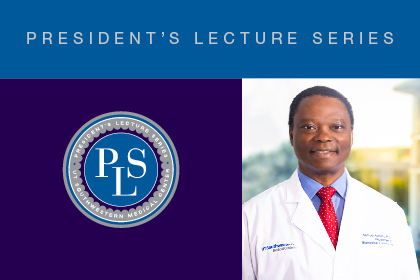
Biomedical innovator Samuel Achilefu, Ph.D., aims to use the power of light to expose and defend against one of the darkest forces of disease that has affected humankind for millions of years – cancer. On Nov. 2, as the final speaker in this year’s President’s Lecture Series, Dr. Achilefu will highlight the history of promising fluorescence imaging technology, discuss its current state, and provide a glimpse of what future applications and opportunities may look like.
https://www.utsouthwestern.edu/ctplus/stories/2019/veterans-day-tribute.html
A problem has occurred. This page could not be rendered: 500page Please notify your system administrator.