
Study reveals how RNA-modifying enzyme picks its targets
RNA shape and sequence determine molecular prey of NSUN2 enzyme linked to cancer, neurological disorders, UTSW research shows
DALLAS – June 29, 2026 – An RNA-modifying enzyme linked to cancer and neurological disorders selects its targets by recognizing specific RNA shapes and sequences, according to a study by UT Southwestern Medical Center researchers. The findings, published in Nature, define the molecular features that guide the enzyme, NSUN2, to the RNAs it modifies and could help researchers investigate how abnormal RNA modification contributes to disease.
“NSUN2 is an oncogenic RNA modification enzyme, and we discovered how it recognizes targets, including what elements constitute the target RNAs,” said corresponding author Yunsun Nam, Ph.D., Professor of Biochemistry and Biophysics at UT Southwestern. Dr. Nam is also a member of the Harold C. Simmons Comprehensive Cancer Center and an Investigator in the Peter O’Donnell Jr. Brain Institute. Jacob Canepa, B.S., graduate student researcher in the Nam Lab, was the study’s first author.
RNA helps cells interpret and use genetic information. Like DNA and proteins, RNA can be chemically modified in ways that influence its function, stability, and fate inside cells. NSUN2 is one of the enzymes that writes those marks, adding a modification known as 5-methylcytosine (m5C) to several types of RNA.
But NSUN2 has been difficult to understand because it can modify many different RNAs, and previous studies had not determined how the enzyme chooses its targets. That uncertainty has limited efforts to understand how NSUN2 contributes to disease. NSUN2 is overexpressed in many types of cancer, especially lung cancer, and mutations in the gene that encodes NSUN2 have been linked to intellectual disabilities, including Dubowitz-like syndrome.
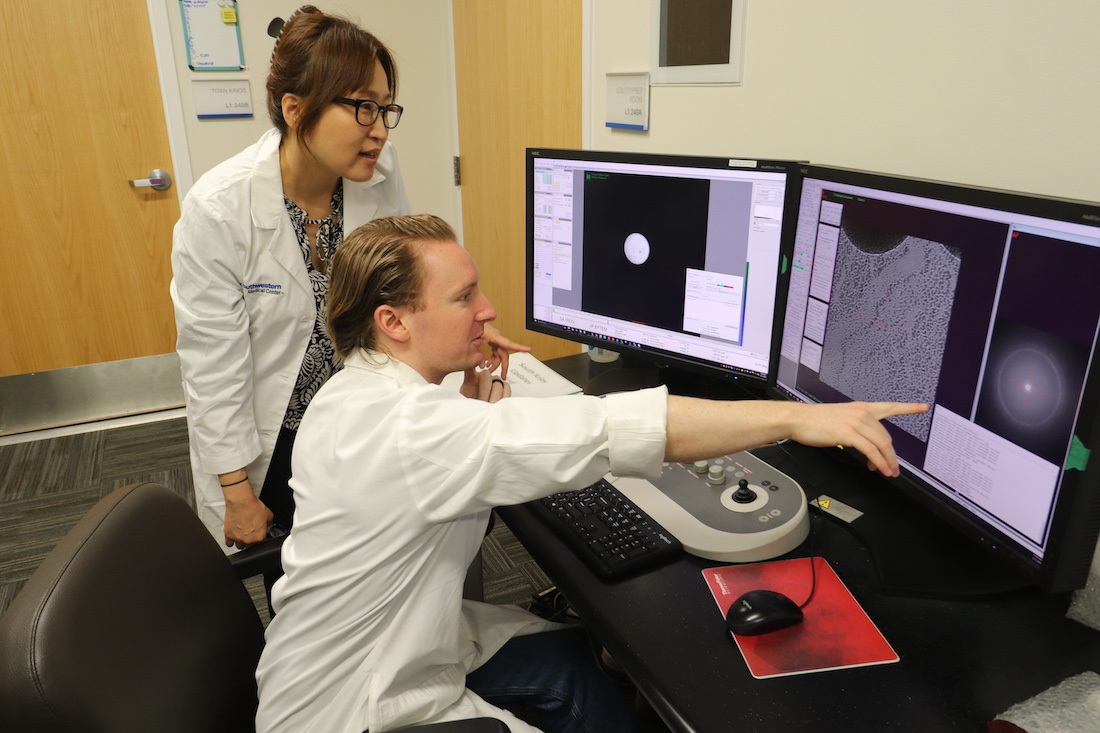
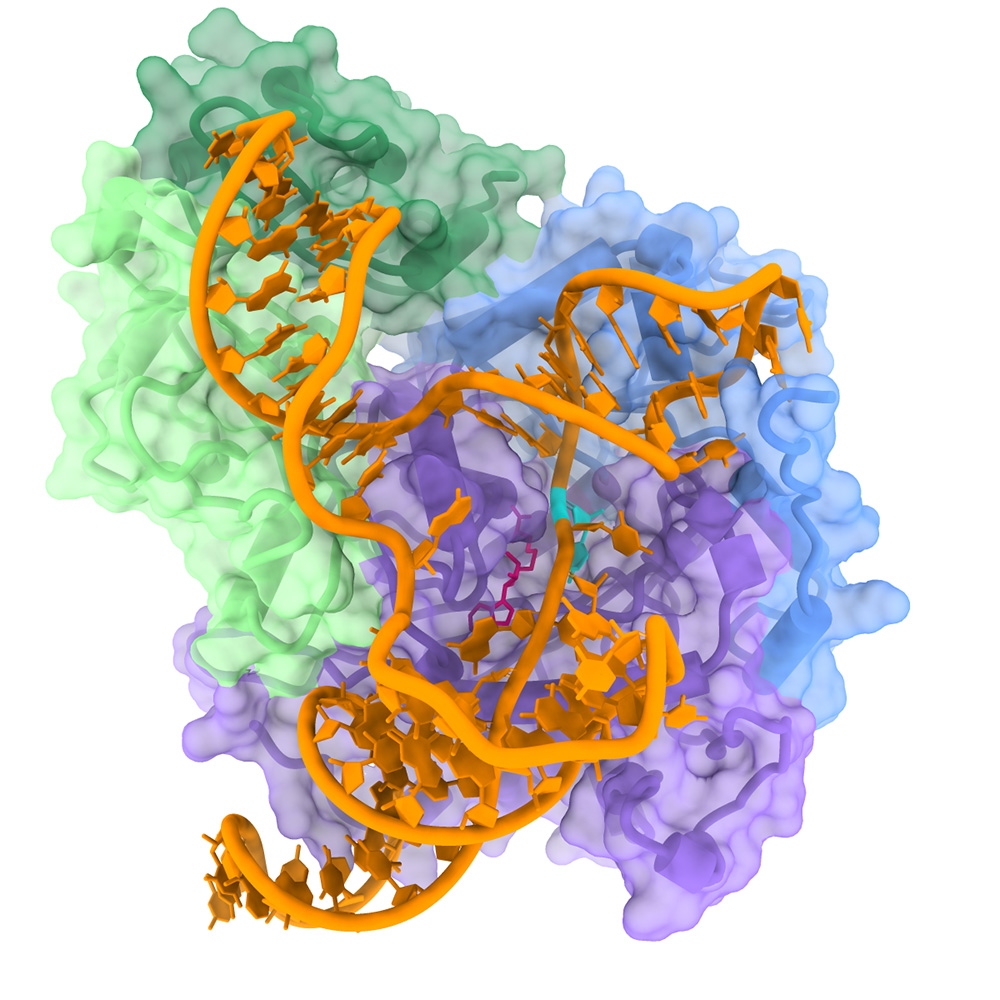
To define how NSUN2 selects its targets, the Nam Lab worked with UTSW’s Cryo-Electron Microscopy Facility to capture multiple 3D structures of NSUN2 bound to RNA at different stages of methylation, a chemical modification cells can make to RNA. These structures showed that NSUN2 recognizes RNA through a combination of shape and sequence. In particular, the enzyme prefers RNAs with two stemlike regions arranged in a specific orientation, along with a short sequence pattern near the modification site.
The researchers then tested those structural findings through biochemical experiments, including designing a shortened RNA molecule that retained the essential features needed for NSUN2 recognition. The results allowed them to define the necessary and sufficient features that make an RNA molecule a direct target of NSUN2.
The work also revealed an unexpected view of transfer RNA (tRNA), one of the most abundant types of RNA in cells. When bound to NSUN2, tRNA adopted a shape that differed from its classic L-shaped structure, suggesting this familiar molecule can take on more dynamic forms than previously realized.
“Our findings close this gap by identifying the specific molecular targets that NSUN2 acts on – knowledge that opens new directions for studying how this protein disrupts normal gene expression and contributes to disease including cancer,” Dr. Nam said. “Importantly, these results also lay the groundwork for developing therapies that directly target NSUN2 and its downstream effects.”
The study builds on previous work from the Nam Lab published in 2023 and 2024 showing that RNA-modifying enzymes can act on different substrates with varying efficiency. Understanding those differences is especially important in cancer, where overexpressed enzymes may begin modifying RNAs they would normally affect only weakly or inadvertently.
Other UTSW researchers in the Nam Lab who contributed to this study are Victor Ruiz-Arroyo, Ph.D., postdoctoral research fellow, and Netanya Schlamowitz, B.A., graduate student researcher.
Dr. Nam holds the Doris and Bryan Wildenthal Distinguished Chair in Medical Science and is a Southwestern Medical Foundation Scholar in Biomedical Research and a UT Southwestern Presidential Scholar. Dr. Nam received the 2026 Edith and Peter O’Donnell Award in Biological Sciences from the Texas Academy of Medicine, Engineering, Science & Technology (TAMEST) for her research into how RNAs and proteins interact at the molecular level.
This study was funded by grants from the National Institutes of Health (R01GM122960, R01CA258589, R01ES038329, and T32GM131963), the American Cancer Society (PF-24-1308804-01-RMC), The Welch Foundation (I-2115-20220331), the Cancer Prevention and Research Institute of Texas (RP210041), and the National Cancer Institute (NCI) Cancer Center Support Grant (P30CA142543).
About UT Southwestern Medical Center
UT Southwestern, one of the nation’s premier academic medical centers, integrates pioneering biomedical research with exceptional clinical care and education. The institution’s faculty members have received six Nobel Prizes and include 27 members of the National Academy of Sciences, 25 members of the National Academy of Medicine, and 13 Howard Hughes Medical Institute Investigators. The full-time faculty of nearly 3,400 is responsible for groundbreaking medical advances and is committed to translating science-driven research quickly to new clinical treatments. UT Southwestern physicians in more than 80 specialties care for more than 143,000 hospitalized patients, attend to more than 470,000 emergency room cases, and oversee nearly 5.3 million outpatient visits a year.