
New biosensor tracks down missing metabolite from childhood brain disorder
Children’s Research Institute scientists discover alpha-ketoglutarate supplementation may delay progression of GPT2 deficiency, rare inborn error of metabolism
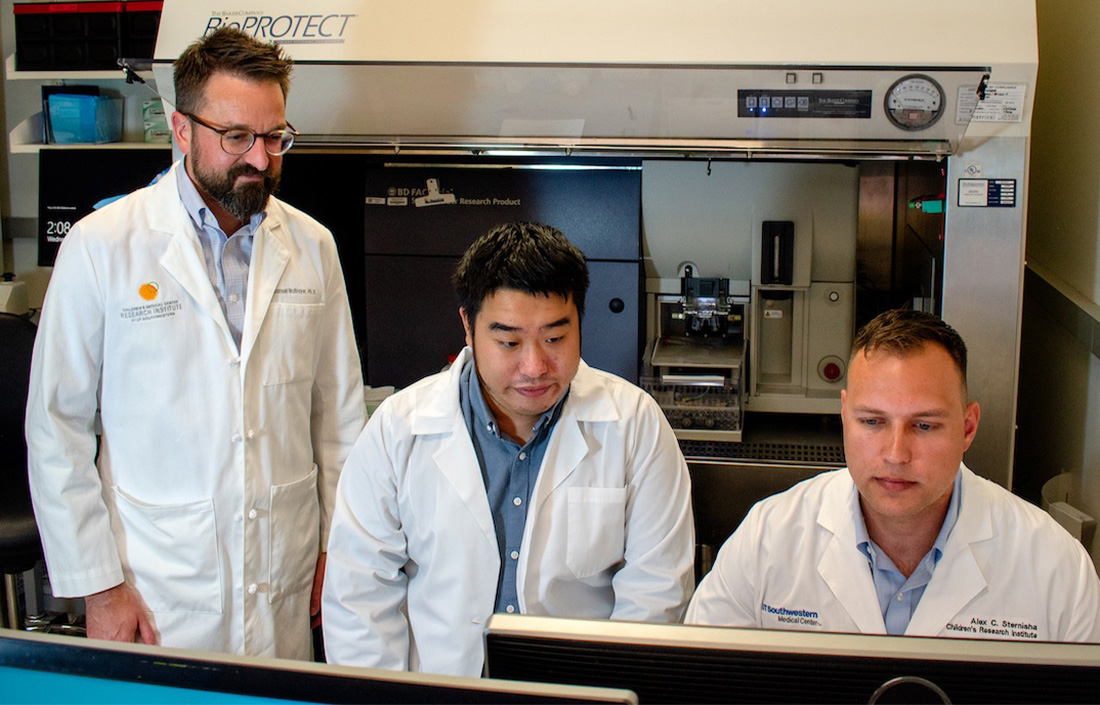
DALLAS – July 16, 2026 – Scientists at Children’s Medical Center Research Institute at UT Southwestern (CRI) have discovered why babies born with a rare inborn error of metabolism, called GPT2 deficiency, suffer from severe neurological impairment, according to research published in Science.
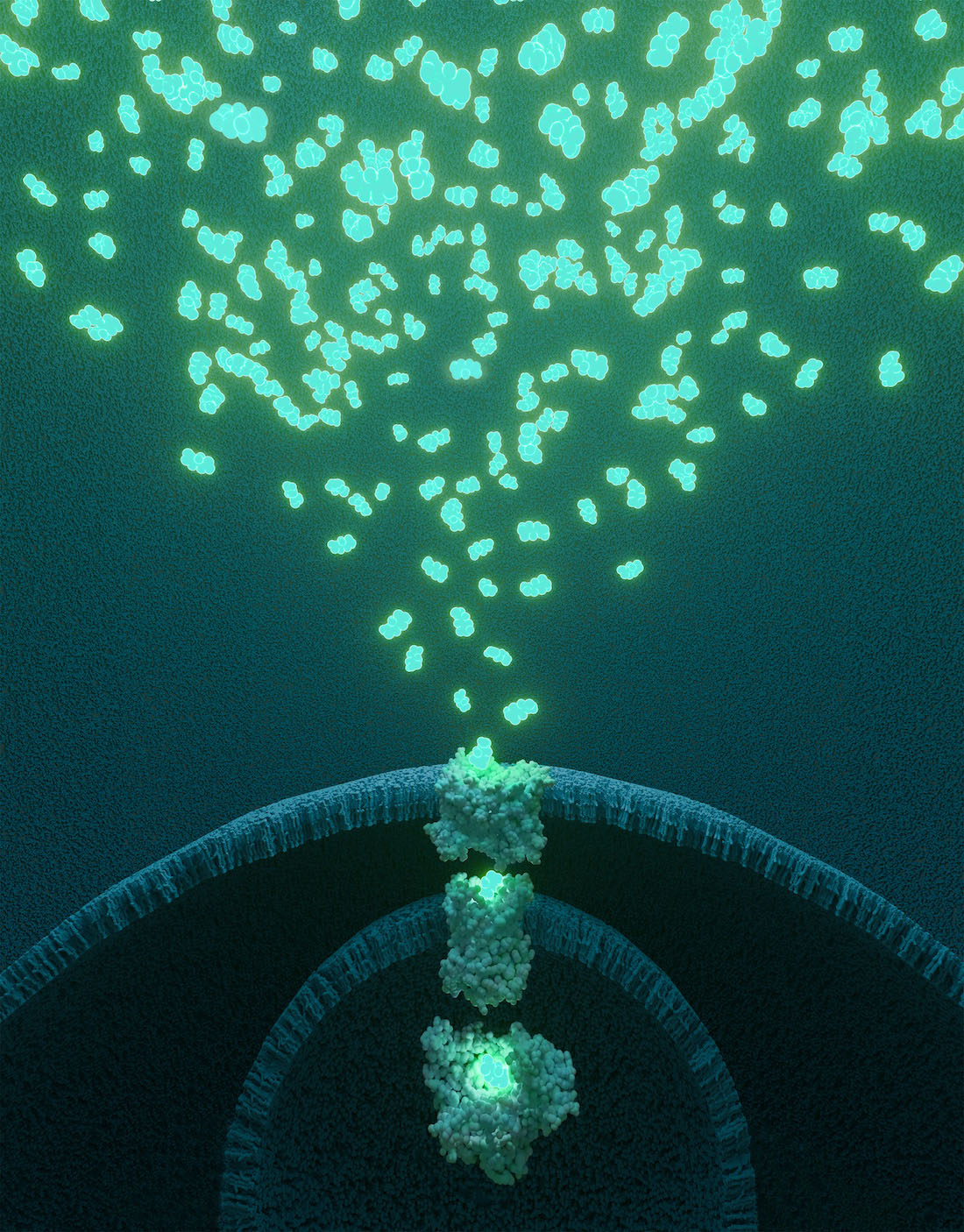
Using their newly developed biosensor to track essential metabolite alpha-ketoglutarate (αKG), researchers found that mitochondrial enzyme GPT2 and transporter protein SLC25A11 work together to control production and transport of αKG from the mitochondria to the nucleus.
Since αKG is essential to unwind DNA for gene transcription, this new research suggests αKG supplementation at birth might help diminish disease progression, according to study leader Samuel McBrayer, Ph.D., Assistant Professor at CRI and of Pediatrics.
“GPT2 is expressed throughout the body, so it was difficult to understand why this enzyme would have a special role in the brain,” Dr. McBrayer said. “The disruption of GPT2 activity causes substantial changes in DNA structure, most profoundly in brain cells, which dysregulates many important genes that must turn on during brain development.”
Based on this insight, Dr. McBrayer collaborated with Eric M. Morrow, M.D., Ph.D., Mencoff Family Professor of Biology at Brown University, whose lab studies GPT2 deficiency and has created a mouse model to investigate the inborn error of metabolism.
More than a decade ago, Dr. Morrow initially characterized metabolic aspects of GPT2 deficiency with the help of Ralph J. DeBerardinis, M.D., Ph.D., Director of the CRI Genetic and Metabolic Disease Program and the Eugene McDermott Center for Human Growth and Development at UT Southwestern.
Using Dr. Morrow’s model, scientists found that by supplementing αKG from birth, newborn mice lacking the Gpt2 enzyme maintained their body weight, one mortality marker of the disease.
“We are really excited about the possibility of developing treatments, such as potentially dietary supplements, that will help patients,” Dr. Morrow said. “The discoveries in this paper provide important new insights on mechanisms, and we will continue to test these treatments in animal studies.”
Scientists previously didn’t understand how the pool of nuclear αKG was regulated. Study first author Alex Sternisha, M.D., Ph.D., a former graduate student in the McBrayer Lab, built a biosensor using a protein from cyanobacteria to examine what creates, transports, or consumes αKG.
“Cyanobacteria evolved this elegant mechanism to sense αKG because it’s so important for their metabolism,” Dr. Sternisha said. “We took a transcription factor that recognizes αKG from cyanobacteria, modified it to function in human cells, and linked its activity to expression of a green fluorescent protein so that we could monitor αKG levels in the nucleus of a living human cell.”
Dr. McBrayer said αKG plays a dual role in cell metabolism. In addition to being part of the mitochondrial TCA cycle – a series of chemical reactions used to produce energy in the cell – it’s also used by chromatin in the nucleus to control how tightly DNA is compacted.
Researchers, including co-first author Haocheng Li, B.S., found that if the GPT2 enzyme doesn’t produce αKG in the mitochondria or if the SLC25A11 protein doesn’t transport it to the cytosol, then not enough αKG diffuses into a cell’s nucleus to support DNA unwinding, affecting DNA access and reducing gene activation.
The study also confirms the enzyme BCAT1, found in the cytosol, is an important αKG consumer and competes with other enzymes for available αKG.
Before now, scientists had only a partial understanding of why GPT2 deficiency leads to fewer synapses and weaker brain circuits. This contributes to neurological symptoms, including severe intellectual disabilities and progressive motor dysfunction, according to the National Organization for Rare Disorders.
“There’s a high degree of hope that we might be able to employ this treatment strategy in patients and really move the needle in that disease context,” Dr. McBrayer said. “Together with Dr. Morrow’s group, we nominated a metabolite supplementation strategy that might prevent some of the defects in neurodevelopment that afflict patients with GPT2 deficiency. We are currently analyzing this treatment strategy with the intent to advance it to clinical trial.”
Dr. McBrayer is an Investigator in the Peter O’Donnell Jr. Brain Institute and a member of the Cellular Networks in Cancer Research Program at the Harold C. Simmons Comprehensive Cancer Center at UT Southwestern. He is also a Cancer Prevention and Research Institute of Texas (CPRIT) Scholar. He was honored with a Distinguished Scientist Award in 2021 from the Sontag Foundation.
Other study contributors include Dr. DeBerardinis, also Professor of Pediatrics and Director of the CRI Metabolomics Shared Facility; Laura A. Banasyznski, Ph.D., Associate Professor in the Cecil H. and Ida Green Center for Reproductive Biology Sciences, CRI, and Obstetrics and Gynecology; Michalis Agathocleous, Ph.D., Assistant Professor in CRI and Pediatrics; Thomas P. Mathews, Ph.D., Assistant Professor of Research in CRI and Pediatrics, and Assistant Director of the CRI Metabolomics Shared Facility; Chad A. Brautigam, Ph.D., Professor of Biophysics and Microbiology; Yoon Jung Kim, Ph.D., Assistant Professor of Research in CRI and Pediatrics; Javier Garcia-Bermudez, Ph.D., Assistant Professor in CRI and Pediatrics; Lin Xu, Ph.D., Assistant Professor of Health Data Science and Biostatistics in the Peter O’Donnell Jr. School of Public Health and Pediatrics; and Ruth Gordillo, Ph.D., Associate Professor of Internal Medicine.
This research was funded by the National Institutes of Health, the National Cancer Institute, the National Institute of Neurological Disorders and Strokes, the National Institute of General Medicine, the National Institute of General Medical Sciences, the National Institute of Diabetes and Digestive and Kidney Diseases, the National Institute of Child Health and Human Development, the National Institute on Aging, a CPRIT grant, The Sontag Foundation, the Jonesville Foundation, The Nick Gonzales Foundation for Brain Tumor Research, a Burroughs Wellcome Fund Career Award for Medical Scientists, a Lubin Family Foundation Scholar Award, the Human Frontier Science Program, the American Cancer Society, a Pew-Stewart Scholars for Cancer Research award, The Welch Foundation, and the Howard Hughes Medical Institute Investigator Program.
Dr. DeBerardinis holds the Eugene McDermott Distinguished Chair for the Study of Human Growth and Development and the Philip O’Bryan Montgomery, Jr., M.D. Distinguished Chair in Developmental Biology and is a Sowell Family Scholar in Medical Research.
About CRI
Children’s Medical Center Research Institute at UT Southwestern (CRI) is a joint venture of UT Southwestern Medical Center and Children’s Medical Center Dallas. CRI’s mission is to perform transformative biomedical research to better understand the biological basis of disease. Located in Dallas, Texas, CRI is home to interdisciplinary groups of scientists and physicians pursuing research at the interface of regenerative medicine, cancer biology, and metabolism – relentless discovery toward the treatments of tomorrow.
X/Twitter | LinkedIn | Instagram | YouTube | Facebook
About UT Southwestern Medical Center
UT Southwestern, one of the nation’s premier academic medical centers, integrates pioneering biomedical research with exceptional clinical care and education. The institution’s faculty members have received six Nobel Prizes and include 28 members of the National Academy of Sciences, 26 members of the National Academy of Medicine, and 14 Howard Hughes Medical Institute Investigators. The full-time faculty of nearly 3,400 is responsible for groundbreaking medical advances and is committed to translating science-driven research quickly to new clinical treatments. UT Southwestern physicians in more than 80 specialties care for more than 143,000 hospitalized patients, attend to more than 470,000 emergency room cases, and oversee nearly 5.3 million outpatient visits a year.