
Adding drug to glioblastoma treatment may boost effectiveness
Study co-led by UTSW researchers could lead to new therapy for most common primary brain cancer
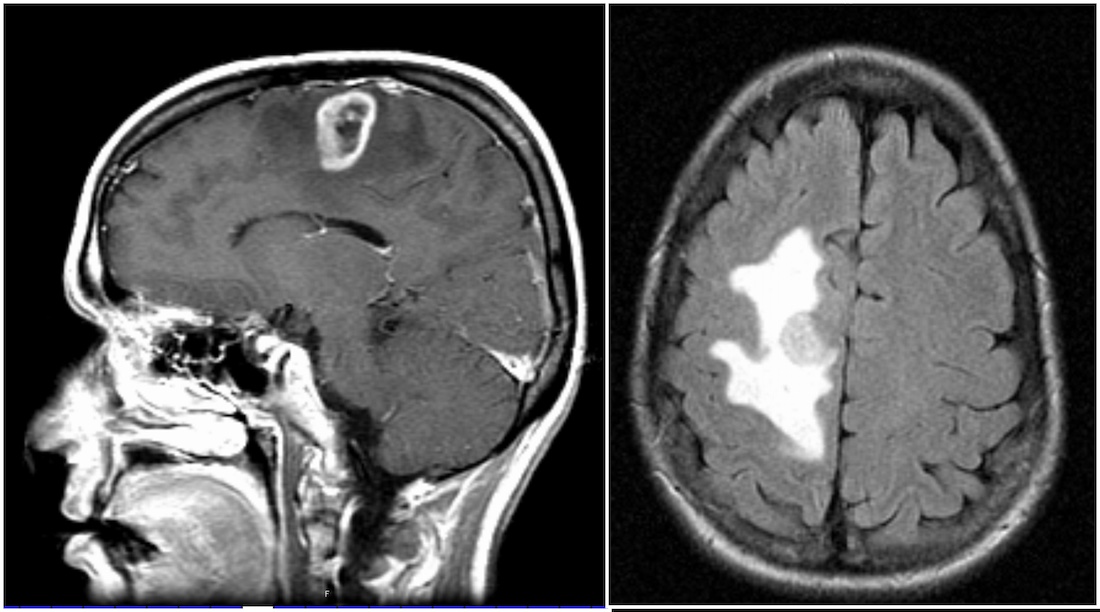
DALLAS – July 08, 2026 – Treating glioblastoma with a class of drugs known as EGFR inhibitors made this cancer more sensitive to chemotherapy, suggests a study in preclinical models co-led by researchers at UT Southwestern Medical Center and the University of Alabama at Birmingham. The findings, published in Science Translational Medicine, could lead to a new strategy for fighting the most common primary brain cancer in adults.

“Glioblastoma is a devastating brain cancer with a dismal prognosis and no truly effective treatments. Our study could give new hope to the approximately 250,000 patients worldwide diagnosed with this disease each year,” said Amyn Habib, M.D., Professor of Neurology and Neurological Surgery at UT Southwestern and Staff Physician at the Dallas Veterans Affairs Medical Center. Dr. Habib is also a member of the Development and Cancer Research Program in the Harold C. Simmons Comprehensive Cancer Center and an Investigator in the Peter O’Donnell Jr. Brain Institute.
Dr. Habib co-led the study with Gao Guo, D.D.S., M.S.D., Ph.D., Assistant Professor of Neurosurgery at the University of Alabama at Birmingham and a former postdoctoral researcher in the Habib Lab. The co-first authors of the study are Arifa Nayab, M.P.H., a former member of the Habib Lab, and Nouman Mughal, Ph.D., former Assistant Professor of Surgery at Aga Khan University in Pakistan.
Despite decades of research, outcomes for glioblastoma remain grim: Most patients survive 12 to 18 months after diagnosis, with five-year survival rates at 5%-7%. Along with surgery and radiation, glioblastoma is typically treated with the chemotherapy agent temozolomide (TMZ). This drug works by damaging the DNA of cancer cells, preventing them from dividing and eventually causing their death. However, glioblastoma patients who initially respond to TMZ almost inevitably develop incurable drug-resistant cancer in the brain. There are no effective treatments for recurrent, TMZ-resistant glioblastoma.
Researchers have long known that TMZ is most effective for tumors that don’t produce a protein called O-6-methylguanine-DNA methyltransferase (MGMT), which repairs the DNA damage caused by TMZ. But because TMZ has been shown to increase MGMT over time, Dr. Habib explained, understanding how cells regulate this process could lead to more effective treatments for glioblastoma.
The Habib Lab has a long-standing focus on how the epidermal growth factor receptor (EGFR), a protein produced by a gene frequently mutated in glioblastoma, drives this and several other types of cancer. While studying what molecular pathways are influenced by EGFR, Dr. Habib and his colleagues discovered that inhibiting EGFR also significantly reduced the amount of MGMT produced by glioblastoma cells growing in the laboratory. They found a similar effect in mouse models of glioblastoma.
Additional experiments showed that an EGFR inhibitor called afatinib also made glioblastoma cells and tumors growing in mice more sensitive to TMZ, even when they had developed TMZ resistance. However, this strategy only worked when the researchers pretreated with afatinib a day before they delivered TMZ. Giving both drugs simultaneously had no effect, Dr. Habib said, since MGMT production must be shut down through EGFR inhibition before TMZ can do its job.
This finding may explain why clinical trials testing TMZ and EGFR inhibitors delivered together haven’t had success, Dr. Habib added. When the researchers examined glioblastoma samples from patients who participated in one such trial, they found that the tumor cells had high levels of MGMT that prevented TMZ from working. Glioblastoma samples from a different clinical trial testing only a novel EGFR inhibitor showed significantly reduced MGMT levels, suggesting that TMZ may be effective after administration of the EGFR-targeted drug.
If future clinical trials confirm that treatment with EGFR inhibitors sensitizes glioblastoma patients to TMZ, this strategy could eventually become the gold standard for treating this cancer, Dr. Habib said.
A complete list of UTSW contributors can be found in the study.
This research was funded by grants from the National Institutes of Health (R01CA299152-01 and 1R01NS119225-01A1) and the National Cancer Institute Cancer Center Support Grant (P30CA142543).
About UT Southwestern Medical Center
UT Southwestern, one of the nation’s premier academic medical centers, integrates pioneering biomedical research with exceptional clinical care and education. The institution’s faculty members have received six Nobel Prizes and include 28 members of the National Academy of Sciences, 26 members of the National Academy of Medicine, and 14 Howard Hughes Medical Institute Investigators. The full-time faculty of nearly 3,400 is responsible for groundbreaking medical advances and is committed to translating science-driven research quickly to new clinical treatments. UT Southwestern physicians in more than 80 specialties care for more than 143,000 hospitalized patients, attend to more than 470,000 emergency room cases, and oversee nearly 5.3 million outpatient visits a year.