
Dendrites may be key to learning and memory, study suggests
Branches of neurons act as minicomputers in the brain, processing information independent of cell bodies, UTSW researchers discover
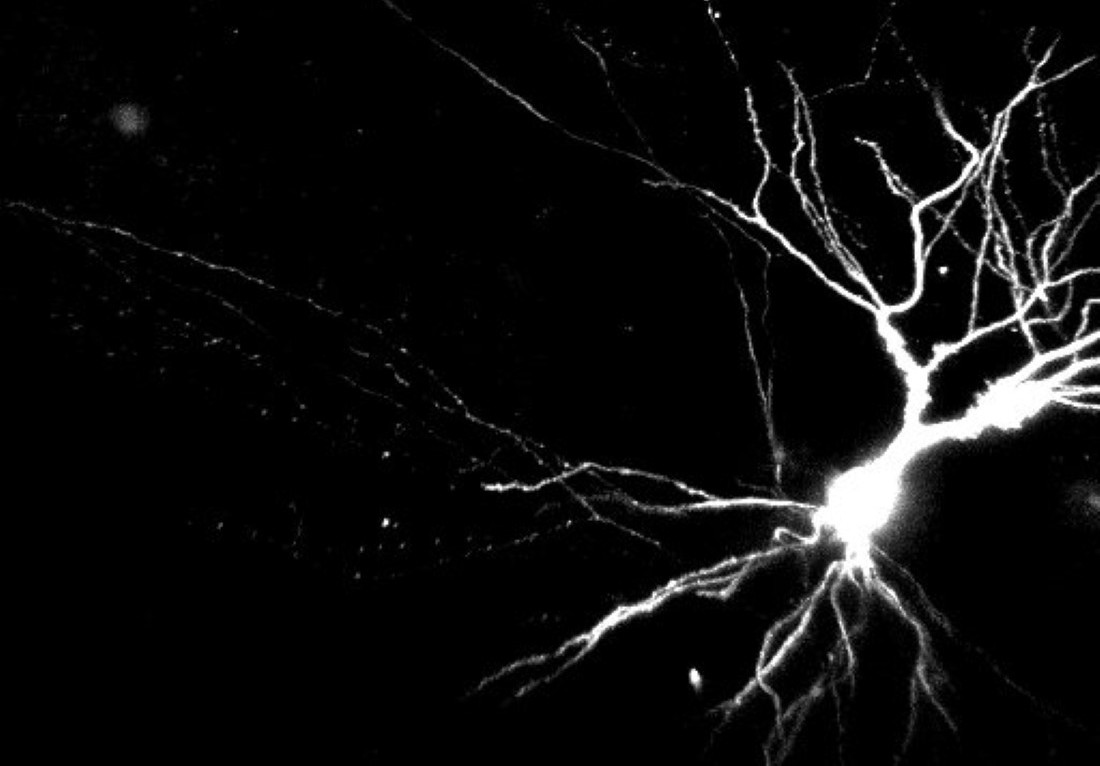
DALLAS – July 16, 2026 – Branchlike structures called dendrites that extend from neurons appear to make their own computations independent of the cell body, helping individual brain cells store memories of the past, respond to the present, and anticipate the future, a study led by UT Southwestern Medical Center researchers suggests. The findings, published in Science, represent a paradigm shift in current models of how learning and memory take place.
“This shifts our entire perspective. Rather than acting as simple switches, neurons behave more like sophisticated processors with internal divisions of labor, dramatically increasing the brain’s computational capacity,” said Attila Losonczy, M.D., Ph.D., Professor in the Peter O’Donnell Jr. Brain Institute and of Neuroscience and Director of the Program in Memory Longevity (PML) at UT Southwestern. Dr. Losonczy led the study with co-first authors Asako Noguchi, Ph.D., a postdoctoral researcher in the PML, and Satoshi Terada, Ph.D., a former postdoctoral researcher with Dr. Losonczy.
More than a century ago, scientists discovered that neurons have two types of anatomy extending from the cell body: dendrites – named for the Greek word for tree, dendron – and axons, the threadlike parts of neurons that conduct electrical impulses to other cells. Until recently, dendrites were largely thought to be passive collectors and dispersers of electrical information processed in the cell body. Learning and memory are thought to occur through the strengthening of connections called synapses, which are almost exclusively located on dendrites and allow electrical signals to pass more freely between neurons.
For decades, neuroscientists have hypothesized that dendrites can process electrical information independently, and studies over the past decade using neurons in petri dishes have strengthened that idea. But direct evidence during behavior has been lacking. If this is true in live animals, Dr. Losonczy explained, it could mean dendrites play an active role in helping shape synaptic learning and memory formation by serving as individual minicomputers that influence activity in the cell body.
To test this idea, Drs. Losonczy, Noguchi, and Terada and their colleagues used recently developed technology that can visualize electrical impulses in biological structures with resolution well below a micrometer – about 1/70th the width of a human hair. This advance allowed the researchers to view electrical activity in the dendrites of live mice as they performed learning- and memory-based tasks.
The team visualized this electrical activity in place cells – neurons in the brain’s hippocampus that have an important role in spatial memory and navigation – as mice navigated virtual-reality (VR) spaces in search of drops of water as rewards. In spaces the mice had already become familiar with, the scientists found that electrical activity in the dendrites generally matched that of the cell bodies.
When the researchers moved the reward to a new location, the cell bodies quickly adjusted their activity – but some dendrites appeared to retain the earlier memory, continuing to display the same patterns of electrical impulses. After the researchers had the mice explore a new VR space, some of the dendrites changed their activity before the cell body did – anticipating the new pattern of electrical impulses that the cell body eventually adopted after repeatedly navigating the novel space. This contrast is a striking and unexpected finding: Changing only the reward location left dendrites lagging behind the cell body, while changing the environment caused dendrites to lead it, suggesting the two types of change engage dendritic processing in fundamentally different ways.
When the mice rested after each task, the team found their dendrites replayed the same patterns of electrical activity detected during navigation. Since similar replay in cell bodies has been linked to memory consolidation, this finding suggests dendrites play a key part in consolidation as well, Dr. Losonczy said.
Together, he explained, these results suggest dendrites are active participants in learning and memory, rather than passive structures. The team plans to continue studying dendrites to better understand how they communicate with the cell body and whether their electrical activity may go awry in neurodevelopmental and neuropsychological disorders. In the near term, the researchers are testing whether neurons in a hippocampal region with different synaptic input patterns show a similar dissociation, and they are also developing computational models to connect dendritic dynamics to learning and memory capacity at the circuit level.
This study was funded by the Human Frontier Science Program (LT0003/2024-L); Japan Society for the Promotion of Science (Overseas Research Fellowships); the National Institute of Mental Health (R01MH124047 and R01MH124867); the National Institute on Aging (RF1AG080818); and the National Institute of Neurological Disorders and Stroke (U01NS115530, R01NS121106, R01NS131728, and R01NS133381).
Dr. Losonczy holds the Distinguished Chair in Brain Injury and Repair.
About UT Southwestern Medical Center
UT Southwestern, one of the nation’s premier academic medical centers, integrates pioneering biomedical research with exceptional clinical care and education. The institution’s faculty members have received six Nobel Prizes and include 28 members of the National Academy of Sciences, 26 members of the National Academy of Medicine, and 14 Howard Hughes Medical Institute Investigators. The full-time faculty of nearly 3,400 is responsible for groundbreaking medical advances and is committed to translating science-driven research quickly to new clinical treatments. UT Southwestern physicians in more than 80 specialties care for more than 143,000 hospitalized patients, attend to more than 470,000 emergency room cases, and oversee nearly 5.3 million outpatient visits a year.