
2026 Article Archive
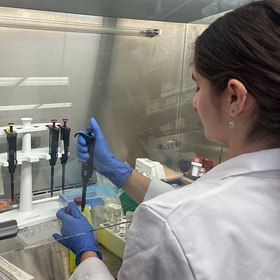
New research center set to explore treatments for Alzheimer’s
Since launching in April, the North Texas Alzheimer’s Disease Research Center (NT-ADRC) based at UT Southwestern Medical Center has quickly established the foundation needed to support cutting-edge research into Alzheimer’s and related dementias.
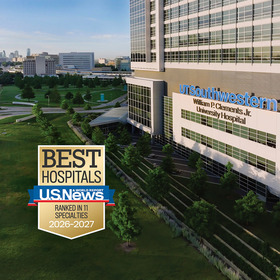
A decade of excellence: UTSW is DFW’s top hospital for 10th year in a row
For the 10th consecutive year, UT Southwestern Medical Center has been named the No. 1 hospital in Dallas-Fort Worth by U.S. News & World Report. Additionally, UTSW ranks among the nation’s top hospitals for care in 11 specialties – the most of any hospital in Texas – in the annual U.S. News Best Hospitals list released today.

How to boost enrollment of Black, Hispanic patients in pediatric clinical trials
While Black and Hispanic families are enthusiastic about research participation, other provider and systems-focused factors may influence their involvement in pediatric oncology clinical trials, a new UT Southwestern Medical Center-led study has found.

Autoantibodies could play key role in cancer progression and prevention
Scientists have long sought to understand why some people with no known risk factors develop cancer while others with significant risk never do.
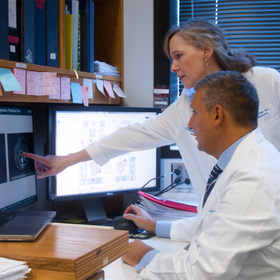
Rewriting the cancer story
Matteo Ligorio’s phone started buzzing just after 3 a.m. The texts from a hospice nurse indicated “Patient 14” had just passed away, which meant Dr. Ligorio and his team had less than four hours to honor her dying wish.

GLP-1 use rising rapidly among U.S. adolescents, young adults
Adolescents and young adults in the U.S. are increasingly using popular GLP-1 weight-loss drugs alone or in conjunction with metabolic and bariatric surgery (MBS) to manage obesity.
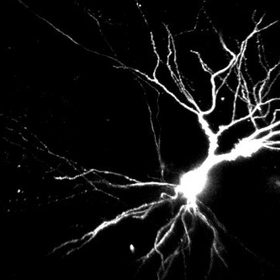
Dendrites may be key to learning and memory, study suggests
Branchlike structures called dendrites that extend from neurons appear to make their own “computations” independently of the cell body, helping individual brain cells store memories of the past, respond to the present, and anticipate the future, a study led by UT Southwestern Medical Center researchers suggests.
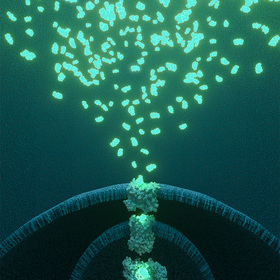
New biosensor tracks down missing metabolite from childhood brain disorder
Scientists at Children’s Medical Center Research Institute at UT Southwestern (CRI) have discovered why babies born with a rare inborn error of metabolism, called GPT2 deficiency, suffer from severe neurological impairment, according to research published in Science.
Metabolites produced by gut bacteria may protect against fungal infection
A metabolic byproduct formed when gut bacteria break down dietary fiber appears to protect against dangerous fungal infections common in immunocompromised patients, a study led by UT Southwestern Medical Center researchers shows.
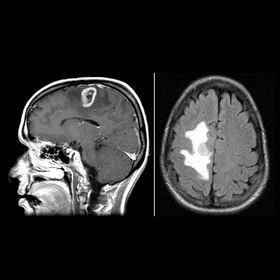
Adding drug to glioblastoma treatment may boost effectiveness
Treating glioblastoma with a class of drugs known as EGFR inhibitors made this cancer more sensitive to chemotherapy, suggests a study in preclinical models co-led by researchers at UT Southwestern Medical Center and the University of Alabama at Birmingham.