
Pediatric Infectious Disease Education
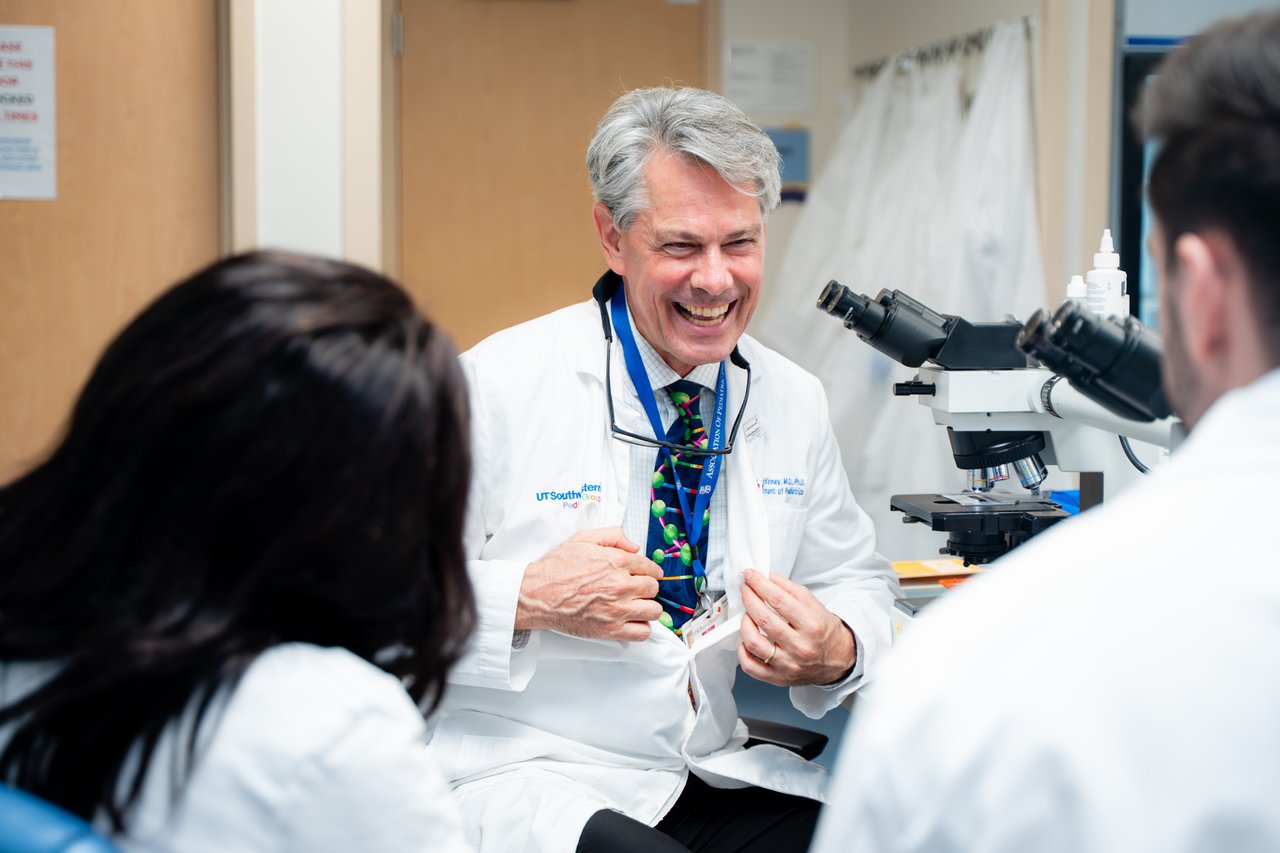
The Division of Pediatric Infectious Disease provides educational opportunities for medical students and pediatric residents in addition to its ACGME-accredited fellowship training program. We welcome visitors from other medical schools and residency training programs.
Medical Students
Medical students interact with all divisions in the Department and help manage children with a wide range of underlying medical problems, including those with presumed or proven infections.
Medical students can gain a broad experience in clinical pediatric infectious disease while rotating on the inpatient consultation services and outpatient clinics. They can choose to work in these clinics under the supervision of the fellows and faculty.
The elective rotation is open to second-, third-, and fourth-year medical students. Visitors from other medical schools and residency training programs are welcome.
Residents
Residents can work on the inpatient services and/or in the outpatient clinics:
- General Infectious Disease
- AIDS-Related Medical Services (ARMS Clinic)
- Congenital Infectious Diseases Clinic
- Tuberculosis Clinic
- Transplant Clinic
Residents can customize their elective time based on their interests. They’re given varying degrees of autonomy based on their clinical experience.
The Infectious Diseases Service is an elective-only rotation among our house officers. We are pleased to consistently attract residents who self-select training experiences in infectious diseases.
Individualized by Amanda Evans, M.D., these blocks allow residents to tailor their training, choosing among experiences in outpatient clinics, our general infectious diseases consult service, and our immunocompromised host clinical service. Residents consistently contribute to our division rounds, including via formal presentations of contemporary cases and new research findings.
In addition, trainees interested in infectious diseases can work with our colleagues in public health, transplant services, the clinical microbiology lab, and our dedicated infectious diseases pharmacists. Resident scholarly projects have been mentored by our faculty, and we take pride in facilitating nationally competitive ID fellowship searches by our UT Southwestern resident cadre.
The goals for the elective rotation include:
- Develop differential diagnoses for common and uncommon pediatric infectious disease problems and learn appropriate management strategies
- Become familiar with appropriate laboratory tests for bacterial, viral, and fungal infections, and understand the basis for interpretation of results
- Learn appropriate antimicrobial management for common community-acquired infections in infants, children, and adolescents
- Develop an understanding of antimicrobial usage and resistance to understand resistance patterns of clinical relevance
- Develop an appreciation of hospital epidemiology and public health preventive measures in pediatric infectious diseases:
- Principles of routes of transmission and preventive precautions
- Understanding which diseases must be reported to the county health department
- Familiarity with websites that may be consulted for the most up-to-date information
- Scientific basis for currently recommended vaccination issues, VAERS, etc.
- Blood/body fluid exposure prevention
- Case management/discharge planning for patients with infections requiring prolonged courses of antimicrobial therapy.
Evaluating Student Performance
Faculty members judge student and resident performance by case presentations, interpretation of clinical and laboratory information, and comprehension of the appropriate management and the daily follow-up of cases. Other factors include interest in acquiring information by reading and discussion, plus the ability to interact with patients, their families, faculty, and fellows.
The attending faculty member discusses performance with each student. Rotators assess the Division’s teaching and patient care activities by completing an evaluation form at the end of the 4-week rotation.
Course Descriptions
Fellows
A fellowship in the Division of Pediatric Infectious Disease gives fellows a solid background in classical microbiology, immunology, and molecular biology lab techniques. Clinical training includes consultations, rounds, conferences, and outpatient infectious disease clinics (see above).
The 3-year fellowship training program aims to provide individuals with sufficient background to pursue a career of independent research, teaching, and managing patients with a wide variety of pediatric infectious diseases.