
Pediatric Critical Care Medicine Research
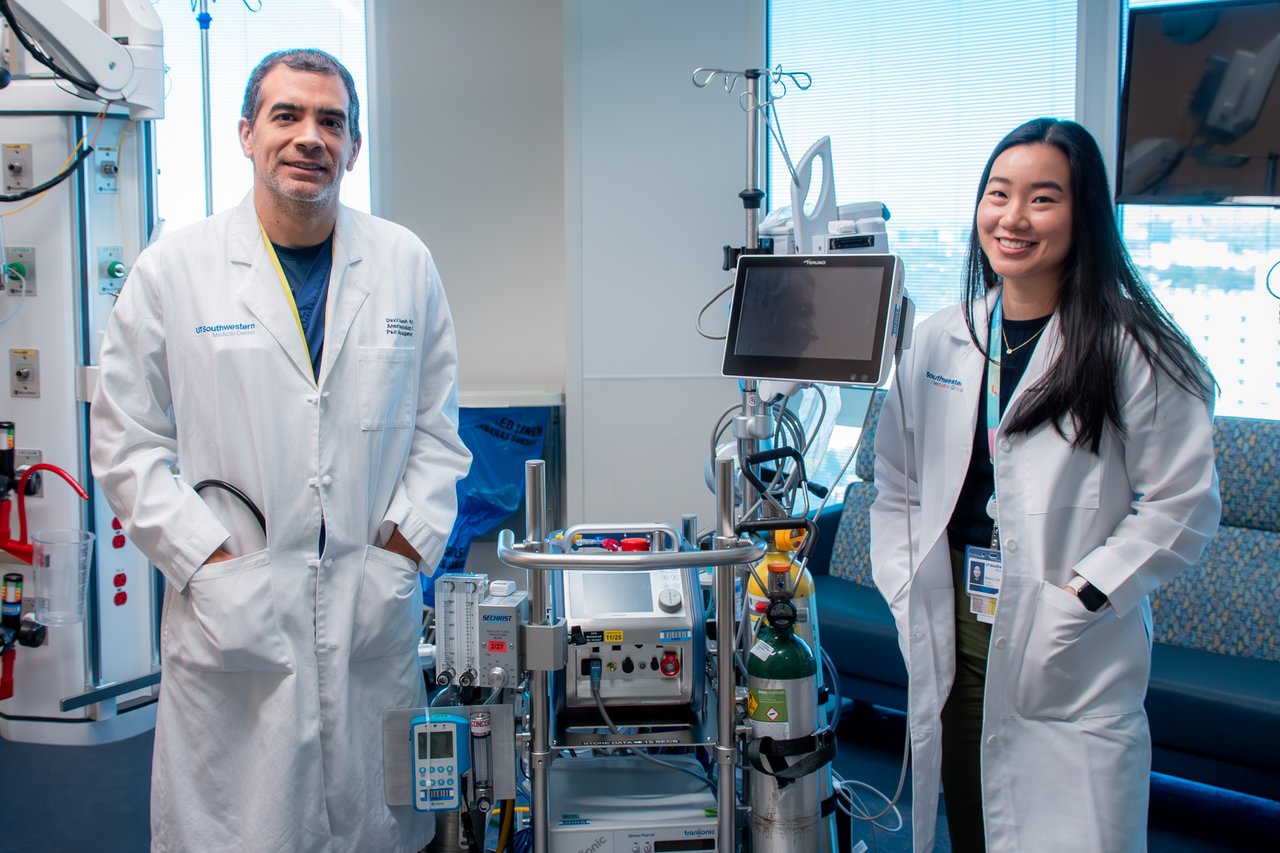
Division research activities are numerous and diverse, with faculty members engaged in basic, translational, and clinical research projects.
The Division is leading or contributing to a number of clinical investigations to determine best practices for the most common disorders, including:
- Respiratory failure from RSV infection
- Treatment of multiple organ failure
- Decreasing sedatives using non-opioid medications for children with acute respiratory failure
- Understanding neurological injuries in children requiring extracorporeal membrane oxygenation (ECMO)
We aspire to lead the field in the future with innovative strategies that leverage our School of Public Health colleagues as well as our IT expertise to conduct clinical trials more effectively and efficiently.
Faculty Research Highlights
We are proud to highlight multiple areas of investigation:
- Michael J. Bell, M.D.
Dr. Bell joined the Division in January 2025 and brought several NIH-funded projects related to traumatic brain injury, treatment of severe sepsis, and strategies to minimize opioids for children with acute respiratory failure. He is building an infrastructure within the Division so that national opportunities can be offered to children within the Dallas region for innovative therapeutic strategies. He is also working with the School of Public Health to develop infrastructure so that UTSW can lead these efforts in the future in a holistic manner.
- Matthew Borgman, M.D.
Dr. Borgman has been a prolific researcher in pediatric trauma and resuscitation. He was recently a part of the Pediatric Trauma Hemorrhagic Shock Consensus Conference, which published its guidelines in January 2023. He was also elected to the Scientific Steering Committee for the BloodNet Subgroup for the Pediatric Acute Lung Injury and Sepsis Investigators (PALISI) Network.
- Cindy Darnell Bowens, M.D., M.S.C.S.
Dr. Bowens focuses her time on quality initiatives and improving daily care for critically ill children, administrative leadership, and developing physicians to lead complex organizations.
- Archana Dhar, M.D.
Dr. Dhar is the site Principal Investigator for an NIH-funded ASCEND project involving longitudinal observation of children with acute respiratory distress syndrome (ARDS) who undergo ECMO management.
- Proshad Efune, M.D.
Dr. Efune conducts research focused on prediction of events as well as preventive strategies of respiratory events after adenotonsillectomy in high-risk children.
- Olivia Hoffman, M.D.
Dr. Hoffman focuses her research on quality improvement (QI), implementation science, and medical education. She developed and continues to lead a QI curriculum for the pediatric critical care fellows. She individually mentors fellows through QI-based scholarly projects.
Dr. Hoffman also participates in and/or co-leads several single-institution and multicenter QI initiatives. She is involved in the UTSW Quality Enhancement Plan's Team FIRST as an instructor and lead. Dr. Hoffman is the site Co-Investigator for the NIH-funded study Handoffs and Transitions in Critical Care – Understanding Scalability (HATRICC-US) (clinicaltrials.gov identifier: NCT04571749).
- Peter Luckett, M.D.
Dr. Luckett has current research interests that include clinical trials in pediatric critical care. In 2002, he was an initial organizing member of the PALISI Network clinical trials group. Recent clinical trials include a longitudinal cohort study of post-intensive care syndrome in pediatrics that has recently been concluded and PROSpect (PRone and OScillation PEdiatric Clinical Trial), an ongoing multicenter, international trial investigating ARDS ventilator management.
As a member of the PALISI Network POST-PICU Scoping Review Investigators, he has participated in the development of a core outcome measurement set for use in pediatric critical care follow-up.
- Darryl Miles, M.D.
Dr. Miles is a member of the Pediatric Neurocritical Care Research Group and works to advance the care of neurocritical illness in children and better understand how the brain responds to injury. He has participated in several large multicenter clinical trials studying hypothermia after traumatic brain injury and cardiac arrest, and recently served as the site Principal Investigator for the multicenter trial Approaches and Decisions in Acute Pediatric Traumatic Brain Injury (ADAPT). Dr. Miles is currently leading projects using automated pupillometry and transcranial Doppler technology to noninvasively measure intracranial pathology in brain-injured children.
- Alan Poole, M.D., Ph.D.
Dr. Poole was the site PI for Antithrombin Activity and Catheter-Associated Thrombosis in Critically Ill Children, a multicenter prospective cohort study of critically ill children at high risk of bleeding with central venous catheters. Findings were recently published in the Journal of Thrombosis and Haemostasis.
- Alan Poole, M.D., Ph.D., and Paige Volk, M.D.
Dr. Poole and Dr. Volk lead a group that includes multiple faculty members in the Divisions of Pediatric Critical Care and of Allergy and Immunology, and the Lyda Hill Department of Bioinformatics, studying the determinants of severe pediatric asthma exacerbations using data from Children's Health, UTSW, and the Virtual PICU Systems (nationally aggregated data from over 35 children's hospitals) and made possible by disruptions to usual seasonal patterns of asthma exacerbations caused by the COVID-19 pandemic.
- Lakshmi Raman, M.D.
Dr. Raman's interest is in brain injury and the care of ECMO patients. She has concentrated her research on the effect of chronic hypoxia on the brain and has been involved in doing prospective studies in patients on ECMO and a study comparing different concentrations of hypertonic saline in the management of intracranial hypertension in traumatic brain injury.
- Darryl Miles, M.D., and Lakshmi Raman, M.D.
Dr. Miles and Dr. Raman, in collaboration with Ann Stowe, Ph.D., have received a grant from the Texas Institute for Brain Injury and Repair (TIBIR) to study the effects of cerebral perfusion pressure in severe traumatic brain injury on central nervous system inflammation after pediatric traumatic brain injury.