Internal Medicine Community & Population Healthcare Track
About the Program
As the Dallas-Fort Worth area rapidly becomes one of the fastest-growing metropolitan areas in the U.S., UT Southwestern is committed to facing the healthcare challenges of the future by fostering the skills residents need to become highly proficient and culturally competent clinicians, educators, and healthcare leaders experienced in caring for diverse as well as underserved populations. Our distinct Community and Population Healthcare training track, embedded within our Internal Medicine Residency program, emphasizes the skills and training needed to address and reduce health disparities for the people of Dallas-Fort Worth and beyond. The Internal Medicine Community and Population Healthcare Track will welcome 15 residents per year, for a total of 45 residents over three years. Graduates of the Community and Population Healthcare Track will be poised to pursue ambulatory and hospital-based general internal medicine careers, and possess a foundation for subspecialized advanced fellowships with a focus on improving health care for all.
Preparing Leaders in the Field
The Community and Population Healthcare Track goes beyond traditional clinical training. Residents will practice academic community medicine, with a focus on Quality Improvement projects, gain a deep understanding of healthcare systems like our large Veterans Administration health system, and address social determinants of health. This track is designed to cultivate leaders who can drive change, focus on disparities, and promote well-being through public health initiatives.
- Training Sites
Innovative Training Across Leading Healthcare Systems
This track will offer residents immersive, hands-on experience across three major healthcare systems:
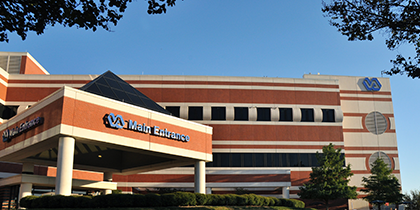 VA North Texas Health Care System
Residents will spend 50 percent of their time at the nation's second-largest VA hospital, providing comprehensive care from primary to advanced subspecialty medicine.
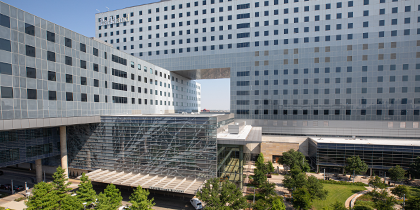 Parkland Memorial Hospital
Residents will spend 25 percent of their time at Dallas County's safety net hospital serving a diverse community, including specialized clinics for refugees, correctional health, and more.
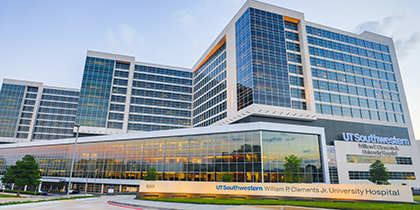 William P. Clements Jr. University Hospital
Residents will spend 25 percent of their time at our tertiary care hospital rotating through various subspecialties to ensure well-rounded clinical training.
- Curriculum
Curriculum by Year
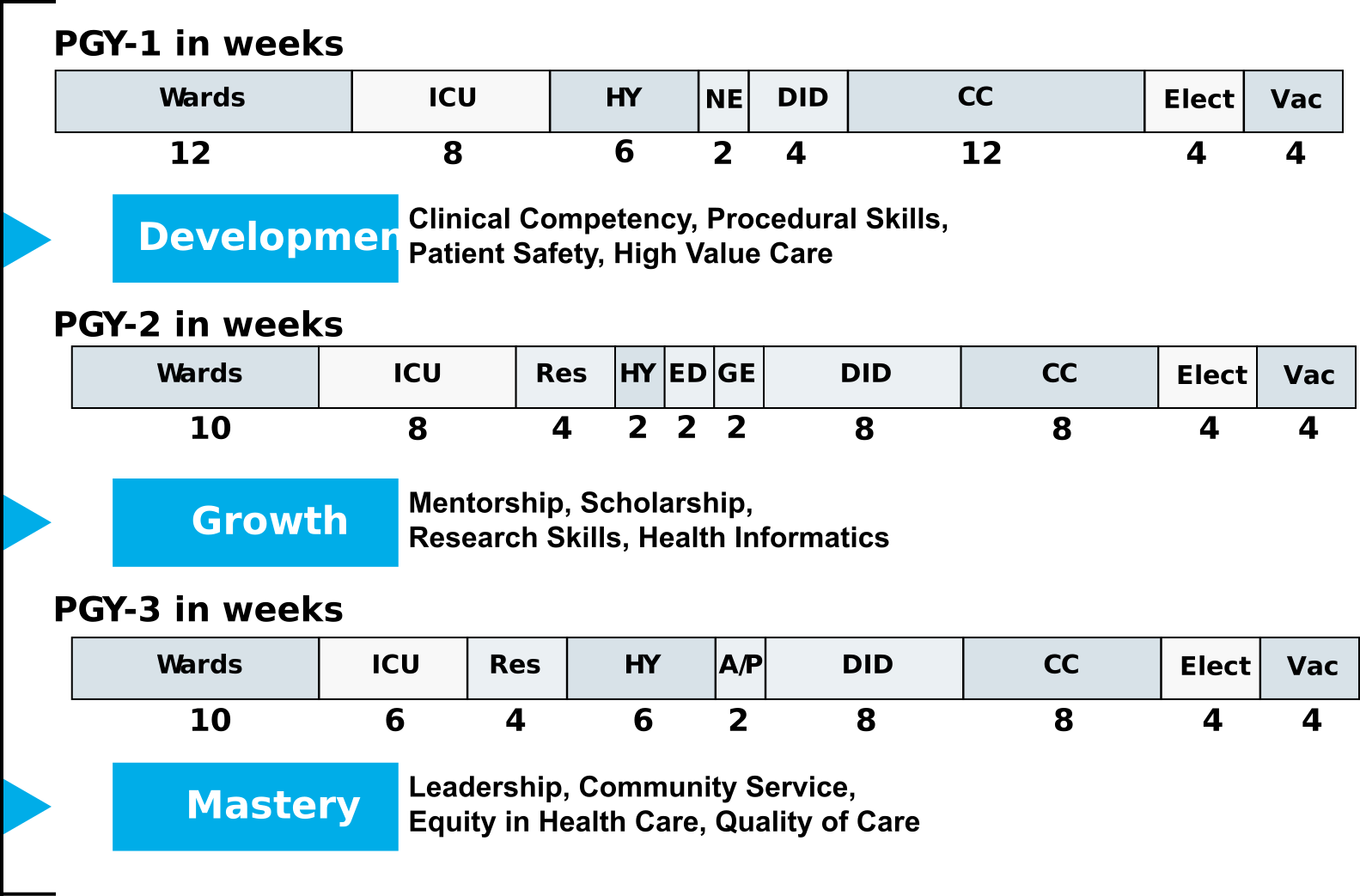
- Resident Curriculum by Year
Educational focus: Development through clinical competency, procedural skills, patient safety, and high-value care.
PGY-1 Curriculum (52 weeks)- Wards: 12 weeks
- Intensive Care Unit (ICU): 8 weeks
- Hybrid rotations: 6 weeks
- Neurology: 2 weeks
- Didactics: 4 weeks
- Continuity Clinics:12 weeks
- Elective: 4 weeks
- Vacation: 4 weeks
Educational focus: Growth through mentorship, scholarship, research skills, and health informatics.
PGY-2 Curriculum (52 weeks)- Wards: 10 weeks
- Intensive Care Unit (ICU): 8 weeks
- Research: 4 weeks
- Hybrid rotations: 2 weeks
- Emergency Department (ED): 2 weeks
- Geriatrics: 2 weeks
- Didactics: 8 weeks
- Continuity Clinic: 8 weeks
- Elective: 4 weeks
- Vacation: 4 weeks
Educational focus: Mastery through leadership, community service, equity in health care, and quality of care.
PGY-3 Curriculum (52 weeks)- Wards: 10 weeks
- Intensive Care Unit (ICU): 4 weeks
- Research: 4 weeks
- Hybrid rotations: 6 weeks
- Addiction/Palliative Care: 2 weeks
- Didactics: 8 weeks
- Continuity Clinic: 8 weeks
- Elective: 4 weeks
- Vacation: 4 weeks
Abbreviations shown in graphic
- ICU = Intensive Care Unit
- HY = Hybrid rotation
- NE = Neurology
- DID = Didactics
- CC = Continuity Clinic
- Res = Research
- ED = Emergency Department
- GE = Geriatrics
- A/P = Addiction Medicine/ Palliative Care
- Elect = Elective
- Vac = Vacation
Comprehensive Curriculum
To strengthen the sense of community and family at UT Southwestern, the Community & Population Healthcare residents are sorted into three "firms" who rotate through inpatient rotations and +2 clinic weeks together. This continuity, along with having weekends off together, helps residents form close relationships over the three years of residency and makes our large program feel much smaller.
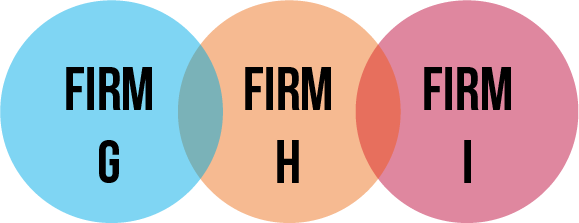
4 + 2 Highlights
- The academic year is made up of eight (8), six (6) week blocks each.
- The six weeks are broken up into a 4-week rotation followed by a +2 Continuity Clinic week. The 4-week rotations are made up of inpatient wards, ICU, electives, and hybrid rotations.
- Firms rotate through 4-week blocks together and will always be in clinic at the same time.
- Shared practice groups made up of residents in each firm help cover each other’s patient panels while they are in clinic allowing those on 4-week rotations to focus their attention on their inpatient responsibilities.
- The weekend before a +2 clinic week is always a full weekend off (“golden weekend”). This allows for planning all weekends off for the full three years of residency.
Hybrid Rotations
The Department of Internal Medicine has robust divisions in all major Internal Medicine subspecialties. During hybrid rotations, residents get broad exposure to these specialties through both inpatient and outpatient experiences at all three of our hospitals and their affiliated clinics. Residents will spend 2-to-4-weeks immersed in Nephrology, Gastroenterology, Geriatrics, Infectious Disease, Hematology/Oncology, Neurology, Palliative Care, Rheumatology, Endocrinology, Addiction Medicine, Cardiology, and Pulmonary Medicine over the course of three years. An added bonus of these rotations is that most services included in hybrid blocks allow for weekends off. Residents also rotate at specialized clinics like refugee, transgender, medication-assisted treatment and homeless outreach clinics. Residents will also have dedicated weeks for longitudinal primary care and health equity experiences with mentorship from faculty members in the O’Donnell School of Public Health.
Sample Block Schedule
Block 1 Block 2 Block 3 Block 4 PGY 1 PMH Wards +2 CUH Wards +2 VA Wards +2 VA CPICU +2 PGY 2 CUH Wards +2 VA Wards +2 ED/Wards Night Float +2 VA CPICU +2 PGY 3 PMH Wards +2 VA Wards +2 Wards/Renal Hybrid +2 VA CPICU +2 Block 5 Block 6 Block 7 Block 8 PGY 1 PMH MICU +1 Elective +1 Neuology/Hematology Oncology Hybrid +1 GI Hybrid +1 PGY 2 CUH MICU +1 Elective +1 Geriatics/ ID Hybrid +1 Research/EROC +1 PGY 3 PMH MICU +1 Elective +1 Addiction/Palliative +1 PMH Wards +1 PMH: Parkland Memorial Hospital
CUH: Clements University Hospital
VA: Dallas Veterans Affair Medical Center
CPICU: Cardiopulmonary ICU
EROC: Emergency Resident On-CallRotations Available
Sub-Specialty PMH CUH VA General Wards Yes Yes Yes MICU Yes Yes No Combined MICU/CCU No No Yes Cardiology Yes No No Advanced Cardiac Care Service No Yes No Hybrid Rotations - Nephrology Yes Yes Yes Hybrid Rotations - GI/Liver Yes Yes Yes Hybrid Rotations - Infectious Disease Yes Yes Yes Hybrid Rotations - Hematology/Oncology Yes Yes Yes Hybrid Rotations - Neurology Yes Yes Yes Hybrid Rotations - Rheumatology/Endocrinology Yes Yes Yes Hybrid Rotations - Cardiology/Pulmonary Yes Yes Yes - Resident Curriculum by Year
- Application and Interview Process
The Community and Population Healthcare Track is a unique training pathway within the UT Southwestern Internal Medicine Residency. We accept applications to the track through ERAS and the Community and Population Healthcare track has its own NRMP code: 2835140C5.
The Interview Process
The Community and Population Healthcare Track is a part of the larger Internal Medicine Program, so we want to ensure that all applicants have a chance to learn about both the Internal Medicine Residency in general and the Community and Population Healthcare Track specifically. Applicants take part in the larger General IM Residency interview process and then have additional interview elements to learn about the training sites, experiences, and people who make up the Community and Population Healthcare Track.
- Salary and Benefits
House Staff Stipends for 2026-2027
Program Year Annual Stipend Program Year 1 $71,657 Program Year 2 $74,258 Program Year 3 $77,686 Program Year 4 $82,225 Program Year 5 $86,343 Program Year 6 $89,505 Program Year 7 $95,050 Program Year 8 $100,944 Benefits
Residents in the Community and Population Healthcare Track are employed by UT Southwestern. This arrangement allows for the fullest integration with the O'Donnell School of Public Health possible.
UT Southwestern offers a robust benefits package that includes free health insurance for employees, affordable dependent coverage, dental and vision plans, flexible spending accounts, wellness programs, and personalized support services to promote overall well-being.
Additional Benefits offered to Residents
Malpractice Insurance
All residents are enrolled in professional liability insurance administered by The University of Texas System Professional Medical Liability Benefit Plan. Coverage is effective upon enrollment and extends to all training sites during the duration of residency training.
Paid Time Off
Residents will be provided with four weeks of PTO each academic year from July 1 to June 30th.
- For Parkland, PTO will be front loaded at the start of employment
- For UTSW employed, 8.33 PTO hours will be accumulated each month
Up to one month per academic year is permitted for time away from training, including vacation, holiday, illness, family medical leave, bereavement leave, pregnancy related leave. In accordance with ACGME Policy, residents are provided six weeks (240 hours) of approved maternal, parental, and caregiver leave of absence. The Maternal, Paternal, Caregiver leave benefit is 100% paid and runs concurrently with Family and Medical Leave Act (FMLA).
Parking
Free parking is provided at all campus and hospital sites.
Uniforms
Residents are provided two pairs of scrubs and one jacket with embroidered name and program. Additional scrubs are available at hospital sites.
Meals
Free lunch is provided every week day during noon conference at the three main hospital sites (Parkland, Clements University Hospital, Dallas VA). Parkland and CUH meal cards are allocated for meal purchases during overnight call.
Education and Travel Allowance
Each resident is allocated $2,000 each academic year to cover educational and travel expenses:
- $1000 towards educational expenses (e.g. textbooks, board prep courses, journal subscriptions, board examinations, etc.)
- $1000 towards conference travel expenses
Also included
- In-house moonlighting opportunities available
- Residents' lounge – An oasis in the middle of it all; stocked with coffee, a refrigerator, a microwave, sofas, cable television, and a ping-pong table!
- VPN accounts for home access to our hospital's medical records and library resources
- Free access to AMBOSS for all residents and UWorld bulk purchased and covered by educational expenses.
- UT System site license for Microsoft Office software
Leadership

Professor & Chair
Program Director
Associate Program Director
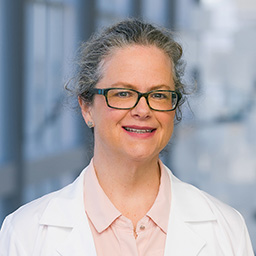
Associate Program Director
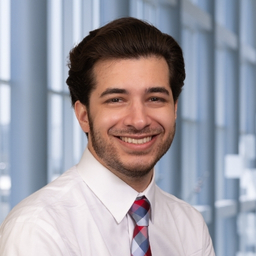
Nilesh Kapoor, M.D.
QSV Chief Resident
Contact Us
Internal Medicine Residency Program
UT Southwestern Medical Center
5323 Harry Hines Blvd.
Dallas, TX 75390-9030
Phone: 214-648-2287
Email