
Search
Meet the second-quarter winners of the Strauss Awards for service excellence - CT Plus - UT Southwestern
https://www.utsouthwestern.edu/ctplus/stories/2020/strauss-awards-q2-2020.html
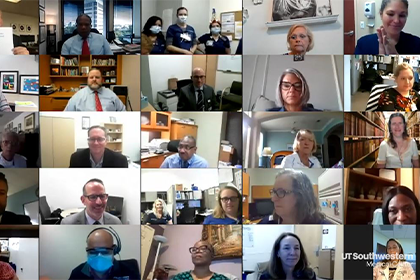
Every quarter, we recognize shining stars within our UT Southwestern Health System – employees who provide exceptional patient care, as well as those who stand out in vital supporting roles.
Bringing ‘black box’ technology to the operating room - CT Plus - UT Southwestern
https://www.utsouthwestern.edu/ctplus/stories/2020/or-black-box.html
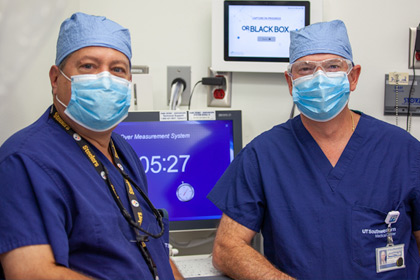
In August, UT Southwestern became the second hospital in the United States to begin using the OR Black Box system in its operating rooms. Developed by Surgical Safety Technologies Inc. (SST) in Toronto, the OR Black Box is installed in five operating rooms at William P. Clements Jr. University Hospital, where cameras, microphones, and links to patient monitors have been installed.
When technology becomes magic: Virtual conferences with Teams - CT Plus - UT Southwestern
https://www.utsouthwestern.edu/ctplus/stories/2020/virtual-conference.html

The third annual Simulation-Based Quality Improvement and Research Forum on May 13 became the first UT Southwestern conference to be held virtually using the Microsoft Teams platform. More than 430 people from over 70 institutions took part in the conference, including representatives from UT Dallas, UT Arlington, Baylor Scott & White, Penn State University, University of Chicago, and Northwestern University. One attendee even signed on from Lisbon, Portugal.
UTSW chaplains provide comfort and hope to families of COVID-19 patients - CT Plus - UT Southwestern
https://www.utsouthwestern.edu/ctplus/stories/2020/chaplains-covid.html

For UTSW’s hospital chaplains, the COVID-19 pandemic is changing daily routines as well.
Statistical Planning, Analysis, and Clinical Informatics Fellowships: Neurology - UT Southwestern, Dallas, Texas
https://www.utsouthwestern.edu/departments/neurology/subspecialties/biostatistics/fellowship.html
Statistical Planning, Analysis, and Clinical Informatics Fellowships Lorem ipsum dolor sit amet, consectetur adipiscing elit. Fusce nec hendrerit lacus. Quisque egestas fermentum tortor in vehicula. Pellentesque vitae velit dolor. Curabitur congue lorem turpis, sed facilisis metus ornare id. Donec co…
Graduate School launches PROVIDES Program to increase faculty diversity - CT Plus - UT Southwestern
https://www.utsouthwestern.edu/ctplus/stories/2020/provides-program.html
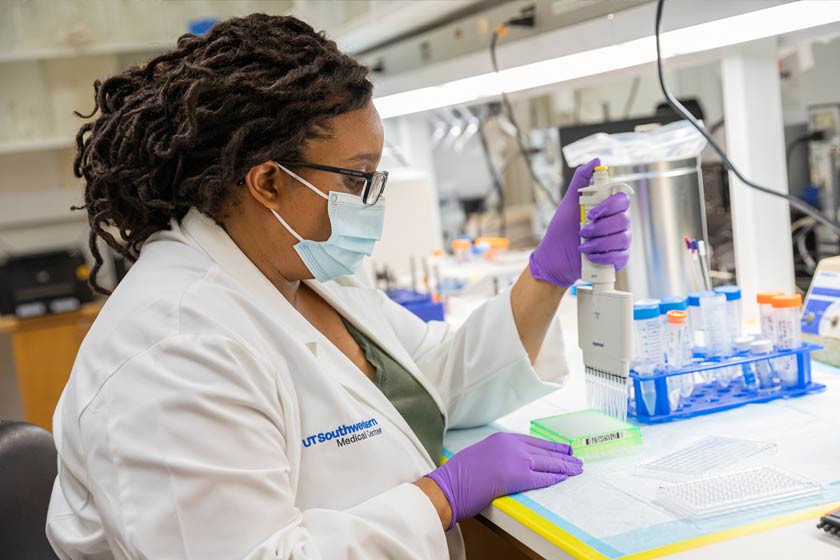
To increase diversity among UT Southwestern’s researchers and faculty, leaders in the Graduate School of Biomedical Sciences have instituted a new program that provides mentorship and other resources to early career scientists from minority groups underrepresented in biomedical science.
Student and resident mental health and wellness: 'It's OK to not be OK' - CT Plus - UT Southwestern
https://www.utsouthwestern.edu/ctplus/stories/2020/student-mental-health.html
Managing stress and anxiety is a normal part of life for medical students, residents, and fellows. But the unprecedented nature of the COVID-19 pandemic presents a different type of psychological challenge for learners on campus.
Surviving COVID-19: Beating the virus is just the beginning - CT Plus - UT Southwestern
https://www.utsouthwestern.edu/ctplus/stories/2020/covid-patient-recovery.html

Mr. Lynn-Royerth has hazy memories of the intubation but knew he was in good hands. “UT Southwestern has great facilities and you can see that the doctors and nurses genuinely care,” he said.
Immunohistochemistry & Immunofluorescence: Frozen Sections: CORT - UT Southwestern, Dallas, TX
https://www.utsouthwestern.edu/research/cort/research-projects-support/protocols/ihc-if.html
Protocol for immunohistochemistry and immunofluorescence frozen sections.
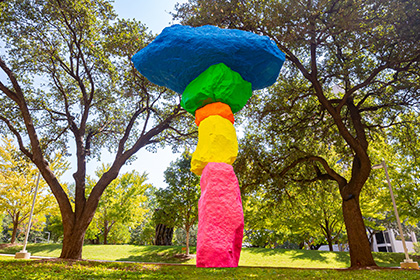
Vibrant monolith is a ‘rock star’ addition to sculpture garden - CT Plus - UT Southwestern Medical Center
https://www.utsouthwestern.edu/ctplus/stories/2024/goldstein-sculpture-ugo.html
Office of Institutional Opportunity hosted “She Talks,” a forum featuring remarkable women leaders of UT Southwestern. Modeled after “TED Talks,” the event celebrated Women’s History Month by recognizing the unique perspectives and backgrounds of women in the UTSW community.