

Research Design & Methods
Biostatistics, Epidemiology, and Research Design (BERD)
BERD provides complimentary consultation and research support for early-career clinical scholars who are developing projects and working toward independent funding.
A common challenge for investigators early in their research careers is the gap between having an important research question and obtaining the funding needed to access biostatistical or data science collaboration that can help advance the work. BERD’s mission is to help bridge this gap by providing access to biostatistics, epidemiology, research design, and analytic expertise during the early stages of project and career development.
Our goal is to help investigators build the foundation needed to compete successfully for pilot awards, career development grants, and extramural funding opportunities.
Who We Support
BERD is designed to support early-career clinical scholars who do not yet have funding to support biostatistical or data science collaboration
Types of Support
BERD consultations may include:
- Study design and methodological guidance
- Statistical analysis planning
- Pilot and preliminary data analyses
- Sample size and power calculations
- Guidance for grant applications and career development awards
- Interpretation and presentation of analytic results
Support Model
BERD provides targeted consultation and limited complimentary analytic support through the CTSA program.
Our goal is to provide early-stage support that helps investigators advance toward sustainable, funded research collaborations.
Because BERD resources are intended to support clinical scholars during the early stages of research development, projects with available funding for dedicated biostatistical or data science support may be referred to other institutional or departmental resources for ongoing or longitudinal collaboration.
Collaboration and Referrals
We work collaboratively with investigators to identify the most appropriate level of support for each project. When another group or institutional resource is better suited to provide sustained analytic collaboration, BERD will help connect investigators to those resources.
Request a Consultation
Ready to get started with BERD? Click the button below to complete the intake form.
https://redcap.link/BERDRequest
Have questions about BERD services? Please ResearchMethods@UTSouthwestern.edu us.
Always cite the CTSA Grant as follows:
Research reported in this publication was supported by the National Center for Advancing Translational Sciences of the National Institutes of Health under award Number UL1 TR003163. Content is solely the responsibility of the authors and does not necessarily represent the official views of the NIH (National Institutes of Health). The authors thank the UT Southwestern Research Design & Methods team for statistical and data analysis expertise.
Affiliated Faculty
Director Research Design & Methods
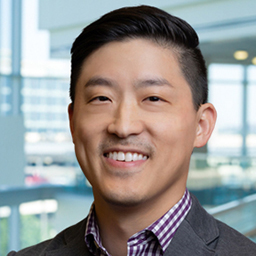
Dr. Liao is a Professor of Internal Medicine and in the Peter O’Donnell Jr. School of Public Health at UT Southwestern Medical Center. Dr. Liao has extensive experience and expertise in health policy and population health interventions, with emphasis on quantitative program evaluation and implementation of behaviorally designed care delivery interventions.
Expertise: Health policy, health care payment, population health, value-based care, and behavioral economics
BERD
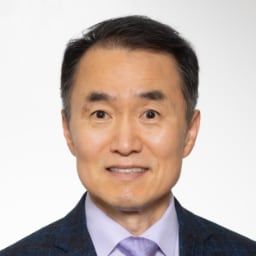
Dr. Ahn is a Professor in the O’Donnell School of Public Health and Director of Biostatistics Shared Resources at the Harold C. Simmons Comprehensive Cancer Center. Previously, he served as Director of Biostatistics for the BERD Core. Dr. Ahn has served as biostatistics leader for research projects and clinical trials and has over 520 peer-reviewed publications. He has extensive experience in the design and analysis of preclinical, clinical, epidemiologic, and population studies. Additionally, he has authored numerous methodological papers on the design and analysis of correlated data as well as two books: Sample Size Calculations for Clustered and Longitudinal Outcomes in Clinical Research and Design and Analysis of Pragmatic Trials.
Expertise: Design and analysis of clinical trials, causal inference, and observational analysis
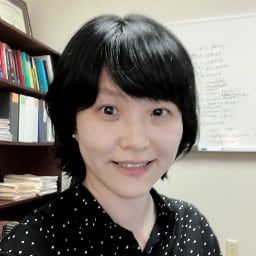
Dr. Lee is an Associate Professor in the O’Donnell School of Public Health. She also serves as Chair of the Population Science Protocol Review and Monitoring Committee (PRMC) at Simmons Cancer Center. Dr. Lee’s research focus centers around developing and applying innovative statistical methods to solve challenges and issues found in various research areas.
Expertise: Statistical analysis and design for disease prevention/behavioral intervention trials, multilevel data/longitudinal data analysis, biomarker data analysis, and lifestyle behavioral data analysis
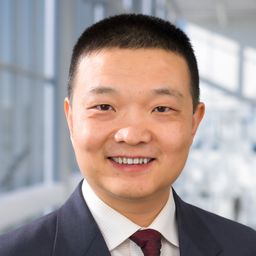
Dr. Zhang is a Professor in the O’Donnell School of Public Health and Director of the UTSW CTSA Program BERD (Biostatistics, Epidemiology, and Research Design) initiative. He also serves as an expert of experimental design on the National Cancer Institute Central Institutional Review Board (Adult CIRB – Early Phase Emphasis). His research interests include Bayesian hierarchical modeling and clinical trial design. He has co-authored two books: Sample Size Calculations for Clustered and Longitudinal Outcomes in Clinical Research and Design and Analysis of Pragmatic Trials. As a Principal Investigator, Dr. Zhang has received funding from the Patient-Centered Outcomes Research Institute (PCORI), the National Institutes of Health (NIH), and the National Science Foundation (NSF) to support his research.
Expertise: Design and analysis of clinical trials, observational studies, large national database analysis, and Bayesian hierarchical models
Specialized Support - BERD Collaborating Faculty
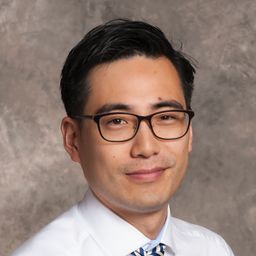
Dr. Hong is an Assistant Professor of Internal Medicine and in the O’Donnell School of Public Health and oversees the Delivery Redesign for Innovation, Value, and Equity (DRIVE) and Clinical Research, Evaluation, and Data Office (CREDO) initiatives as part of his role as Director, Research & Scholarship, in the Division of General Internal Medicine. His research interests include understanding how patients and clinicians interact within the health care system.
Expertise: Health services, insurance claims, health records, interrupted time series, care delivery, and quality of care

Dr. Jackson is a Professor of Internal Medicine and in the O’Donnell School of Public Health. A health care epidemiologist and implementation scientist with a background in health administration, he joined UT Southwestern in 2023 as Director of the Advancing Implementation & Improvement Science Program in the O’Donnell School of Public Health. The goal is to develop a system to identify potentially successful projects using implementation and improvement science, which uses rigorous, data-driven research to expand programs and improve a community’s health.
Expertise: Implementation science and improvement science
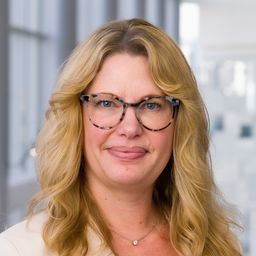
Dr. Kitzman is an Associate Professor in the O’Donnell School of Public Health and Director of the Office of Community Health and Research Engagement. Her expertise is in randomized and pragmatic studies at the community or clinic level to improve health outcomes in those experiencing poverty and ethnic minority groups. She also has proficiency in patient reported outcomes, electronic health record data, community-based study implementation, and qualitative, quantitative, and biospecimen measurements.
Expertise: Patient and community-engaged translational and clinical research and recruitment in lower income and underrepresented in biomedical research populations
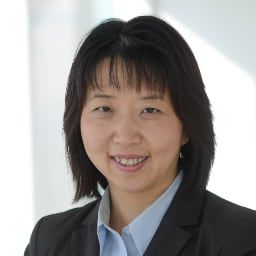
Dr. Xie is a Professor in the O’Donnell School of Public Health and the Lyda Hill Department of Bioinformatics, serves as Associate Dean of Data Science, and holds the Raymond D. and Patsy R. Nasher Distinguished Chair in Cancer Research, in Honor of Eugene P. Frenkel, M.D. She is the founding Director of the Quantitative Biomedical Research Center, the Data Science for Precision Health Initiative, and the Pediatric Cancer Data Core at UT Southwestern. She has served as a regular member of the NIH Biodata Management and Analysis Study Section and is an adviser to the journal Lancet Digital Health. With training in statistics, medicine, and epidemiology, she has a comprehensive understanding of developing and validating quantitative methods for precision health applications.
Expertise: Machine learning and artificial intelligence, predictive modeling, and biomarker discovery
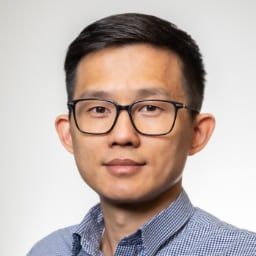
Dr. Yang is an Assistant Professor in the O’Donnell School of Public Health and Director of the Biostatistics and Data Science Core, where he leads a team to provide informatics, analytics, and technological support to UTSW investigators and beyond. His research focuses on developing methods, platforms, and infrastructure for the integration and analysis of multimodal health care and biomedical data to address clinically important questions. Dr. Yang has extensive experience working with electronic health records, claims, medical notes, and imaging and molecular profiling data. Outcomes from his research include new clinical insights from these real-world data, assessments of health and health care disparities, and data commons platforms for various disease domains.
Expertise: Data science, health informatics, machine learning, and natural language processing