
What happens when a key cancer defense fails?
UTSW-led study reveals chain reaction that begins when p53 gene is switched off, offering clues to how cancer develops
DALLAS – Oct. 07, 2026 – A tumor suppressor gene known as p53 is mutated in more than half of all cancers, but how it acts to prevent cancer formation is largely unknown. A study by UT Southwestern Medical Center researchers sheds light on this phenomenon by showing what happens when p53 becomes disabled, revealing the gene’s diverse roles in maintaining healthy metabolic activity, repressing mobile genes called retrotransposons, and preventing cells from adopting features of sperm and eggs.
“The p53 gene is widely recognized as the most commonly mutated cancer gene. Our work is the first to examine the immediate consequences of p53 loss at the single-cell level in real time,” said corresponding author John Abrams, Ph.D., Professor of Cell Biology and a member of the Harold C. Simmons Comprehensive Cancer Center at UT Southwestern. The study published in Genes & Development.
Described as the “guardian of the genome,” p53 helps protect cells by activating tumor-suppressing genes and turning off tumor-driving genes when DNA is damaged by factors such as genotoxic chemicals or ionizing radiation. But research led by Dr. Abrams and others indicates p53 may have a “steady state” function when cells aren’t stressed, which could also contribute to cancer suppression.
Studying this potential function in unstressed cells has been difficult since there hasn’t been a reliable way to turn off p53 and investigate the immediate effects in real time. In conventional platforms used to study p53 deficiency – such as p53-mutated tumor cells from patients, or genetically engineered mouse models or cell lines in which the gene has been deleted – there’s a significant lag from p53 loss to when the resulting cancerous changes appear. Thus, what happens right after p53 turns off is unclear and obscured by other changes that appear in the aftermath.
To elucidate the more immediate changes, mouse cells were genetically engineered so that p53 turned off after the cells were exposed to a drug called tamoxifen. One change Dr. Abrams and his colleagues noticed within 48 hours was that cells without working p53 switched from the metabolic pathway known as oxidative phosphorylation to a metabolic pathway characteristic of cancer cells called Warburg metabolism.
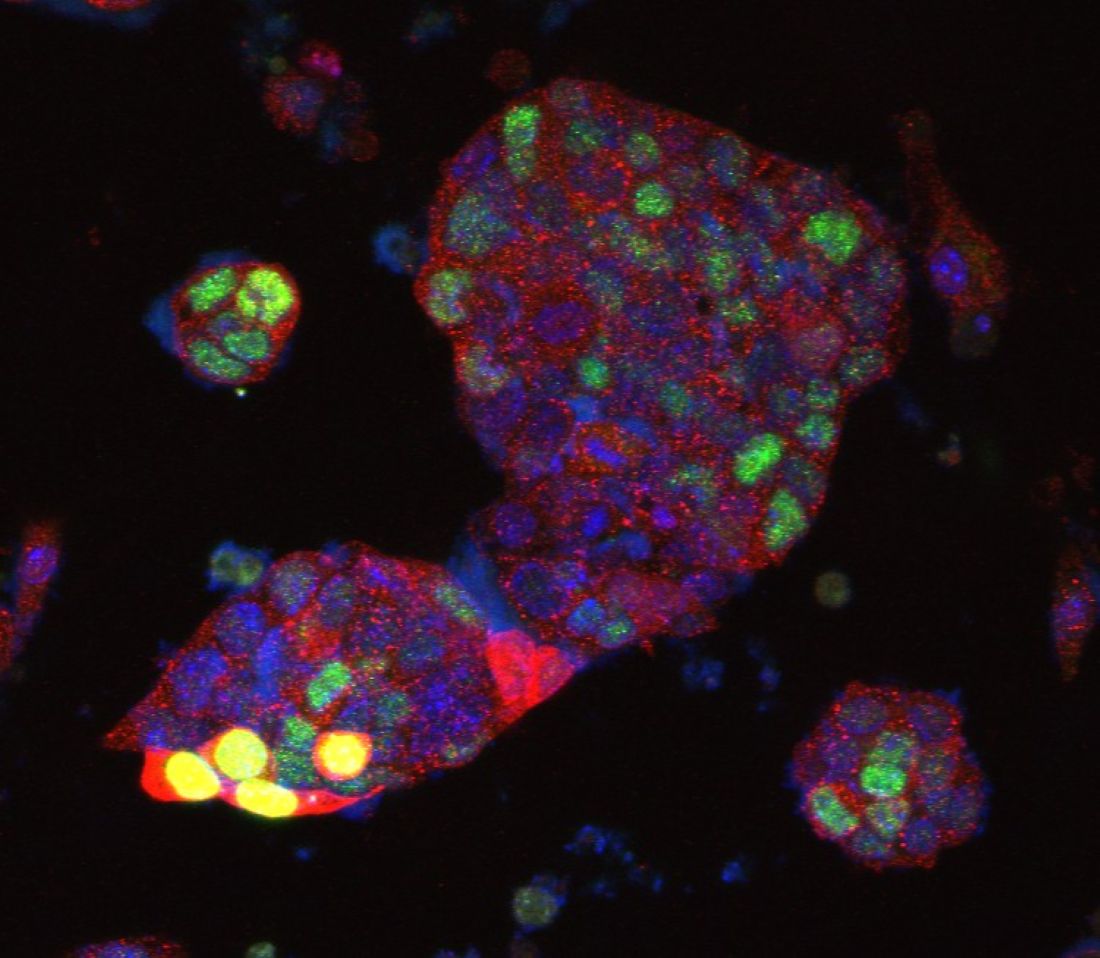
Rather than oxidizing nutrients to release chemical energy as healthy cells do, Warburg metabolism causes cells to derive energy from consuming large amounts of glucose and fermentation that produces lactic acid. Instead of being a long-term consequence of tumor development as some researchers have hypothesized, this finding suggests the switch to Warburg metabolism is relatively immediate once p53 is disabled, Dr. Abrams explained.
Similarly, previous research had shown that retrotransposons – “jumping genes” that can change their places in the genome but that largely remain dormant in healthy cells – can become reactivated in p53-mutant cells, but the timeline of this derepression has been unclear. The new study showed that this change happens immediately following p53 elimination, causing widespread effects throughout the genome.
Another important change the researchers saw in the altered cells was a fast shift to genetic programs seen exclusively in sperm and egg cells, including activation of the genes necessary for meiosis, a type of cell division that produces cells with only one copy of each chromosome.
How these consequences of p53 inactivation eventually cause healthy cells to become malignant remains unknown and will be investigated in future studies, Dr. Abrams said. A better understanding of this process could lead to new ways to treat cancer and prevent its development in patients at high risk, such as those with some familial cancer syndromes. For example, if retrotransposon reactivation from p53 deficiency plays a significant role in cancer development, doctors might eventually prescribe reverse transcriptase inhibitors – drugs typically used to treat HIV/AIDS that are also known to inhibit retrotransposons – as a strategy to lower a person’s risk of developing cancer.
Other researchers from UTSW who contributed to this study are first author Yang Fan, Ph.D., postdoctoral researcher in the Abrams Lab; Ralph DeBerardinis, M.D., Ph.D., Director of the Eugene McDermott Center for Human Growth and Development, Director of the Genetic and Metabolic Disease Program at Children’s Medical Center Research Institute at UT Southwestern, Professor of Pediatrics, and member of the Simmons Cancer Center; Amanda Jones, Ph.D., Instructor of Cell Biology; Yi Ding, Ph.D., Research Associate; and Chendong Yang, M.D., Ph.D., Senior Research Associate.
This study was funded by grants from the National Institutes of Health (R01GM115682, R01CA222579, R35CA220449, R01HD103627, and R01GM138565), the Cancer Prevention and Research Institute of Texas (RP240127, RP180778, and RR170076), and The Welch Foundation (I 2261 and I-2088); support from the New York Stem Cell Foundation and the Howard Hughes Medical Institute Investigator Program; and a National Cancer Institute Cancer Center Support Grant (P30CA142543).
About UT Southwestern Medical Center
UT Southwestern, one of the nation’s premier academic medical centers, integrates pioneering biomedical research with exceptional clinical care and education. The institution’s faculty members have received six Nobel Prizes and include 28 members of the National Academy of Sciences, 26 members of the National Academy of Medicine, and 14 Howard Hughes Medical Institute Investigators. The full-time faculty of nearly 3,400 is responsible for groundbreaking medical advances and is committed to translating science-driven research quickly to new clinical treatments. UT Southwestern physicians in more than 80 specialties care for more than 143,000 hospitalized patients, attend to more than 470,000 emergency room cases, and oversee nearly 5.3 million outpatient visits a year.