
Renowned researcher joining UTSW is among recipients of up to $25 million Cancer Grand Challenges award
Jean-Laurent Casanova, M.D., Ph.D., is part of a global team that will focus on solving one of cancer’s biggest questions
DALLAS – March 05, 2026 – Jean-Laurent Casanova, M.D., Ph.D., an internationally recognized expert in the fields of genetics, immunology, and infectious diseases who will be joining UT Southwestern Medical Center on July 1, has been selected along with a global team of researchers to receive a Cancer Grand Challenges award of up to $25 million.
The Cancer Grand Challenges initiative, co-founded in 2020 by the National Cancer Institute and Cancer Research UK, provides funding over approximately five years to interdisciplinary teams equipped to address the most complex research questions surrounding cancer. Dr. Casanova and his colleagues and collaborators will be an integral part of the Cancer Grand Challenge’s ATLAS team, which will explore the role of immune-modulating autoantibodies (auto-Abs) in cancer resistance.
“My team and I are deeply honored to be participating in Cancer Grand Challenges and to expand our efforts to understand why certain people remain remarkably resistant to cancers,” said Dr. Casanova, who has served as Professor at The Rockefeller University in New York since 2008 and has led the St. Giles Laboratory of Human Genetics of Infectious Diseases. “By applying genetic and immunological approaches, we hope to uncover protective mechanisms that could guide new strategies for cancer prevention and treatment.”
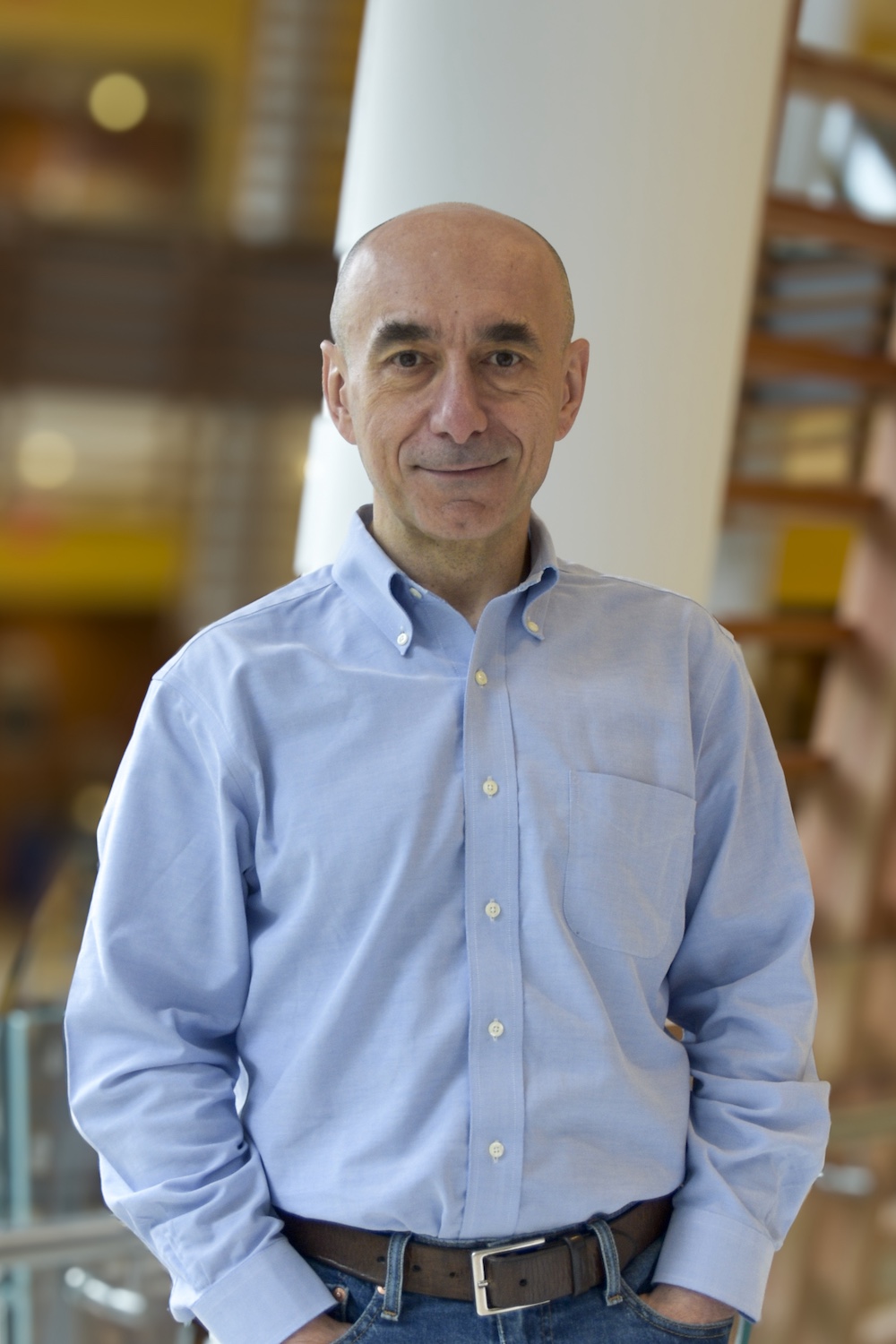
Dr. Casanova’s research into single gene “inborn errors of immunity” has transformed the understanding of why certain otherwise healthy individuals are uniquely vulnerable to specific viruses and bacteria, including influenza, West Nile virus, and COVID-19. Over three decades, his research has uncovered more than 80 genes that, when mutated, impair the body’s ability to fight off specific infections, as well as several auto-Abs underlying specific infections. By pinpointing precise genetic defects that disrupt key immune pathways, his work is guiding new approaches to personalized care.
The ATLAS team will be led by Paul Bastard, M.D., Ph.D., at Imagine Institute of the Necker Hospital for Sick Children in Paris. The team’s research will seek to uncover the biological mechanisms underpinning tumor resilience in the host to understand what protects certain individuals from developing cancer. The investigators plan to incorporate human cohorts, including those 100 years or older, cancer-free individuals with high-risk exposures, and cancer-discordant twin pairs, into their cutting-edge research.
“Cancer Grand Challenges unites exceptional research teams from across the globe to tackle the most complex problems in cancer,” said David Scott, Ph.D., Director of Cancer Grand Challenges. “Together, we’re creating opportunities for bold team science that could redefine what’s possible for people affected by cancer.”
ATLAS is one of five Cancer Grand Challenges teams announced this week, spanning nine countries, 34 institutions, and including more than 42 researchers. Total funding for all five is $125 million.
When Dr. Casanova joins UTSW, he will serve as Professor in the Center for the Genetics of Host Defense and Children’s Medical Center Research Institute at UT Southwestern (CRI), and will have dual appointments in the Departments of Pediatrics and Immunology. He and his lab will continue their pioneering research into the fundamental role that genes play in the body’s ability – or inability – to fight infections and now cancer.
“The field of inborn errors of immunity is advancing at an extraordinary pace, and few scientists have contributed as profoundly to its momentum as Dr. Casanova. His ability to connect genetic variation with immune dysfunction is both elegant and transformative,” said Bruce Beutler, M.D., 2011 Nobel Laureate and Director of the Center for the Genetics of Host Defense. “Bringing a scientist of this caliber to UT Southwestern significantly strengthens our capabilities and will accelerate innovation, helping us better understand the mechanisms that protect – or fail to protect – the human body.”
Drs. Beutler and Casanova have collaborated on several studies linking human genetic deficiencies to specific, severe infections over the last 20 years.
Dr. Casanova earned his M.D. at the University of Paris Descartes and went on to specialize in pediatrics. He completed his Ph.D. in immunology at University of Paris Pierre and Marie Curie and co-founded the Laboratory of Human Genetics of Infectious Diseases at Imagine Institute. He is a member of the National Academy of Sciences and the National Academy of Medicine and an Investigator of the Howard Hughes Medical Institute. His work has been recognized recently with two prestigious international awards: the 2025 Novo Nordisk Prize and the 2023 Maria I. New International Prize for Biomedical Research.
More information at: New Teams Announcement | Cancer Grand Challenges
About UT Southwestern Medical Center
UT Southwestern, one of the nation’s premier academic medical centers, integrates pioneering biomedical research with exceptional clinical care and education. The institution’s faculty members have received six Nobel Prizes and include 28 members of the National Academy of Sciences, 26 members of the National Academy of Medicine, and 14 Howard Hughes Medical Institute Investigators. The full-time faculty of nearly 3,400 is responsible for groundbreaking medical advances and is committed to translating science-driven research quickly to new clinical treatments. UT Southwestern physicians in more than 80 specialties care for more than 143,000 hospitalized patients, attend to more than 470,000 emergency room cases, and oversee nearly 5.3 million outpatient visits a year.
About Cancer Grand Challenges
Co-founded in 2020 by two of the largest funders of cancer research in the world, Cancer Research UK and the National Cancer Institute, Cancer Grand Challenges supports a global community of diverse, world-class research teams to come together, think differently and take on some of cancer’s toughest challenges. These are the obstacles that continue to impede progress and no one scientist, institution or country will be able to solve them alone. With awards of up to $25 million, Cancer Grand Challenges teams are empowered to rise above the traditional boundaries of geography and discipline to make progress against cancer we urgently need. Cancer Grand Challenges now brings together 1,800 researchers and 21 teams from across the world to take on 18 challenges. Team ATLAS is funded by Cancer Research UK and the Torrey Coast Foundation through Cancer Grand Challenges.