
Protein coordinates responses to environmental stress
UTSW researchers identify central signaling pathway that enables survival without the need for genetic change
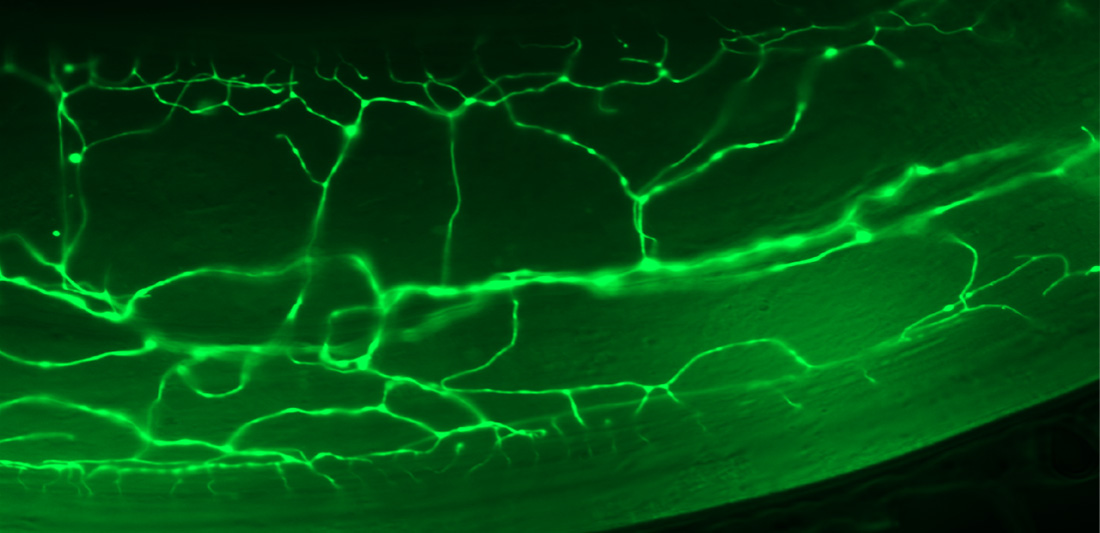
DALLAS – May 14, 2026 – UT Southwestern Medical Center researchers have discovered a key molecular mechanism that allows animals to adapt to changing environmental conditions without altering their genes – an ability known as phenotypic plasticity. The findings, published in Science Signaling, provide a foundation for future studies that could lead to new treatments for a wide range of diseases and disorders, including inflammatory and immune conditions, neurodegenerative diseases, and cancer.
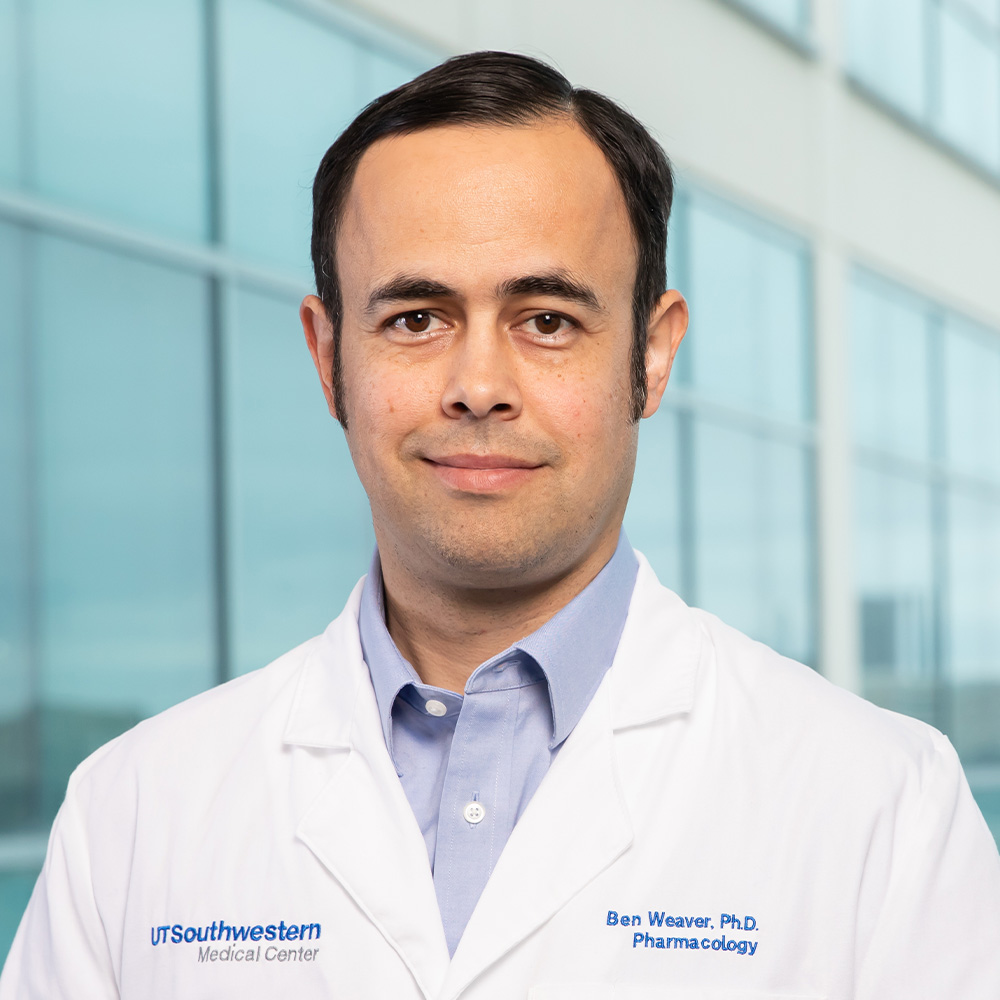
“This work has just unearthed a vastly underexplored area of basic biology: understanding how changes in the environment can trigger an array of responses within a population of animals. In the future, better understanding of phenotypic plasticity will provide us with a unique opportunity to tune distinct outcomes, leading to healthier responses to stressful environmental conditions,” said study leader Benjamin Weaver, Ph.D., Associate Professor of Pharmacology and Physiology and a Virginia Murchison Linthicum Scholar in Medical Research at UT Southwestern.
The Weaver Lab studies interactions between genes and the environment that affect health. For decades, a key question in this field is how organisms cope with extreme environmental stressors such as excessive heat or cold, heavy exposure to ultraviolet light, or long periods of dehydration or starvation – particularly stressors that individuals have never experienced. Although new genetic variants to help survive challenging conditions can evolve over time, changes to the genome typically take millennia.
“Animals aren’t worried about what will happen 10 million years from now – they’re worried about how to survive in the next five minutes,” Dr. Weaver said. “Yet, how does an animal change its characteristics without changing its genes?”
To answer this question, he and his colleagues focused on a protein called mitogen-activated protein kinase (MAPK) p38. This protein had long been recognized as a stress sensor with diverse roles in development, and it’s found in organisms throughout the animal kingdom as well as in yeast. Previously, it was believed that p38 acted like a switch, turning on or off various molecular pathways in response to changing conditions. But these responses can be opposing even in the same condition, Dr. Weaver explained. For example, p38 appears to promote both cell survival and cell death; in cancer, it can act as both a tumor suppressor and a tumor promoter.
Noted Dr. Weaver: “p38 seems to play both sides of every game.”
To better understand this protein’s role in a live animal, the researchers developed a new analytical method called ContinuumID. It serves as a molecular proximity sensor, allowing researchers to see which proteins come into contact with a selected protein across different tissues, development stages, and environmental conditions.
Dr. Weaver and two of his colleagues – Wang Yuan, Ph.D., Research Scientist and the study's first author, and Yi Weaver, Ph.D., Senior Research Scientist, both in the Weaver Lab – developed this method for use on a p38 family member known as PMK-1 in Caenorhabditis elegans, a roundworm commonly used as a lab model. The researchers found that PMK-1 appeared to interact with more than 1,000 proteins, most of them only under certain circumstances. The connections occurred in different tissues, at different stages of development, and in response to different stressors. When the team examined the known roles of these proteins, most were involved in regulating gene expression.
Additional experiments showed that the same stressor prompted a variety of responses among individual C. elegans worms, even in worms that were genetic clones. These results suggest that PMK-1 doesn’t act as a switch that just turns on and off, but more like a thermostat that can produce a range of outcomes.
This flexibility could help explain why PMK-1 and its counterpart p38 in mammals have been conserved throughout evolution in all animal species, Dr. Weaver said. Although specific outcomes may not benefit every individual, having a range could ensure survival of the population.
The researchers plan to continue studying p38 to better understand how it senses stress and determines which proteins to interact with – knowledge that could help steer its behavior toward healthful responses.
Also contributing to this study was Luke A. Nunamaker, B.S., Research Technician at UT Southwestern.
This study was funded by grants from The Welch Foundation (I-2260-20250403), the National Institute of General Medical Sciences (R35GM133755), and the National Institute on Aging (R21AG086710).
Dr. Weaver is a member of the Cellular Networks in Cancer Research Program in the Harold C. Simmons Comprehensive Cancer Center as well as the Hamon Center for Regenerative Science and Medicine at UT Southwestern.
About UT Southwestern Medical Center
UT Southwestern, one of the nation’s premier academic medical centers, integrates pioneering biomedical research with exceptional clinical care and education. The institution’s faculty members have received six Nobel Prizes and include 27 members of the National Academy of Sciences, 25 members of the National Academy of Medicine, and 13 Howard Hughes Medical Institute Investigators. The full-time faculty of nearly 3,400 is responsible for groundbreaking medical advances and is committed to translating science-driven research quickly to new clinical treatments. UT Southwestern physicians in more than 80 specialties care for more than 143,000 hospitalized patients, attend to more than 470,000 emergency room cases, and oversee nearly 5.3 million outpatient visits a year.