
Gut bacteria boost immune system, help send vitamin A to T cells
Pathways linking microbes to nutrients could be therapeutic targets, UTSW researchers find
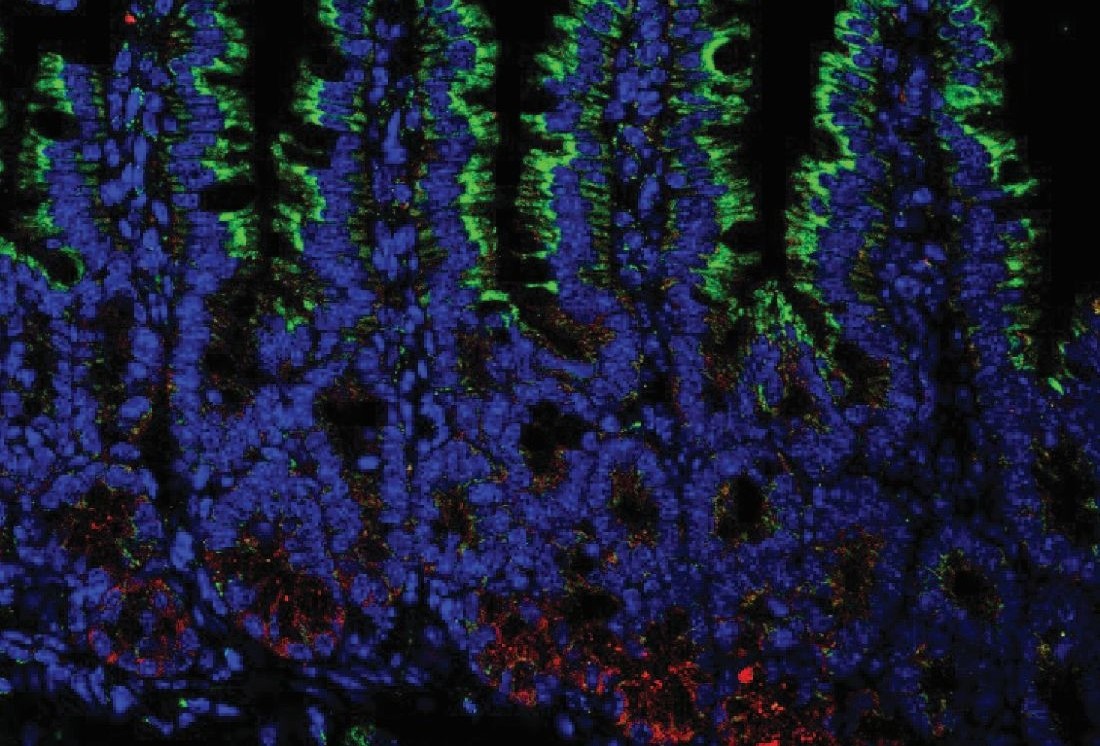
DALLAS – July 07, 2026 – Scientists at UT Southwestern Medical Center have discovered that gut bacteria help regulate the development of the body’s immune system by directing the movement of vitamin A through a previously unrecognized cellular network. The preclinical findings, published in Cell Host & Microbe, could reshape how researchers view conditions in which immune development is disrupted, highlighting nutrient pathways as potential targets for therapeutic intervention.

“We’ve known for years that both gut microbes and vitamin A are important for building a healthy immune system,” said first author Tarun Srinivasan, Ph.D., a third-year medical student in UT Southwestern’s Perot Family Scholars Medical Scientist Training Program entering his third year of medical school. “What we didn’t understand was how those two were connected. This study identifies the pathway that links them.”
The study’s co-corresponding authors are Lora Hooper, Ph.D., Chair and Professor of Immunology and Professor in the Center for the Genetics of Host Defense and of Microbiology, and Andrew Koh, M.D., Professor of Pediatrics, Chief of the Division of Pediatric Hematology and Oncology, and Professor of Microbiology. Both are members of the Harold C. Simmons Comprehensive Cancer Center.
The immune system relies on vitamin A-derived signals to guide the development of T cells, a class of immune cells that protects the body from infection. Researchers have long known both vitamin A and the gut microbiome are essential for immune development, but exactly how these factors work together has remained unclear.
UTSW scientists found that gut bacteria in mice trigger a stepwise transfer of vitamin A between cells. The process begins in the intestinal lining, where microbes stimulate production of a vitamin A-binding protein called serum amyloid A (SAA). SAA delivers vitamin A to immune cells in the intestine, which then carry it to nearby lymph nodes and pass vitamin A-derived signals to developing T cells.

When gut bacteria were removed, this vitamin A delivery system was largely shut down, leaving developing T cells unable to mature properly or migrate to the intestine. Because these steps are essential for building a functional immune defense, disruptions in this pathway could impair the body’s ability to respond to infections or maintain normal immune balance. Researchers further showed this pathway became increasingly active during early life – a critical window when the immune system is being programmed – suggesting interruptions during this period could have lasting consequences.
Together, this work shows gut microbes are not just passive residents – they actively control how a key nutrient signal reaches the cells that build the immune system.
Study authors said the findings may help explain how antibiotic exposure during early life influences immune development. Because the newly identified pathway depends on signals from gut microbes, disruptions in the microbiome could interfere with how vitamin A-derived signals are delivered to the developing immune cells. Understanding this process may help explain links between early-life microbiome disruption and increased risk of infections, inflammatory conditions, or poor immune regulation later in life.
“One of the long-standing mysteries in the field has been how the gut microbiome communicates with the developing immune system,” Dr. Hooper said. “Our study shows vitamin A is a key part of that conversation. It’s exciting because it reveals how gut microbes and nutrients from the diet work together to help build a healthy immune system early in life.”

The findings reveal gut microbes do more than simply stimulate immune cells. They also control how a key nutrient-derived developmental signal is distributed throughout the immune system.
This research suggests immune development may depend not only on the availability of nutrients such as vitamin A, but also on the body’s ability to deliver those nutrients to the right immune cells at the right time.
“These findings point to vitamin A signaling as a potentially actionable way to tune immune responses,” Dr. Koh said. “From a translational standpoint, that raises the possibility that carefully modulating this pathway could one day help improve the balance between efficacy and toxicity in cancer immunotherapy.”
A complete list of authors from UTSW can be found in the study.
This study was supported by grants from the National Institutes of Health (R01 DK070855, R01 CA231303, P01 AI179406, T32 AI007520) and The Welch Foundation (I-1874); the Walter M. and Helen D. Bader Center for Research on Arthritis and Autoimmune Diseases; the UT Southwestern and Children’s Health Cellular and ImmunoTherapeutics Program (CITP); the Howard Hughes Medical Institute; and the National Cancer Institute Cancer Center Support Grant (P30CA142543).
Dr. Hooper holds the Jonathan W. Uhr, M.D. Distinguished Chair in Immunology. Dr. Koh holds the Grant A. Dove Distinguished Chair for Research in Oncology.
About UT Southwestern Medical Center
UT Southwestern, one of the nation’s premier academic medical centers, integrates pioneering biomedical research with exceptional clinical care and education. The institution’s faculty members have received six Nobel Prizes and include 28 members of the National Academy of Sciences, 26 members of the National Academy of Medicine, and 14 Howard Hughes Medical Institute Investigators. The full-time faculty of nearly 3,400 is responsible for groundbreaking medical advances and is committed to translating science-driven research quickly to new clinical treatments. UT Southwestern physicians in more than 80 specialties care for more than 143,000 hospitalized patients, attend to more than 470,000 emergency room cases, and oversee nearly 5.3 million outpatient visits a year.