
How to boost enrollment of Black, Hispanic patients in pediatric clinical trials
UTSW-led study identifies elements that may help improve participation among marginalized families whose children have cancer

DALLAS – July 31, 2026 – While Black and Hispanic families are enthusiastic about research participation, other provider- and systems-focused factors may influence their involvement in pediatric oncology clinical trials, a UT Southwestern Medical Center-led study has found. The findings, published in JAMA Network Open, focused on parent and clinician perspectives, revealing opportunities to increase clinical trial participation for historically marginalized patients to help improve outcomes and make trial results more generalizable.
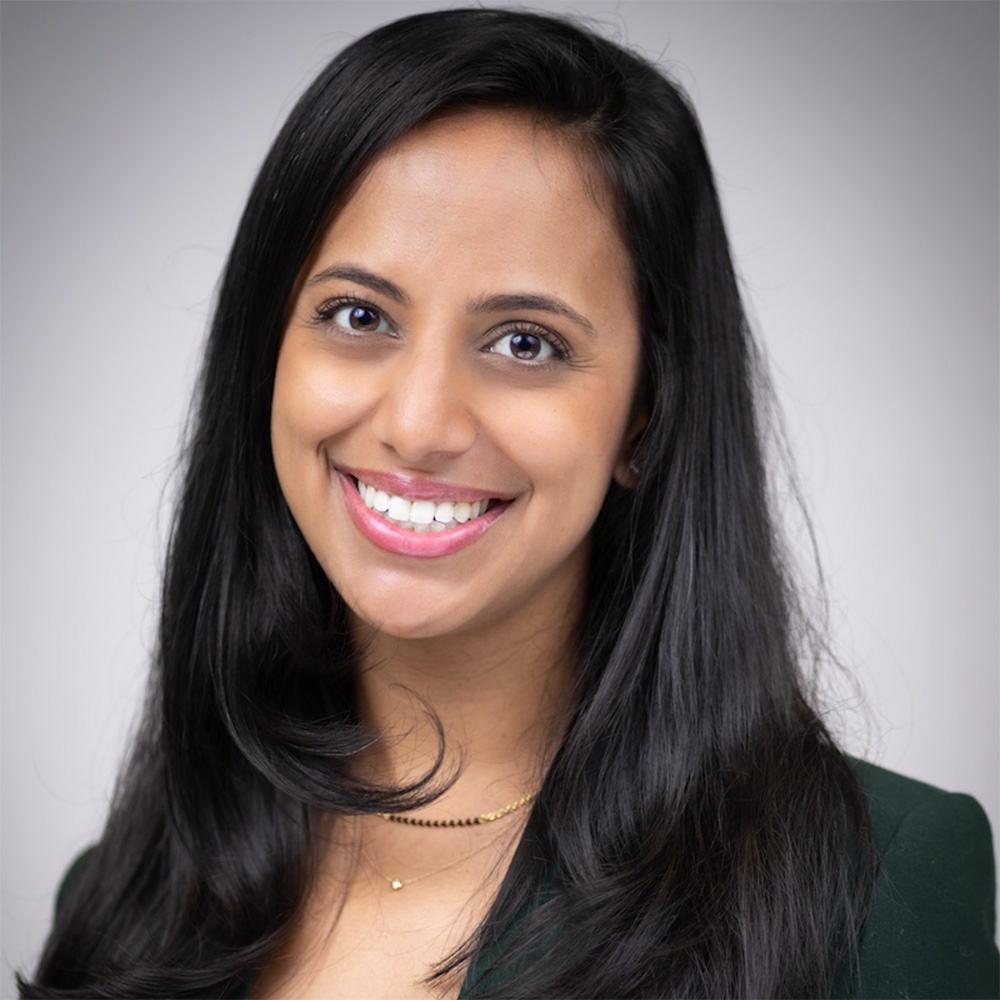
“This is one of the first studies to center on the perspectives of Black and Hispanic families regarding research participation,” said the study’s lead author, Puja Umaretiya, M.D., M.S., Assistant Professor of Pediatrics and a member of the Population Science and Cancer Control Research Program in the Harold C. Simmons Comprehensive Cancer Center at UT Southwestern. “Our findings highlight that historically marginalized parents are very willing to participate in clinical trials, if offered. Efforts to reduce clinician gatekeeping – where doctors decide not to offer clinical trials based on assumptions – and address material hardship are needed to improve equitable participation.”
While survival rates for children with cancer have drastically improved from 10% to 85% over the past 75 years, research suggests disparities persist, with Black and Hispanic children continuing to have lower survival rates than white children.
Efforts to address these gaps include increasing participation in clinical trials, which provide access to new therapies and help ensure findings apply broadly across patient populations. However, a 2024 study by the U.S. Department of Health and Human Services that sampled National Institutes of Health-funded clinical trials found that most of them missed enrollment targets for underrepresented groups.
Despite the importance of clinical trial participation, there is limited data on the perspectives of Black and Hispanic families related to involvement. To better understand these views, researchers surveyed 60 parents of Black and Hispanic children with cancer and 15 clinicians from Dana-Farber Cancer Institute. About 73% of participating families reported experiencing household material hardship, which includes insecurity with food, housing, transportation, or utilities.
Using surveys from all participants and interviews with a subset of 20 participating parents and the 15 clinicians, researchers identified factors that facilitated clinical trial participation as well as those that acted as barriers.
Two key factors that both parents and clinicians identified as facilitators of participation were altruism and trustworthiness. Notably, a majority of parents reported very high levels of trust in their oncology team. When it came to barriers for participation, parents and clinicians cited the informed consent discussion required for trial participation and difficult-to-understand trial materials. They noted these factors were particularly challenging for families who did not speak English.
While clinicians perceived issues related to household material hardship and the experimental nature of clinical trials as barriers for families to participate, parents did not identify these as drivers in their decision-making, highlighting a discrepancy between parent-clinician perceptions. Clinicians also identified gatekeeping as it relates to the willingness to engage families and the adherence to trial requirements related to financial hardship as potential barriers.
“Equitable clinical trial participation is important because it ensures that our research is generalizable, identifies mechanisms that may drive worse outcomes for certain populations, and improves the trustworthiness of the medical system. There is more we can do to support participation of marginalized families, such as ensuring that we are offering trials to all families and supporting them with resources needed to successfully participate,” Dr. Umaretiya said.
Other UTSW researchers who contributed to this study are Sandi Pruitt, Ph.D., M.P.H., Professor of Social and Behavioral Sciences in the Peter O’Donnell Jr. School of Public Health and Associate Director of Community Outreach and Engagement in the Simmons Cancer Center, and Gabriella Nguyen, M.D., Assistant Professor of Pediatrics.
This work was supported by a grant from Dana-Farber Cancer Institute and the National Institutes of Health (NCI 1K08CA304376).
About UT Southwestern Medical Center
UT Southwestern, one of the nation’s premier academic medical centers, integrates pioneering biomedical research with exceptional clinical care and education. The institution’s faculty members have received six Nobel Prizes and include 28 members of the National Academy of Sciences, 26 members of the National Academy of Medicine, and 14 Howard Hughes Medical Institute Investigators. The full-time faculty of nearly 3,400 is responsible for groundbreaking medical advances and is committed to translating science-driven research quickly to new clinical treatments. UT Southwestern physicians in more than 80 specialties care for more than 143,000 hospitalized patients, attend to more than 470,000 emergency room cases, and oversee nearly 5.3 million outpatient visits a year.