
Stiffer colon could signal risk of early-onset colorectal cancer
Findings from study co-led by UTSW provide potential mechanism for malignancy that’s rapidly increased in past few decades
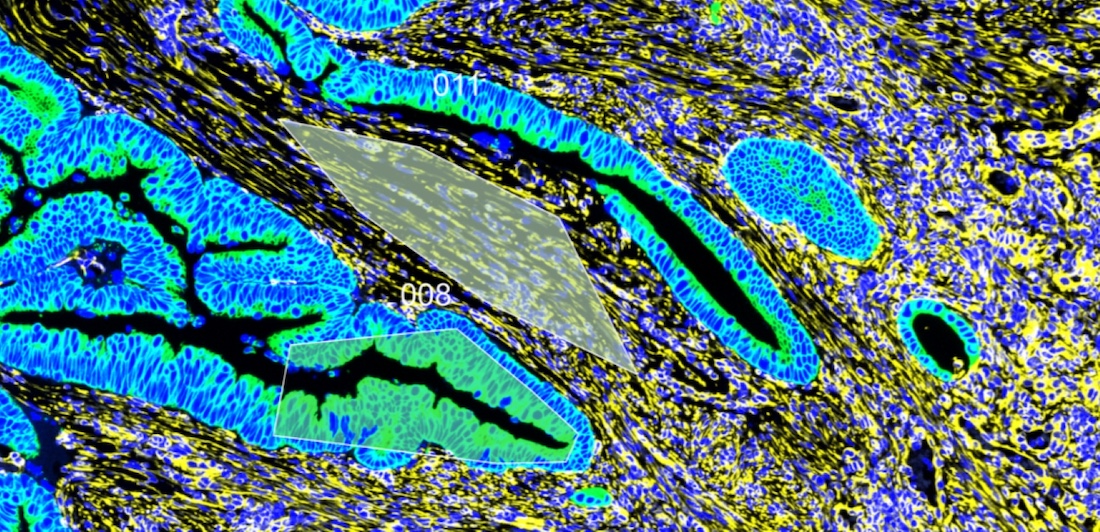
DALLAS – Dec. 23, 2025 – Increased stiffness of the colon, spurred by chronic inflammation, may encourage the development and progression of early-onset colorectal cancer (CRC), a study co-led by UT Southwestern Medical Center researchers suggests. The findings, published in Advanced Science, could lead to new ways to prevent and treat this deadly subset of CRC.
“We consider this study a significant advancement toward identifying those at risk of early-onset CRC and finding new ways to treat them,” said Emina Huang, M.D., M.B.A., Professor of Surgery in the Division of Colon and Rectal Surgery and Executive Vice Chair of Research for Surgery at UT Southwestern. She is also Professor of Biomedical Engineering and in the Harold C. Simmons Comprehensive Cancer Center.
UT Southwestern partnered with researchers from The University of Texas at Dallas on the study.
“This is the first study to highlight the key role of biomechanical forces in the pathogenesis of early-onset CRC,” said Jacopo Ferruzzi, Ph.D., Assistant Professor of Bioengineering at UT Dallas and Biomedical Engineering at UT Southwestern. “Our observations are consistent across multiple length scales and link connective tissue stiffening to altered biochemical signaling in cancer cells.”
CRCs that are not caused by genetic syndromes and that occur at an average age of over 50 are known as average-onset or sporadic CRCs. The incidence and deaths from average-onset CRC have decreased over the last three decades. At the same time, the incidence and deaths from CRCs that occur before age 50, known as early-onset CRCs, have risen dramatically during the same period. Early-onset CRC now comprises about 12% of all CRCs diagnosed in the U.S. since 2020.
The reason for this rapid increase is unknown. Most research in this area has focused on lifestyle, excess weight, and environmental exposures that could potentially drive CRC by causing chronic intestinal inflammation. However, why chronic inflammation might lead to early-onset CRC has been unclear.
Dr. Huang explained that chronic inflammation can cause scarring, gradually increasing the stiffness of tissues over time. Such stiffness is known to drive development and progression in some other cancer types, such as breast and pancreatic cancers. She and her colleagues wondered whether a similar phenomenon might spur early-onset CRC.
To answer this question, researchers worked with intestinal tissue from patients who underwent surgery to remove their cancerous tumors at William P. Clements University Hospital and Parkland Health: 19 samples from patients with average-onset CRC and 14 from patients with early-onset CRC. Each sample included not only malignant tumors but also their noncancerous margins. Tests showed that both the tumors and the noncancerous tissue were significantly stiffer in samples from patients with early-onset CRC compared with those from patients with average-onset CRC. These findings suggest that an increase in stiffness may have preceded early-onset CRC development.
Searching for a reason for this increased rigidity, researchers examined the collagen in both sample types, a protein that increases in abundance and changes conformation with scarring. They found that collagen in the early-onset samples was denser, longer, more mature, and more aligned than those in the average-onset samples. Those factors underscore the role of scarring in early-onset CRC tissue.
When scientists compared gene activity in the two sample types, they saw a significant increase in the expression of genes associated with collagen metabolism, blood vessel formation, and inflammation in the early-onset CRC tissues, further reinforcing that scarring from chronic inflammation is responsible for tissue stiffness. Importantly, they also noticed an uptick in a molecular pathway responsible for mechanotransduction, a process in which cells convert mechanical forces into biochemical signals. This suggests that cells in the early-onset CRC samples might change their behavior based on the stiffness of their environment.
Not surprisingly, when the researchers grew CRC cell lines on substrates with various levels of rigidity, they found that the cells multiplied quicker on stiffer substrates and increased rigidity. Similarly, three-dimensional organoid models made from CRC cells grew bigger faster on stiffer substrates.
Together, Dr. Huang said, these findings suggest that a more rigid environment might cause CRC to initiate and grow in those who develop early-onset CRC. They also reinforce the idea that disrupting mechanotransduction molecular pathways in these cells could halt or reverse CRC initiation and growth, a strategy currently being explored for some other cancers. Developing diagnostic tests to assess intestinal stiffness could help identify those at risk of early-onset CRC, Dr. Huang added, much like colonoscopies have done for average-onset CRC.
A complete list of UTSW contributors can be found in the study.
Dr. Huang holds the Doyle L. Sharp, M.D. Distinguished Chair in Surgical Research. She is a member of the Cellular Networks in Cancer Research Program at Simmons Cancer Center.
This study was funded by the National Institutes of Health (R01 CA234307 and U01 CA214300), The University of Texas at Dallas Office of Research and Innovation through the CoBRA program, the Burroughs-Wellcome Trust, the American Society of Colon and Rectal Surgeons Resident Research Initiation Grant, The University of Texas at Dallas Bioengineering Research Award, the UT Southwestern Whole Brain Microscopy Facility, an Axioscan 7 Award, the Catherine and James McCormick Charitable Foundation supporting research in early-onset colorectal cancer, and a National Cancer Institute (NCI) Cancer Center Support Grant (P30 CA142543).
About UT Southwestern Medical Center
UT Southwestern, one of the nation’s premier academic medical centers, integrates pioneering biomedical research with exceptional clinical care and education. The institution’s faculty members have received six Nobel Prizes and include 28 members of the National Academy of Sciences, 26 members of the National Academy of Medicine, and 14 Howard Hughes Medical Institute Investigators. The full-time faculty of nearly 3,400 is responsible for groundbreaking medical advances and is committed to translating science-driven research quickly to new clinical treatments. UT Southwestern physicians in more than 80 specialties care for more than 143,000 hospitalized patients, attend to more than 470,000 emergency room cases, and oversee nearly 5.3 million outpatient visits a year.
About Parkland Health
Parkland Health is one of the largest public hospital systems in the country. Premier services at the state-of-the-art Parkland Memorial Hospital include the Level I Rees-Jones Trauma Center, the only burn center in North Texas verified by the American Burn Association for adult and pediatric patients, and a Level III Neonatal Intensive Care Unit. The system also includes two on-campus outpatient clinics – the Ron J. Anderson, MD Clinic and the Moody Outpatient Center, as well as more than 30 community-based clinics and numerous outreach and education programs. By cultivating its diversity, inclusion, and health equity efforts, Parkland enriches the health and wellness of the communities it serves. For more information, visit parklandhealth.org.