
Students and Trainees in Anesthesiology Research
About Us
STAR (Students and Trainees in Anesthesiology Research) is the Department of Anesthesiology & Pain Management’s centralized program that coordinates and serves as the primary platform for all trainee research activities. STAR supports medical students, residents, fellows, and other trainees who are interested in clinical, translational, and quality improvement (QI) research by providing administrative coordination, mentor matching, research onboarding and credentialing guidance, and access to a searchable faculty project database. Through STAR, learners can identify and join active, data-generating projects for both Scholarly Activity and sustained, long-term research involvement.

Our Mission
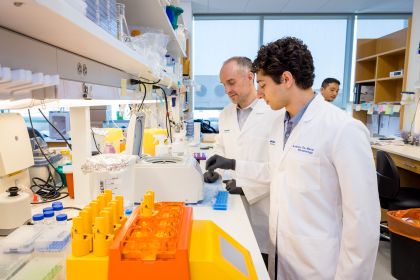
STAR’s mission is to provide centralized research coordination and administration, connecting medical students and trainees with UTSW faculty leading clinical and quality improvement (QI) projects. The program offers practical research guidance and support to help learners take part in meaningful, hypothesis-driven work and navigate the research process effectively.
Our Goals
- Serve as the central coordination point within the Professional Office Building 1 (POB1, 3rd floor), helping align learners, faculty, and ongoing clinical and QI research efforts.
- Coordinate and streamline research onboarding and credentialing (CITI, IRB training, and hospital/departmental requirements) so learners can get started efficiently.
- Support mentor matching and help learners build strong research relationships and networks within the department.
- Provide structured guidance through learner-focused sessions on research fundamentals, expectations, and professional practices (e.g., research etiquette).
- Offer administrative coordination and connect learners with available research support resources, including coordinators and biostatistical support.
Why Participate in STAR?
STAR helps learners gain practical experience in clinical research, quality improvement, data collection, scholarly writing, abstract preparation, and long-term academic mentorship. The program is designed to help trainees move from initial interest to meaningful participation in active departmental projects.
Getting Started with STAR Research
If you are interested in getting involved in research through STAR, please follow the steps below:
-
Review the IRB Project List to explore ongoing clinical research projects and identify potential areas of interest.
-
Consider your research interests and availability before contacting the STAR team. This may include the type of project you would like to join, your preferred level of involvement, and whether you are interested in short-term Scholarly Activity or longer-term research participation.
-
Complete the Research Interest Form. This form is required in order to participate in STAR and helps the team understand your interests, experience, and project preferences.
-
Complete required onboarding and training modules, if applicable, including CITI training and other hospital or departmental requirements outlined in the additional resources.
-
The STAR team will review your submission and help guide next steps, including project matching, mentor connection, and onboarding.
QI projects are not currently listed in the project database. If you are interested in QI work, please contact Kasandra Albarran directly.
Please contact Kasandra Albarran, B.S., with any questions or to discuss your research interests. kasandra.albarran@utsouthwestern.edu
Resources
Learner Expectations
Learners participating in STAR are expected to:
- Communicate professionally
- Respond in a timely manner
- Complete required onboarding
- Clarify their availability
- Follow project-specific expectations for data handling, authorship, deadlines, and team communication.
Faculty Mentors
Faculty members who have active or planned clinical research or QI projects suitable for learner involvement are encouraged to submit projects to the STAR database. STAR can help identify interested learners, coordinate onboarding, and support communication between learners, mentors, and research staff.