
Search
CMRU Core Offerings: Biorepository: Research Cores - UT Southwestern, Dallas, Texas
https://www.utsouthwestern.edu/research/core-facilities/cardiometabolic-research-unit/offerings/biorepository.html
Biorepository: Multi-Specimen Biobank Access Our biorepository provides access to a diverse collection of biological specimens, including blood, plasma, serum, and tissue samples. This multi-specimen biobank supports a wide range of research projects, ensuring the availability of high-quality samples…
Digital Accessibility - UT Southwestern
https://www.utsouthwestern.edu/about-us/digital-accessibility/
Digital Accessibility What is Digital Accessibility? Accessible digital content (published webpages, presentations, shared electronic documents, emails, etc.) is information that can be read and/or interpreted by everyone, regardless of personal limitations, according to federally mandated ADA guidel…
Neuroscience student awarded HHMI Gilliam Fellowship - CT Plus - UT Southwestern
https://www.utsouthwestern.edu/ctplus/stories/2020/hhmi-ortiz.html
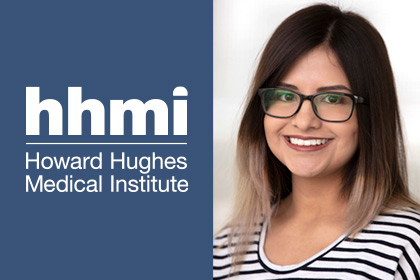
The brain has always fascinated Ana Ortiz, a neuroscience graduate student in the lab of Dr. Genevieve Konopka. As one of 45 recipients of a Gilliam Fellowship for Advanced Study, Ms. Ortiz will use the grant from the Howard Hughes Medical Institute (HHMI) to support her research into brain development and how disorders such as autism spectrum disorder (ASD) may arise.
Institutional Service Award 2024
https://www.utsouthwestern.edu/ctplus/stories/2024/lce24-institutional-service-award.html
This award honors clinical faculty who consistently share time and expertise in service to internal committees, task forces, and other institutional activities that make a significant impact on the care delivered to UT Southwestern patients.
Scholarships for physician assistant students will aid underserved communities and enhance the primary care workforce - CT Plus - UT Southwestern
https://www.utsouthwestern.edu/ctplus/stories/2021/hrsa-pa-scholarships.html
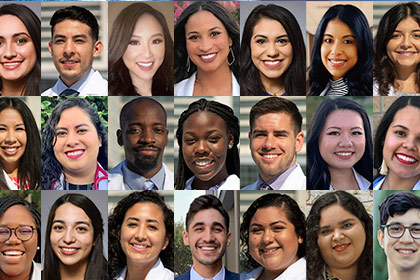
UT Southwestern’s School of Health Professions has received a $3.25 million federal grant to provide financial assistance to students in its nationally ranked Physician Assistant Studies Program.
Mentoring Award - CT Plus- UT Southwestern
https://www.utsouthwestern.edu/ctplus/stories/2024/lce24-mentoring-award.html
This award celebrates clinicians who demonstrate exceptional commitment and effectiveness as mentors to health care providers.
Get to know the latest Strauss Award winners - CT Plus - UT Southwestern
https://www.utsouthwestern.edu/ctplus/stories/2021/strauss-awards-q1-2021.html
Once every three months, six employees within in our hospital and clinics are honored for exemplifying excellence and professionalism in all they do.
Founders Day alumni spotlight: Dr. John Watson - CT Plus - UT Southwestern
https://www.utsouthwestern.edu/ctplus/stories/2021/foundersday-watson.html

The local community and the people of Texas are so supportive that I feel the future for UT Southwestern is very bright. If UT Southwestern continues the open collaboration of many disciplines, such as engineering, it will result in new understandings and advances that will improve the health of the community and the nation.
RESTORE Program provides special care for seniors with fractures - CT Plus - UT Southwestern
https://www.utsouthwestern.edu/ctplus/stories/2021/restore-program.html
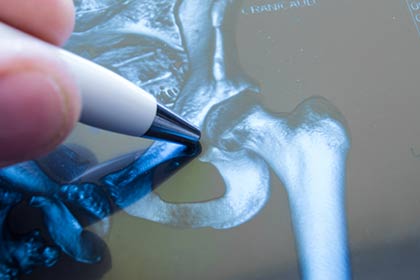
UT Southwestern is providing new hope for older adults who suffer fractures and the complications that can result from those injuries with the new Returning Seniors to Orthopedic Excellence (RESTORE) Program.
Founders Day alumni spotlight: Dr. Danika Franks - CT Plus - UT Southwestern
https://www.utsouthwestern.edu/ctplus/stories/2021/foundersday-franks.html
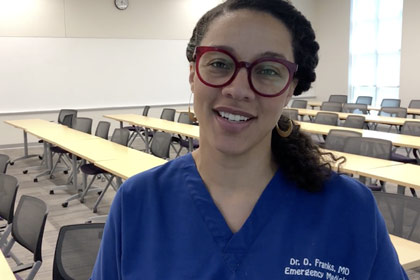
I have so many memorable moments, including going into the anatomy lab for the first time, studying in the carrels, learning from Nobel Laureates, and of course, graduation. Another memory that makes me smile is the testing, which was held in the most magnificently orange environment known as Gooch Auditorium. It was the perfect testing environment for someone whose favorite color is orange!