
Masashi Yanagisawa, M.D., Ph.D., receives Lasker Award for discovery that transformed narcolepsy care
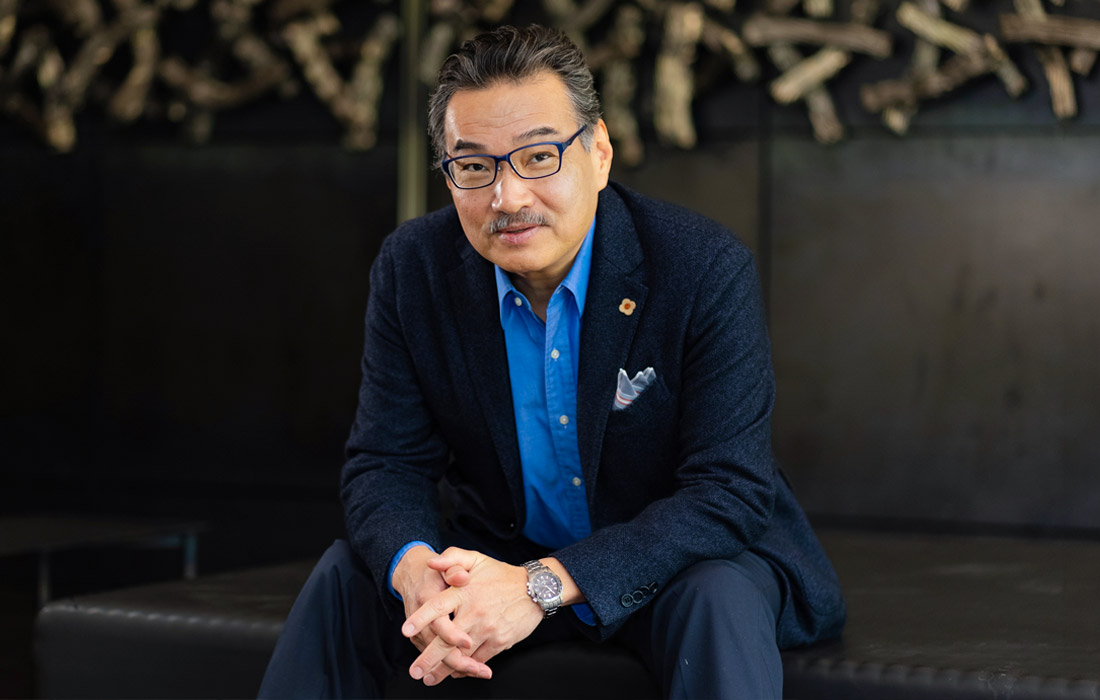
DALLAS – Sept. 09, 2026 – The Lasker Foundation has announced that UT Southwestern Medical Center sleep researcher Masashi Yanagisawa, M.D., Ph.D., is a recipient of the 2026 Albert Lasker Basic Medical Research Award for his discovery of orexin, a brain peptide that maintains wakefulness, and demonstration that the absence of its action is responsible for narcolepsy, a profound disorder of sleep.
Dr. Yanagisawa was a full-time faculty member for more than 20 years at UT Southwestern, where he conducted the prize-winning research. He is now a part-time Professor of Molecular Genetics at UTSW and holds a primary appointment as Director of the International Institute for Integrative Sleep Medicine at the University of Tsukuba in Japan. He is receiving the award along with Emmanuel Mignot, M.D., Ph.D., the Craig Reynolds Professor of Sleep Medicine at Stanford University, who independently identified the role of the orexin protein in controlling sleep.
Often called “America’s Nobels,” the Lasker Awards, established in 1945 by Albert and Mary Woodard Lasker, recognize significant advances in the understanding, diagnosis, treatment, cure, and prevention of human disease and are regarded as the country’s preeminent biomedical research prize.
Dr. Yanagisawa’s recognition marks the third consecutive year and sixth time that a UT Southwestern scientist has received a Lasker Award. With this honor, he joins Steven McKnight, Ph.D. (2025), Professor of Biochemistry; Zhijian “James” Chen, Ph.D. (2024), Professor of Molecular Biology; and Nobel Laureates Alfred Gilman, M.D., Ph.D. (1989), Michael Brown, M.D. (1985), Professor of Molecular Genetics, and Joseph Goldstein, M.D. (1985), Chair and Professor of Molecular Genetics, as UT Southwestern recipients.
Dr. Yanagisawa’s research has led to transformational treatments in the field, including orexin-blocking drugs for insomnia and a new orexin-activating drug to treat narcolepsy Type 1 called oveporexton, which gained U.S. Food and Drug Administration approval last month. Narcolepsy is a disorder that causes extreme daytime sleepiness and sudden sleep attacks. It affects at least 1 in 2,000 people in the U.S.
“Dr. Yanagisawa’s research has the potential to help the millions worldwide who suffer from debilitating sleep disorders,” said Daniel K. Podolsky, M.D., President of UT Southwestern. “We are thrilled to see his discoveries that led to the development of groundbreaking therapies recognized by this year’s Lasker Basic Medical Research Award.”
“I am tremendously honored to receive the 2026 Lasker Award and particularly delighted to see the prestigious recognition given to the field of sleep science, which historically has received relatively little recognition from major academic awards,” Dr. Yanagisawa said.
Dr. Yanagisawa discovered orexin in 1998 in his lab at UTSW while searching for molecules that stimulate so-called orphan brain receptors. His research identified two in a portion of the brain implicated in feeding; he named them after the Greek word for appetite (orexis). While studying how a deficiency in orexin genes affected eating in mice, he discovered that it caused sudden nighttime collapses resembling human narcolepsy.
(Credit: Lasker Foundation)
“I had the privilege of collaborating with Dr. Yanagisawa during the early days following the discovery of orexin and the orexin receptors. It was an exciting time in the field, and I witnessed firsthand his creativity, rigor, and relentless curiosity,” said Joel Elmquist, D.V.M., Ph.D., Professor and Vice Chair of Research in the Department of Internal Medicine. “The work that has now culminated in the Lasker Award fundamentally changed our understanding of sleep biology and narcolepsy. Given the recent approval of drugs to treat narcolepsy, this work continues to improve the lives of patients around the world.”
At the same time Dr. Yanagisawa was defining the functional effects of orexin, Dr. Mignot was working to identify the defective gene responsible for an inherited form of narcolepsy in two breeds of dogs. He zeroed in on orexin receptor-2 – the same receptor gene Dr. Yanagisawa had uncovered. Their findings were published two weeks apart in 1999.
Dr. Yanagisawa is a member of the National Academy of Sciences and a former Howard Hughes Medical Institute Investigator. He received the 2023 Breakthrough Prize in Life Sciences, making him the third UTSW researcher to do so since the award was launched in 2013.
Born in Tokyo, Dr. Yanagisawa earned his M.D. at the University of Tsukuba in 1985 and a Ph.D. from the same institution three years later. His discovery of endothelin, a hormone that causes blood vessels to contract, caught the attention of Drs. Brown and Goldstein, who recruited him to join UT Southwestern in 1991.
The Lasker Awards will be presented in New York on Sept. 17.
Dr. Brown is a Regental Professor and holds the W.A. (Monty) Moncrief Distinguished Chair in Cholesterol and Arteriosclerosis Research and the Paul J. Thomas Chair in Medicine.
Dr. Chen holds the George L. MacGregor Distinguished Chair in Biomedical Science.
Dr. Elmquist holds the Carl H. Westcott Distinguished Chair in Medical Research and the Maclin Family Distinguished Professorship in Medical Science, in Honor of Dr. Roy A. Brinkley.
Dr. Goldstein is a Regental Professor and holds the Julie and Louis A. Beecherl, Jr. Distinguished Chair in Biomedical Research and the Paul J. Thomas Chair in Medicine.
Dr. McKnight holds the Distinguished Chair in Basic Biomedical Research.
Dr. Podolsky holds the Philip O’Bryan Montgomery, Jr., M.D. Distinguished Presidential Chair in Academic Administration and the Charles Cameron Sprague Distinguished Chair in Biomedical Science.
About UT Southwestern Medical Center
UT Southwestern, one of the nation’s premier academic medical centers, integrates pioneering biomedical research with exceptional clinical care and education. The institution’s faculty members have received six Nobel Prizes and include 28 members of the National Academy of Sciences, 26 members of the National Academy of Medicine, and 14 Howard Hughes Medical Institute Investigators. The full-time faculty of nearly 3,400 is responsible for groundbreaking medical advances and is committed to translating science-driven research quickly to new clinical treatments. UT Southwestern physicians in more than 80 specialties care for more than 143,000 hospitalized patients, attend to more than 470,000 emergency room cases, and oversee nearly 5.3 million outpatient visits a year.