
Unmasking autism spectrum disorder through its gene-based roots
UTSW-led research could pave way for genetic tests, therapies for ASD and other neurodevelopmental conditions
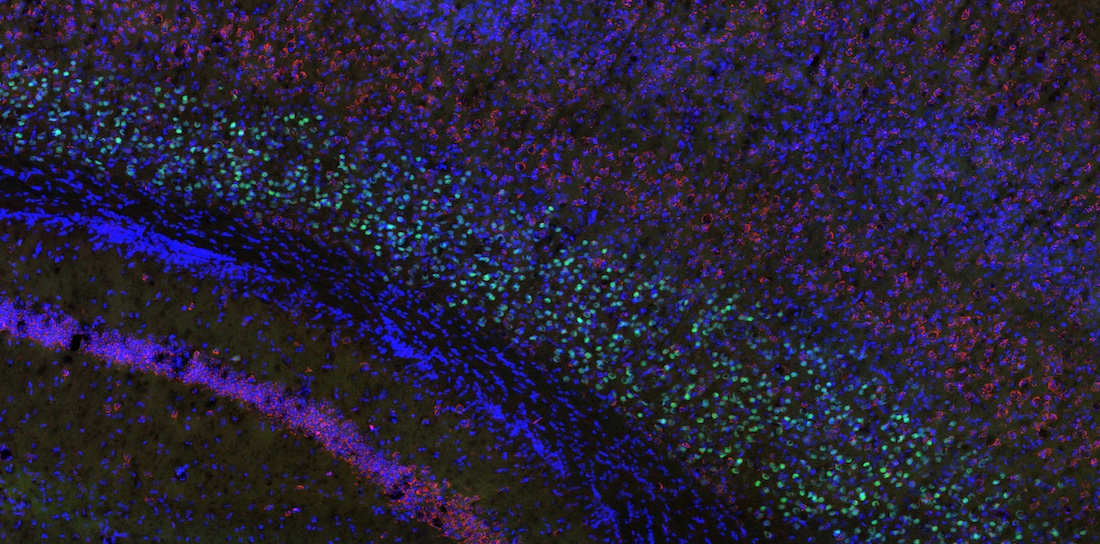
DALLAS – May 04, 2026 – Two studies led by the Chahrour Lab at UT Southwestern Medical Center shed new light on genes associated with autism spectrum disorder (ASD), the neurodevelopmental disease characterized by impaired communication, abnormal social interactions, and restricted, repetitive behaviors. The findings could lead to improved diagnostic tests and therapies that can treat ASD at its genetic roots.
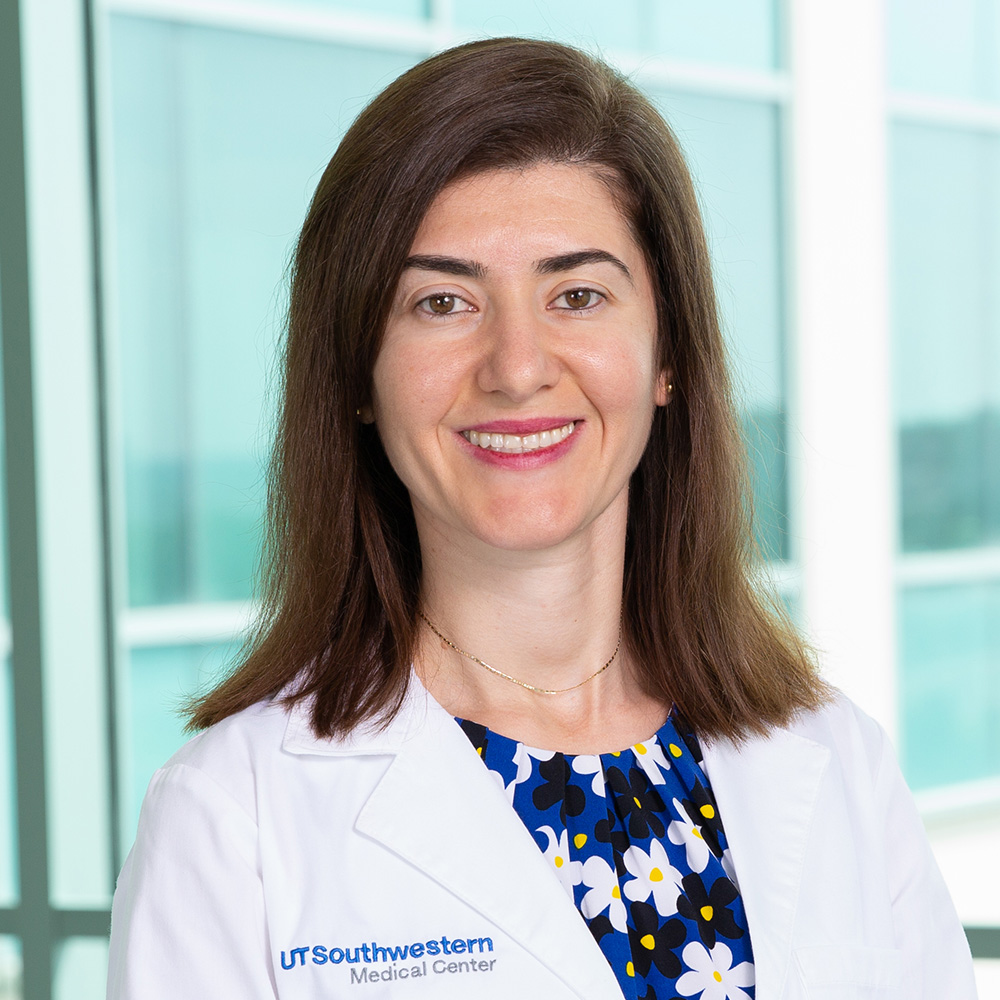
“Our ultimate goal is to understand what these genes are doing in the brain and identify actionable pathways that we can translate into genetic tests and targeted therapies,” said Maria Chahrour, Ph.D., the senior author on both studies and an Associate Professor in the Eugene McDermott Center for Human Growth and Development, the Center for the Genetics of Host Defense, and of Neuroscience and Psychiatry at UT Southwestern.
Since its inception in 2015, the Chahrour Lab has focused on identifying genes associated with ASD and investigating how they impact brain function. Although hundreds of ASD-related genes have been identified by her lab and others around the world, each gene accounts for only a small fraction of cases. Thus, rather than a unified disorder, ASD appears to be a collection of individually rare disorders, with each genetic variant potentially disrupting distinct neurodevelopmental pathways, Dr. Chahrour explained.
The new studies focused on the ASD-related genes KDM5A and UBE3B.
KDM5A
In a study published in 2020, the Chahrour Lab reported the discovery of KDM5A variants in nine individuals with severe ASD within seven families. This gene is known to help control how DNA is packaged within the cell nucleus, influencing which genes cells are able to read to make proteins. The study showed that unrelated individuals had different variants in KDM5A. However, it was unknown whether other variants existed and how they all affected function.
Using a website called GeneMatcher, which connects researchers and clinicians working on the same genes, Dr. Chahrour and her colleagues identified an additional 24 individuals from 21 families who had pathogenic KDM5A variants. Much like the previous cohort, these newly identified individuals had severe speech impairment and intellectual disability, often alongside ASD and other neurodevelopmental impairments.
As before, genetic testing showed each unrelated individual in the new cohort had different variants in KDM5A – leading to a total of 31 known pathogenic variants. Results from the protein structure-modeling program AlphaFold predicted that the different genetic variants each uniquely affect the resulting structure of the KDM5A mutant protein.
In turn, these different structures are predicted to influence how other genes are expressed, potentially through KDM5A’s role in regulating DNA packing. While only six genes were differently expressed in cells from a patient with one variant compared with cells with nonpathogenic KDM5A, more than 4,000 genes were differently expressed in cells with another variant. The results were published in March in HGG Advances.
UBE3B
In a study published in 2019, Dr. Chahrour and colleagues investigated the role of UBE3B, which her team discovered in a set of brothers with ASD while Dr. Chahrour was a postdoctoral fellow at Harvard University seven years earlier. Previous research revealed that variants in this gene also cause a neurodevelopmental disorder called Kaufman oculocerebrofacial syndrome (KOS), characterized by distinctive facial features, intellectual disability, and a complete lack of speech.
She and her team showed that mouse models lacking this gene throughout their bodies didn’t vocalize, had deficits in social behaviors, and had neurons that seemed less mature than mice that produced the UBE3B protein. Although increased blood concentrations of a different protein associated with autism hinted at a cause for these changes, the molecular consequences of UBE3B loss in the brain were unclear.
In the new study, also published in March in Autism Research, tests on genetically altered mice missing UBE3B in their central nervous systems showed they had severe deficits in vocalization, social behavior, learning and memory, and motor skills compared with mice with intact UBE3B. When the researchers examined the animals’ neurons, they found reduced density of excitatory synapses, or connections between neurons that encourage them to fire. These cells also had immature dendrites, structures that receive signals from other neurons. Both abnormalities contributed to less activity in circuits connecting neurons in the brain.
UBE3B is known to play a role in ubiquitination, a cellular process in which proteins are tagged with a small protein called ubiquitin, marking them for degradation or regulating their function. Further experiments showed that the genetically altered mice had increased levels of 116 proteins, potentially due to a lack of ubiquitin tagging. Many of these proteins are known to play roles in developing connections between neurons. Several are also disrupted in ASD, raising the possibility that different genetic mutations may lead to ASD by affecting the same underlying biological pathways.
Dr. Chahrour said these results help show how genetic variants that cause functional loss of UBE3B could bring on symptoms of both ASD and KOS and may someday lead to therapies that target the affected proteins and downstream pathways.
Dr. Chahrour, an Investigator in the Peter O’Donnell Jr. Brain Institute, said she and her colleagues plan to continue studying how both UBE3B and KDM5A contribute to ASD and other neurodevelopmental disorders.
Other UTSW researchers who contributed to the study in Autism Research are first author Shayal Vashisth, Ph.D., former graduate student in the Chahrour Lab; Kimberly Huber, Ph.D., Professor of Neuroscience; Kiran Kaur, Ph.D., Senior Research Scientist in the Eugene McDermott Center for Human Growth and Development; Ariel Aiken, M.S., Research Assistant; and Aleya Shedd, B.S., graduate student researcher.
The study was funded by grants from the Eunice Kennedy Shriver National Institute of Child Health and Human Development (R01HD099162, F31HD110206, U54HD104461).
Other UTSW researchers who contributed to the study in HGG Advances are first author Lauretta El Hayek, Ph.D., former graduate student in the Chahrour Lab; Dr. Kaur; Ashlesha Gogate, M.S., Computational Biologist; and Wei-Chen Chen, M.S., graduate student researcher.
The study was funded by grants from UTSW and the Walter and Lillian Cantor Foundation.
About UT Southwestern Medical Center
UT Southwestern, one of the nation’s premier academic medical centers, integrates pioneering biomedical research with exceptional clinical care and education. The institution’s faculty members have received six Nobel Prizes and include 27 members of the National Academy of Sciences, 25 members of the National Academy of Medicine, and 13 Howard Hughes Medical Institute Investigators. The full-time faculty of nearly 3,400 is responsible for groundbreaking medical advances and is committed to translating science-driven research quickly to new clinical treatments. UT Southwestern physicians in more than 80 specialties care for more than 143,000 hospitalized patients, attend to more than 470,000 emergency room cases, and oversee nearly 5.3 million outpatient visits a year.