
AI-powered electrocardiogram detects early signs of heart failure
UTSW-led Kenya study suggests relatively inexpensive technology could reduce cardiac health disparities in developing countries
DALLAS – May 06, 2026 – Interpreting relatively inexpensive electrocardiograms (ECGs) with an artificial intelligence (AI) algorithm accurately screened patients for a key precursor of heart failure in Kenya, a study led by UT Southwestern Medical Center researchers shows. The results, published in JAMA Cardiology, suggest AI-augmented ECG (AI-ECG) analysis could be a potential low-cost strategy for identifying patients who have underlying impairment in heart function.
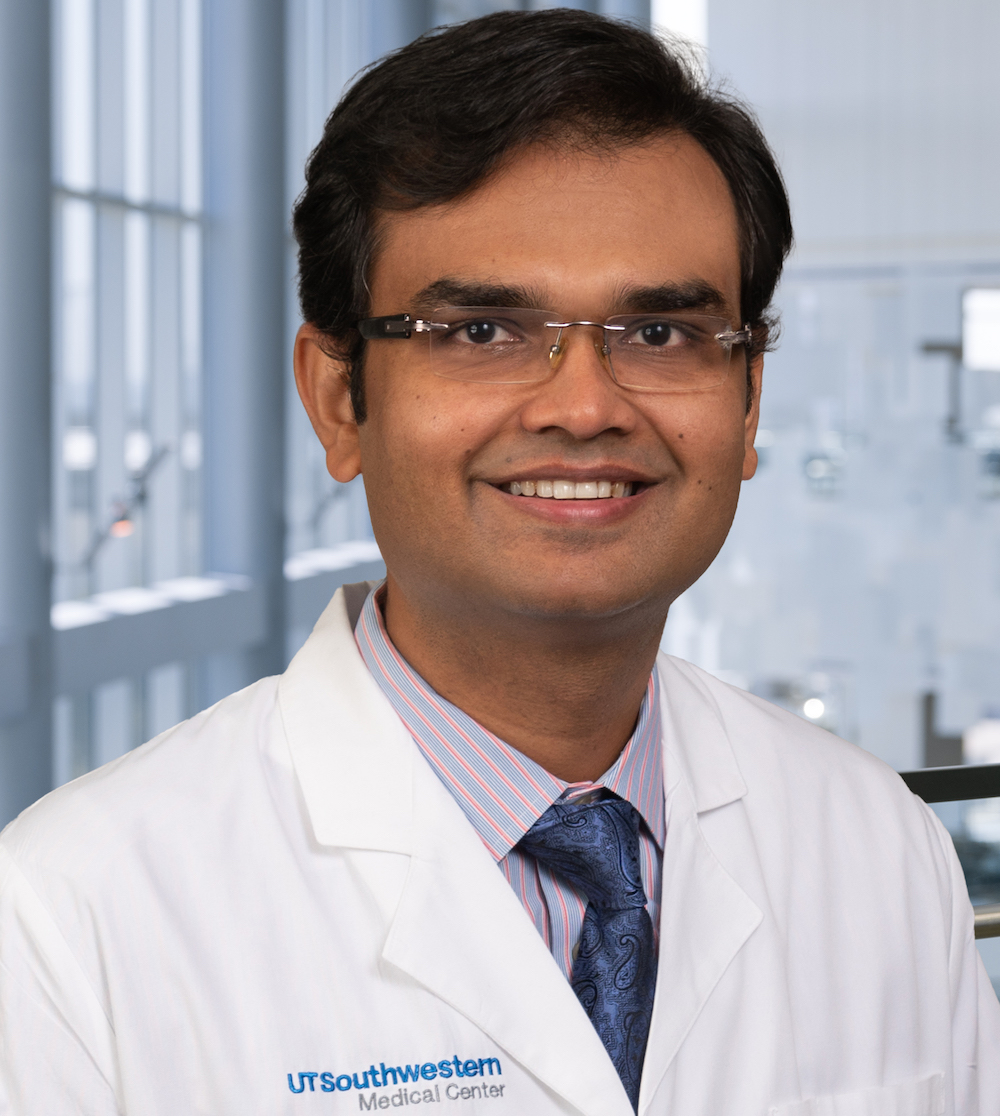
“These findings support AI-ECG as a practical, scalable screening tool that can effectively identify individuals at risk for heart failure in resource-limited settings where access to echocardiography is constrained, addressing a critical gap in global cardiovascular care,” said Ambarish Pandey, M.D., Associate Professor of Internal Medicine in the Division of Cardiology and in the Peter O’Donnell Jr. School of Public Health at UT Southwestern. He has a secondary appointment in Internal Medicine’s Division of Geriatric Medicine.
In addition to Dr. Pandey, the study’s primary lead author, other investigators included Neil Keshvani, M.D., Adjunct Assistant Professor of Internal Medicine at UT Southwestern, and Bernard Samia, M.B.Ch.B., M.Med., M.P.H., consultant physician and cardiologist at M.P. Shah Hospital in Kenya and President of the Kenya Cardiac Society.
Heart failure, a chronic condition in which the heart is unable to pump enough blood to meet the body’s needs, is on the rise globally. The burden is particularly severe in sub-Saharan Africa, where health care resources are limited and patients develop heart failure at younger ages and face worse outcomes despite having fewer complicating conditions compared with patients in developed countries.
Before suffering heart failure, many patients develop precursor conditions such as left ventricular systolic dysfunction (LVSD), in which the heart’s left ventricle doesn’t pump blood effectively. Echocardiograms, which create images of the heart using ultrasound, are the gold standard for diagnosing LVSD and other heart failure antecedents, Dr. Pandey said. But these tests are extraordinarily expensive, and developing countries typically lack the equipment and expertise to perform them, he added.

To address this disparity, Dr. Pandey and his colleagues evaluated the use of AI-ECG, in which a typical ECG – a test of the heart’s electrical function – is enhanced by an AI algorithm that searches for evidence of LVSD and other heart failure precursors. AI-ECG has shown promising results when tested in developed countries; it has rarely been evaluated in a developing country.
The team recruited nearly 6,000 patients seeking routine clinical care from eight health care facilities in Kenya to receive AI-ECG. A subset of this group, totaling 1,444 patients, also received echocardiograms to verify their AI-ECG results.
The AI algorithm identified LVSD in 14.1% of those who also received echocardiograms. AI-ECG had a 99.1% negative predictive value, meaning nearly all patients whose results reflected no evidence of LVSD were confirmed negative by echocardiography.
Positive AI-ECG screening in the study was strongly associated with other markers of adverse cardiac remodeling, including left ventricular hypertrophy and diastolic dysfunction. The algorithm demonstrated a high level of sensitivity, correctly identifying 95.6% of people who had LVSD, while also showing high specificity in accurately identifying 79.4% of people who did not have the condition.
The authors said their findings support the use of AI-ECG as a screening tool for LVSD in resource-limited settings where systematic echocardiographic screening is not feasible.
This study was funded by a research grant from AstraZeneca and in-kind support from Medical AI (which supplied the ECG-AI algorithm) and Tricog Health Inc. (which performed echocardiographic and ECG acquisition).
Dr. Keshvani has received honoraria from Tricog Health. Dr. Pandey has served as a consultant or received honoraria from Tricog Health, Medical AI, and AstraZeneca.
About UT Southwestern Medical Center
UT Southwestern, one of the nation’s premier academic medical centers, integrates pioneering biomedical research with exceptional clinical care and education. The institution’s faculty members have received six Nobel Prizes and include 27 members of the National Academy of Sciences, 25 members of the National Academy of Medicine, and 13 Howard Hughes Medical Institute Investigators. The full-time faculty of nearly 3,400 is responsible for groundbreaking medical advances and is committed to translating science-driven research quickly to new clinical treatments. UT Southwestern physicians in more than 80 specialties care for more than 143,000 hospitalized patients, attend to more than 470,000 emergency room cases, and oversee nearly 5.3 million outpatient visits a year.