
Helen H. Hobbs, M.D., honored for innovation in cardiovascular science
American College of Cardiology’s Valentin Fuster Award recognizes transformative research that advances patient care
DALLAS – March 30, 2026 – Helen H. Hobbs, M.D., Professor in the Eugene McDermott Center for Human Growth and Development and of Internal Medicine and Molecular Genetics at UT Southwestern Medical Center, has been named the recipient of the 2026 Valentin Fuster Award for Innovation in Science by the American College of Cardiology (ACC). This honor reflects her contributions to cardiovascular science and her role in advancing research that has directly improved patient care.
Dr. Hobbs was honored with other 2026 Distinguished Award recipients at the ACC’s Annual Scientific Session on March 28-30 in New Orleans.
“I am deeply grateful to the American College of Cardiology for this recognition,” Dr. Hobbs said. “I share this award with my scientific partner, Jonathan Cohen, and the many trainees and colleagues who have made our discoveries possible, and with UT Southwestern, which has provided an extraordinary environment for curiosity-driven research that ultimately benefits patients.”
The Valentin Fuster Award for Innovation in Science, established in 2022, is presented to an investigator who has made significant and sustained contributions to cardiovascular medicine through scientific discovery, innovation in the delivery of science, and leadership in advancing research to improve patient outcomes worldwide.
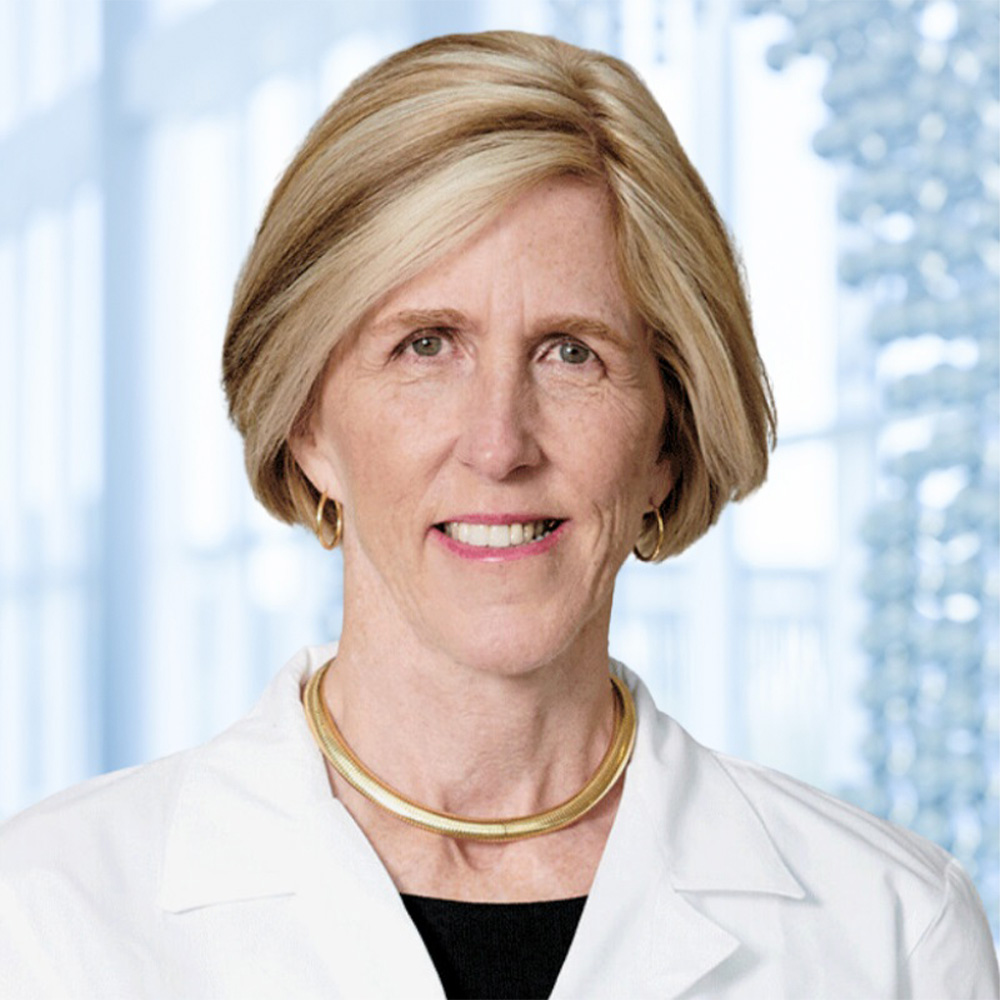
“I am honored to recognize Helen Hobbs, M.D., with the Valentin Fuster Award for Innovation in Science,” said Christopher M. Kramer, M.D., FACC, President of the ACC. “Dr. Hobbs has demonstrated remarkable work that will bolster the ACC’s mission to transform cardiovascular care and improve heart health for all.”
A UTSW physician-scientist since 1987, Dr. Hobbs is an internationally renowned researcher who has used human genetics to identify key proteins and pathways in lipid metabolism. Her work has had far-reaching implications for prevention and treatment of both cardiovascular and metabolic liver disease. Dr. Hobbs’ innovative research has focused on identifying genetic variants that protect against disease rather than those that cause it.
After arriving in Dallas in 1980 to train in internal medicine, Dr. Hobbs completed a postdoctoral fellowship in the laboratory of Michael Brown, M.D., and Joseph Goldstein, M.D., whose mentorship helped shape her scientific career. Drs. Brown and Goldstein received the 1985 Nobel Prize in Physiology or Medicine for their discovery of the basic mechanisms of cholesterol metabolism, and their findings led to the development of cholesterol-lowering statin drugs.
Dr. Hobbs is best known for her collaboration with Jonathan Cohen, Ph.D., Professor in the Center for Human Nutrition, the Eugene McDermott Center for Human Growth and Development and of Internal Medicine. Their work led to the 2006 discovery of the role of the PCSK9 protein in regulating plasma levels of low-density lipoprotein (LDL, or “bad” cholesterol). They discovered that individuals with mutations that inactivate the PCSK9 gene have much lower plasma levels of LDL-cholesterol and have reduced risk of atherosclerotic cardiovascular disease. This seminal finding paved the way for the development of PCSK9-inhibiting drugs now widely used to treat patients with resistant high cholesterol to reduce the risk of heart disease.
In 2008, Drs. Hobbs and Cohen identified a variant in the PNPLA3 gene, the first genetic risk factor identified for metabolic-associated steatotic liver disease (MASLD). Subsequent work revealed that the same variant is also associated with alcohol-associated liver disease, expanding our understanding of metabolic liver disorders.
Much of Dr. Hobbs’ groundbreaking research has drawn on data from the Dallas Heart Study, a large, multiethnic, longitudinal study of cardiovascular disease that she co-founded, together with Ronald Victor, in 2000. The study, now called the Dallas Hearts and Minds Study, gathered detailed clinical evaluations, imaging, and genetic data from thousands of Dallas County residents and has become a model for population-based genetic research worldwide.
Born in Boston, Dr. Hobbs earned her bachelor’s degree in human biology from Stanford University and her medical degree from Case Western Reserve University School of Medicine. She completed her internal medicine training at Columbia-Presbyterian Medical Center and UT Southwestern, where she was later encouraged by the late Donald Seldin, M.D., longtime Chair of Internal Medicine, to pursue a career in research.
A member of both the National Academy of Medicine and the National Academy of Sciences as well as a Howard Hughes Medical Institute Investigator, Dr. Hobbs has received numerous national and international honors. These include the Heinrich Wieland Prize in 2005; the international Breakthrough Prize in Life Sciences in 2015; the Institut de France Grand Prix and the Harrington Prize for Innovation in 2018; the Passano Award with Dr. Cohen in 2016 for exemplary research that leads to real-world applications; and the Ross Prize in Molecular Medicine in 2023 with Dr. Cohen for their groundbreaking research in dyslipidemias and metabolic liver disease.
Dr. Hobbs holds the Dallas Heart Ball Chair in Cardiology Research. Dr. Brown, a Regental Professor, holds The W.A. (Monty) Moncrief Distinguished Chair in Cholesterol and Arteriosclerosis Research and the Paul J. Thomas Chair in Medicine. Dr. Cohen holds the C. Vincent Prothro Distinguished Chair in Human Nutrition Research. Dr. Goldstein, a Regental Professor, holds the Julie and Louis A. Beecherl, Jr. Distinguished Chair in Biomedical Research and the Paul J. Thomas Chair in Medicine.
About UT Southwestern Medical Center
UT Southwestern, one of the nation’s premier academic medical centers, integrates pioneering biomedical research with exceptional clinical care and education. The institution’s faculty members have received six Nobel Prizes and include 24 members of the National Academy of Sciences, 25 members of the National Academy of Medicine, and 13 Howard Hughes Medical Institute Investigators. The full-time faculty of more than 3,300 is responsible for groundbreaking medical advances and is committed to translating science-driven research quickly to new clinical treatments. UT Southwestern physicians in more than 80 specialties care for more than 143,000 hospitalized patients, attend to more than 470,000 emergency room cases, and oversee nearly 5.3 million outpatient visits a year.