
Antibody may improve treatment response in lung cancer
Findings from UTSW-led study could lead to new class of drugs that can overcome resistance to targeted cancer therapy
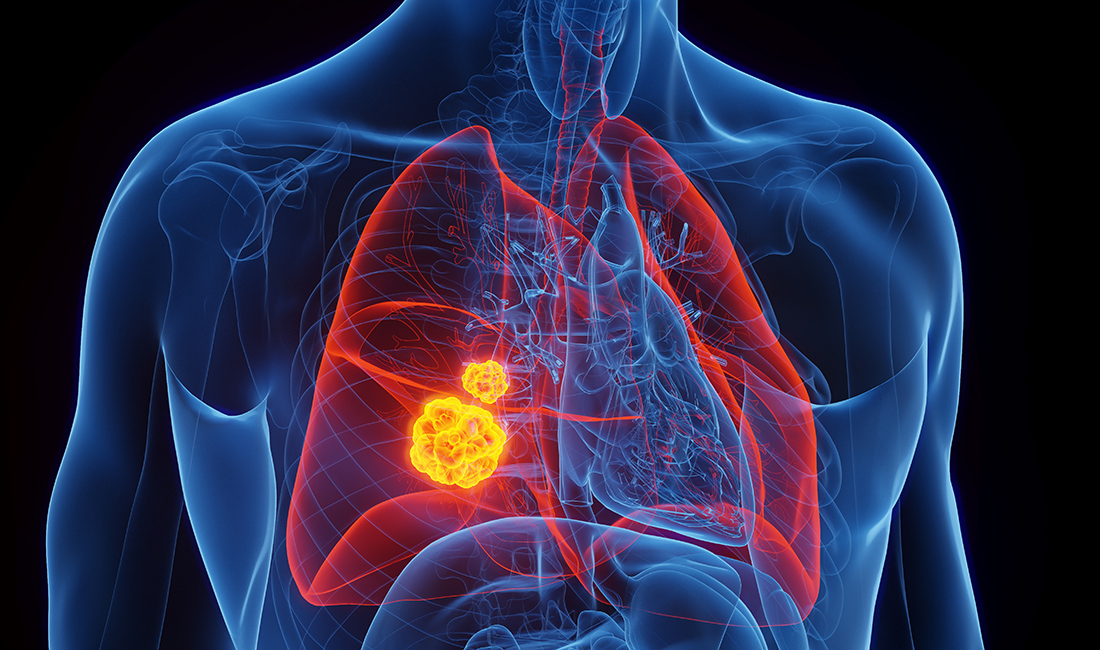
DALLAS – June 11, 2026 – An experimental antibody treatment that binds to a protein known as PCDH7 shrank tumors in preclinical models of non-small cell lung cancer (NSCLC), even those resistant to a targeted therapy, a study led by UT Southwestern Medical Center researchers showed. The findings, published in Science Advances, could eventually lead to a new class of drugs to treat NSCLC and potentially other cancers.

“Overcoming resistance to molecularly targeted therapies is a critical unmet need for lung cancer patients. We are excited that these antibodies may open another therapeutic avenue for lung cancer, especially for patients whose cancers have become resistant to KRAS inhibitors,” said Kathryn O’Donnell, Ph.D., Associate Professor of Molecular Biology and a member of the Harold C. Simmons Comprehensive Cancer Center at UT Southwestern. Dr. O’Donnell co-led the study with first author Nicole Novaresi, Ph.D., a postdoctoral researcher in the O’Donnell Lab, and collaborators at the University of Texas Health Science Center at Houston.
NSCLC accounts for about 85% of lung cancer cases in the U.S. and is the leading cause of cancer-related deaths. The O’Donnell Lab focuses on identifying and characterizing proteins on the surface of NSCLC and other cancer cells due to their potential as therapeutic targets. In 2017, Dr. O’Donnell and her colleagues identified PCDH7 as a driver of NSCLC, especially in tumors with mutations in a gene called KRAS. Found in about 25% of NSCLC cases, these mutations cause uncontrolled cell proliferation that propels tumor growth.
In 2024, the Food and Drug Administration approved a drug called adagrasib, which targets NSCLC with KRAS mutations. However, patients inevitably developed resistance to this treatment over time, leaving them with few therapeutic options.

Searching for a new way to attack NSCLC, Dr. O’Donnell’s group collaborated with Zhiqiang An, Ph.D., and Ningyan Zhang, Ph.D., at the University of Texas Health Science Center to develop antibodies that target PCDH7. The teams then worked closely to characterize and functionally evaluate them. Starting with hundreds of antibody candidates, the researchers narrowed their focus to an antibody called mAb7 that bound strongly to PCDH7, reduced intracellular signaling and proliferation in NSCLC cells, and eventually caused the cancer cells to die.
When the scientists treated mice growing KRAS-mutant NSCLC tumors with mAb7, the tumors shrank significantly. This effect was enhanced when mAb7 was delivered with a drug called trametinib, which targets MAPK/ERK enzymes in the cancer-promoting RAS pathway. This treatment also sensitized the KRAS-mutant NSCLC tumors to adagrasib, causing an effect that reduced tumor size significantly more than mAb7 or adagrasib alone. The team also found that PCDH7 was upregulated in tumors that eventually developed resistance to adagrasib and that mAb7 reduced the growth of those drug-resistant tumors.
To get a sense of whether this strategy might work in patients, the researchers tested mAb7 on mice engineered to have human immune systems. A closer look showed that the antibodies brought immune cells to the human tumor cells and effectively eliminated the cancer cells.
These novel antibodies will require significant testing before use in patients, Dr. Novaresi said. But eventually, they may be used alone or in combination with adagrasib or other emerging targeted cancer therapies. Enhancing them by attaching chemotherapy drugs or by engaging immune cells could help the antibodies fight NSCLC even more effectively. She added that mAb7 may also have potential for treating additional cancers that produce PCDH7 on their cell surfaces, including pancreatic cancer, melanoma, and prostate cancer.
Other UTSW researchers who contributed to this study are John Minna, M.D., Director of the Hamon Center for Therapeutic Oncology Research, Professor of Internal Medicine and Pharmacology, and co-leader of the Experimental Therapeutics Research Program at Simmons Cancer Center; Chul Ahn, Ph.D., Professor of Health Data Science and Biostatistics and a member of the Population Science and Cancer Control Research Program at Simmons Cancer Center; and Shayna Thomas-Jardin, Ph.D., a postdoctoral researcher in the O’Donnell Lab.
Dr. O’Donnell is co-leader of the Development and Cancer Research Program in the Simmons Cancer Center.
This study was funded by grants from the National Cancer Institute (NCI) (R01 CA207763 and P50CA70907), the Cancer Prevention and Research Institute of Texas (RP250391, RP190610, RP200327, RP250572, RP260660, and RP210041), The Welch Foundation (I-1881), the V Foundation, the Department of Defense (LC190249), the American Lung Association (LCD 1421064), and the NCI Cancer Center Support Grant (P30CA142543).
Dr. O’Donnell is a scientific co-founder and adviser of ProtomAb Therapeutics Inc., a company created to continue this work. The University of Texas System has filed a provisional patent application on the PCDH7 antibodies for cancer care.
About UT Southwestern Medical Center
UT Southwestern, one of the nation’s premier academic medical centers, integrates pioneering biomedical research with exceptional clinical care and education. The institution’s faculty members have received six Nobel Prizes and include 27 members of the National Academy of Sciences, 25 members of the National Academy of Medicine, and 13 Howard Hughes Medical Institute Investigators. The full-time faculty of nearly 3,400 is responsible for groundbreaking medical advances and is committed to translating science-driven research quickly to new clinical treatments. UT Southwestern physicians in more than 80 specialties care for more than 143,000 hospitalized patients, attend to more than 470,000 emergency room cases, and oversee nearly 5.3 million outpatient visits a year.