
Study reveals molecular ‘switch’ that turns on inflammation in obesity
UTSW researchers’ findings could lead to new treatments for Type 2 diabetes, cardiovascular disease, and more
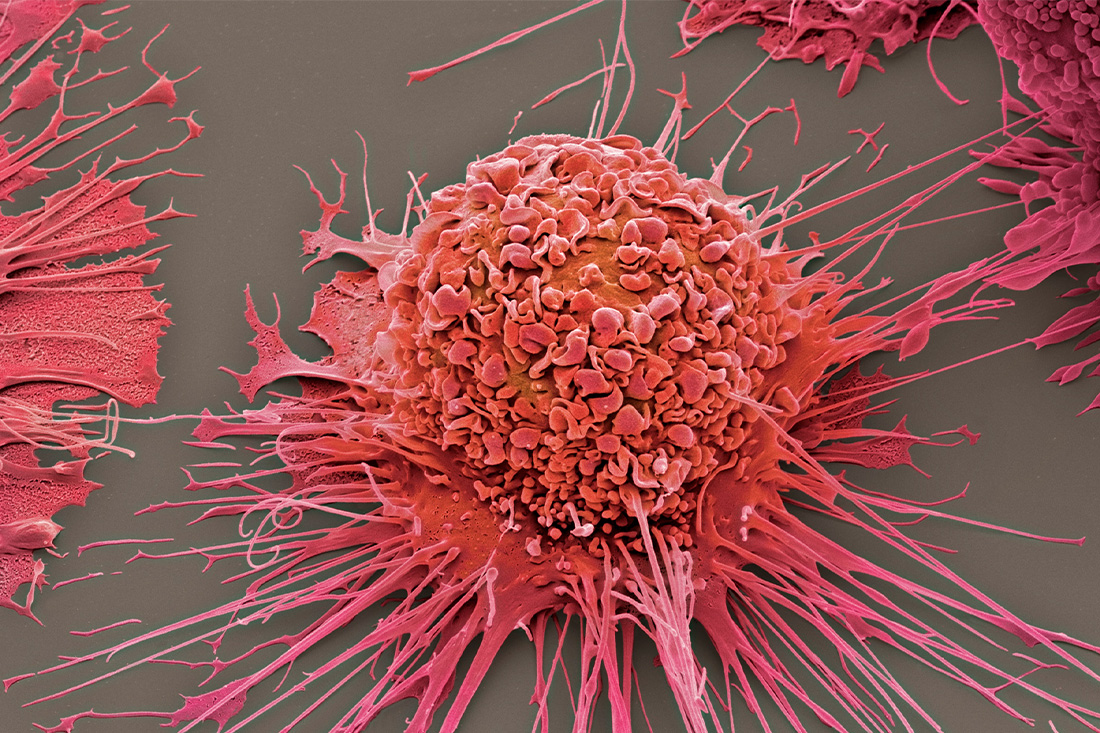
DALLAS – Jan. 15, 2026 – A team led by UT Southwestern Medical Center researchers has uncovered a molecular pathway that links obesity to widespread inflammation, providing long-sought insight into why obesity increases the risk of Type 2 diabetes, cardiovascular disease, fatty liver disease, and certain cancers. The findings, published in Science, identify a molecular “switch” that triggers this inflammation and point to potential new therapeutic targets.
“It’s been known for a long time that obesity causes uncontrolled inflammation, but no one knew the mechanism behind it. Our study provides novel insights about why this inflammation occurs and how we might be able to stop it,” said Zhenyu Zhong, Ph.D., Assistant Professor of Immunology and member of the Harold C. Simmons Comprehensive Cancer Center at UT Southwestern. Dr. Zhong co-led the study with Danhui Liu, Ph.D., a former postdoctoral researcher in the Zhong Lab.

Nearly 900 million adults worldwide – about 1 in 8 – live with obesity, a condition defined by a body mass index of at least 30. Uncontrolled, low-grade inflammation is a hallmark of obesity, contributing to numerous chronic conditions.
Such “sterile” inflammation – occurring in the absence of bacterial or viral infection – is largely driven by an inflammasome known as NOD-like receptor pyrin domain-containing 3 (NLRP3), a multiprotein complex found in immune cells known as macrophages. NLRP3 converts molecules called inflammatory cytokines from immature versions to mature ones that stimulate inflammation when macrophages excrete them. But whether and how NLRP3 activity is influenced by obesity has been largely unknown.
To investigate this, Dr. Zhong and his colleagues compared macrophages isolated from lean and obese human volunteers, as well as from mice fed normal and high-fat diets. In both the macrophages from patients with obesity and mice fed a high-fat diet, NLRP3 was hyperactivated. The researchers also made a surprising observation: In both sets of cells, there was an abnormally large amount of DNA in mitochondria, organelles that serve as power generators in cells and have their own genetic material.
Much of this extra mitochondrial DNA (mtDNA) was oxidized, a damaged form often produced when cells are under stress. When the researchers used a chemical that blocked the oxidized mitochondrial DNA from attaching to the NLRP3 inflammasome, its hyperactivity ceased.
To better understand why macrophages from obese patients overproduced the oxidized mitochondrial DNA, the researchers looked for clues in the cells’ cytoplasm. They found an excess of deoxynucleotides, the building blocks that make up DNA. Further investigation showed that an enzyme (SAMHD1) responsible for degrading extra nucleotides had been phosphorylated – a chemical modification that turned off this enzyme.
Deleting the gene for SAMHD1 in mice – and even zebrafish, a species that shares 70% of its genes with humans – prompted the same phenomenon. In these animals, the researchers found an excess of deoxynucleotides in the cytoplasm of macrophages, an increase in oxidized mitochondrial DNA, and hyperactive NLRP3 inflammasomes. These circumstances caused many of the mice to develop Type 2 diabetes and fatty liver disease.
This work builds on Dr. Zhong’s previous study, published in Nature, that identified the mitochondrial enzyme CMPK2 as essential for mtDNA neosynthesis and NLRP3 inflammasome activation in healthy, lean humans and mice. The new findings reveal how obesity bypasses this pathway, rewiring nucleotide metabolism to sustain inflammation.
Dr. Zhong said the new findings suggest inflammation in obesity occurs through a molecular cascade kicked off by phosphorylation of SAMHD1. Learning why this phosphorylation happens will be a topic for future studies, he said. In the meantime, Dr. Zhong said, finding ways to remove this phosphorylation, prevent deoxynucleotides’ transport to mitochondria, or block the interaction between oxidized mitochondrial DNA and NLRP3 could reduce inflammation, and consequently, the occurrence of inflammation-related diseases in obesity.
A full list of contributors can be found in the published study.
This research was funded by grants from the Cancer Research and Prevention Institute of Texas (RR180014, RP230261, RP200197, and RP240183), the National Institutes of Health (R35GM142654, K22AI135074, R01DK133283, R01AI151708, R01AR075005, R35GM136316, and R35GM142689), and UT Southwestern Circle of Friends Awards.
About UT Southwestern Medical Center
UT Southwestern, one of the nation’s premier academic medical centers, integrates pioneering biomedical research with exceptional clinical care and education. The institution’s faculty members have received six Nobel Prizes and include 28 members of the National Academy of Sciences, 26 members of the National Academy of Medicine, and 14 Howard Hughes Medical Institute Investigators. The full-time faculty of nearly 3,400 is responsible for groundbreaking medical advances and is committed to translating science-driven research quickly to new clinical treatments. UT Southwestern physicians in more than 80 specialties care for more than 143,000 hospitalized patients, attend to more than 470,000 emergency room cases, and oversee nearly 5.3 million outpatient visits a year.