
Developmental ‘switch’ in brain may shape lifelong obesity risk
UT Southwestern researchers discover regulator in hypothalamus that guides neurons toward appetite-stimulating fates
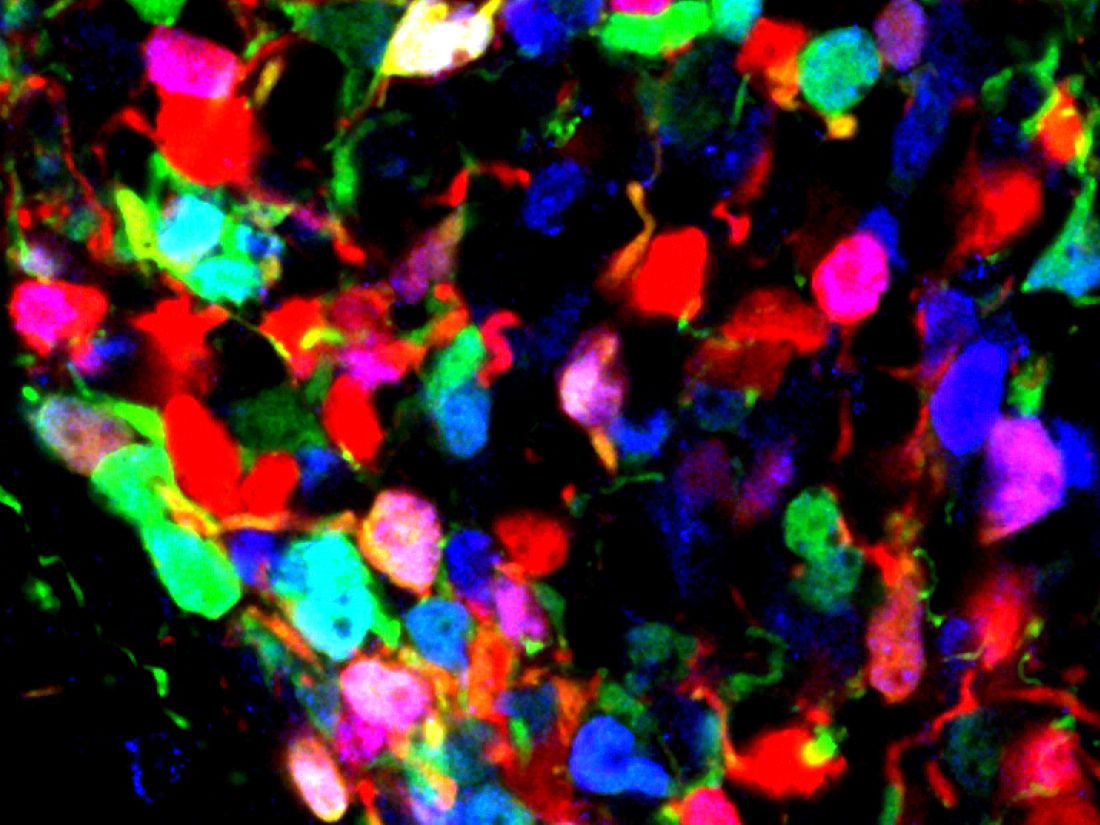
DALLAS – Feb. 16, 2026 – Researchers at UT Southwestern Medical Center have discovered that a crucial developmental process in the brain’s hypothalamus may influence how susceptible individuals are to obesity.
Their preclinical findings, published in Neuron, show that a transcription factor called Otp acts as a molecular “switch” that directs immature hypothalamic neurons toward either appetite-suppressing or appetite-stimulating fates – their ultimate identities as specialized cells. The researchers found that disrupting this switch alters feeding behavior and protects mice from diet-induced obesity.

“These findings show that early developmental decisions in the hypothalamus have a long-lasting impact on energy balance,” said senior author Chen Liu, Ph.D., Associate Professor of Internal Medicine and Neuroscience and an Investigator in the Peter O’Donnell Jr. Brain Institute at UT Southwestern. “By uncovering this fate-switching program, we can begin to understand how the brain establishes lifelong metabolic set points.”
The hypothalamic melanocortin system – comprising pro-opiomelanocortin (POMC) neurons that promote satiety (the feeling of fullness after eating) and agouti-related peptide (AgRP) neurons that trigger hunger – is essential for maintaining energy balance. Although these neurons have been well-studied in adults, how they arise during early development has remained unclear.
Using state-of-the-art, single-nucleus multiome sequencing, Dr. Liu and his colleagues in the Liu Lab mapped the full landscape of neurons derived from POMC-expressing precursor (parent) cells in the adult mouse hypothalamus. The researchers found that fewer than one-third of these precursor neurons continue to express POMC in adulthood. Instead, POMC precursors diversify into many neuronal subtypes, including a substantial portion of adult AgRP neurons.
The study identifies Otp as a key regulator guiding POMC-derived neurons toward AgRP identities. When Otp was selectively deleted in POMC-expressing precursors, these cells failed to acquire the AgRP hunger-triggering fate and instead retained alternative POMC satiety-promoting neuron identities. As a result, adult mice lacking this developmental switch showed reduced urges to consume high-fat diets and were resistant to diet-induced obesity. Notably, this protective effect was stronger in females, due in part to enhanced estrogen receptor (ERα) signaling in specific POMC-derived subpopulations.
“From an evolutionary standpoint, the POMC→AgRP fate switch likely served as an adaptive mechanism,” said Dr. Liu, a Principal Investigator in UTSW’s Center for Hypothalamic Research. “In environments where food availability fluctuated, animals needed a rapid, robust way to increase food intake when high-calorie food became available. By generating a population of highly responsive ‘hunger’ neurons, this developmental switch enabled overeating, helping animals build energy reserves and survive periods of scarcity.”
In today’s world, however, where calorie-dense foods are more readily accessible, this once-beneficial mechanism can amplify vulnerability to obesity, Dr. Liu said. The team’s findings demonstrate that disabling this switch during early development shields the brain from overreacting to high-fat diets, ultimately lowering obesity risk. He said this contrast highlights a broader theme in modern metabolic disease: Biological programs tuned for ancestral survival can become maladaptive in contemporary environments.
Dr. Liu said he and his colleagues plan to investigate next whether external factors, such as maternal overnutrition or undernutrition, influence this genetic fate-switch program and thereby affect metabolic health later in life.
Other UTSW researchers who contributed to this study are co-first authors Baijie Xu, Ph.D., postdoctoral researcher in the Liu Lab, and Li Li, Ph.D., former Instructor of Internal Medicine, former postdoctoral research fellow in the Liu Lab, and current Assistant Professor of Zoology and Physiology at the University of Wyoming; Swati, M.S., Research Associate, Lab Manager in the Liu Lab; Rong Wan, M.S., Research Associate in the Liu Lab; Amanda Almeida, M.B.A., Director of Ambulatory Analytics; and Steven Wyler, Ph.D., Instructor of Internal Medicine and a member of the Center for Hypothalamic Research.
This research was supported by grants from the National Institutes of Health (R01DK114036, DK130892, and DK136592); a postdoctoral fellowship (23POST1019715) and a Career Development Award (24CDA1257999) from the American Heart Association; and the UTSW Metabolic Phenotyping Core, which was supported by a UTSW Nutrition & Obesity Research Center (NORC) grant (P30DK127984).
About UT Southwestern Medical Center
UT Southwestern, one of the nation’s premier academic medical centers, integrates pioneering biomedical research with exceptional clinical care and education. The institution’s faculty members have received six Nobel Prizes and include 28 members of the National Academy of Sciences, 26 members of the National Academy of Medicine, and 14 Howard Hughes Medical Institute Investigators. The full-time faculty of nearly 3,400 is responsible for groundbreaking medical advances and is committed to translating science-driven research quickly to new clinical treatments. UT Southwestern physicians in more than 80 specialties care for more than 143,000 hospitalized patients, attend to more than 470,000 emergency room cases, and oversee nearly 5.3 million outpatient visits a year.