
UTSW researchers boost the power of CAR T cells to fight cancer
Engineering immune cells to produce more BACH2 protein helps them resist exhaustion, fight solid tumors
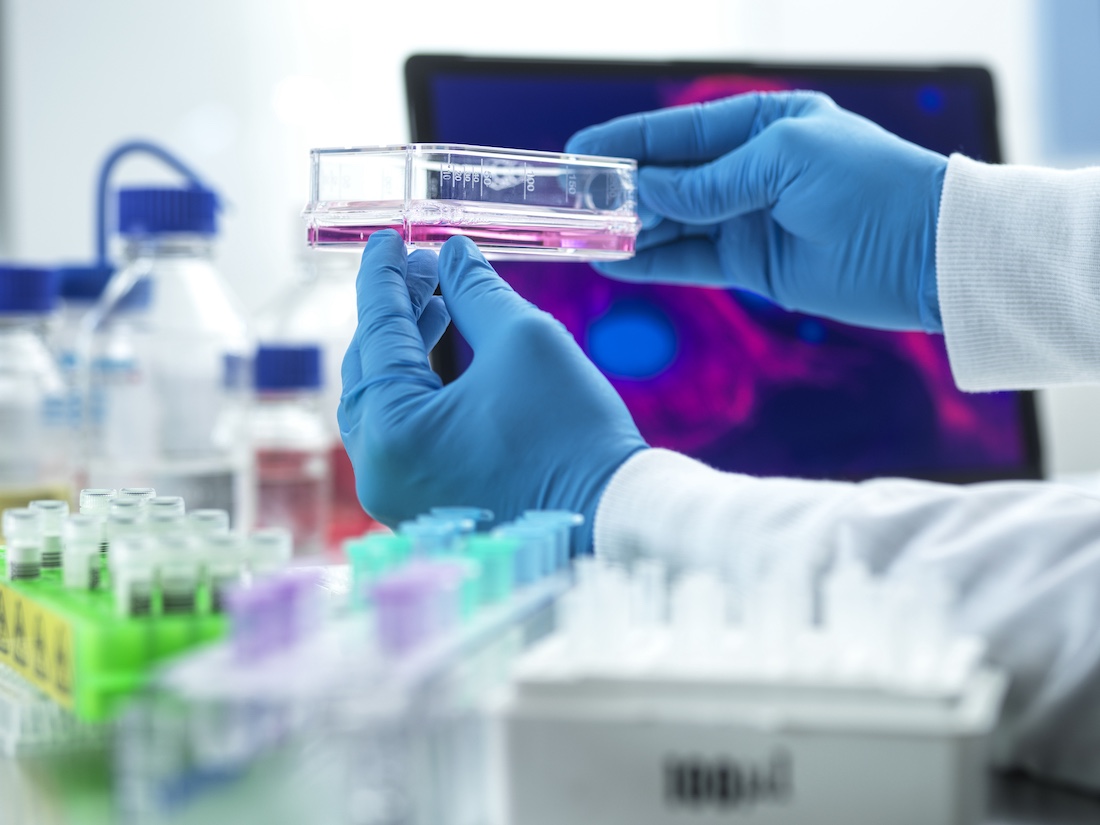
DALLAS – Jan. 22, 2026 – UT Southwestern Medical Center researchers have discovered that increasing the levels of a protein called BACH2 makes engineered cancer-fighting immune cells behave more like stem cells, improving their therapeutic effectiveness. The findings, published in Nature Immunology, suggest new strategies for improving the efficacy of these immune cells, known as chimeric antigen receptor (CAR) T cells.
“Using a mouse model of solid cancer, we found that programming CAR T cells to acquire stem-like properties during manufacturing significantly enhances their antitumor activity. This fine-tuning of CAR T cells may represent a powerful strategy to overcome key barriers in solid tumor immunotherapy,” said Tuoqi Wu, Ph.D., who co-led the study with Chen Yao, Ph.D. Both researchers are Assistant Professors of Immunology and in the Harold C. Simmons Comprehensive Cancer Center at UT Southwestern.
CAR T cells have been approved by the Food and Drug Administration as an anticancer therapy since 2017. These cells are created by collecting a cancer patient’s own T cells, then genetically engineering them to fight that patient’s specific cancer. Although CAR T cells have shown enormous promise in fighting blood cancers, such as leukemias and lymphomas, they offer long-lasting remission in only a subset of cases. Additionally, CAR T cells are largely ineffective at fighting solid tumors.
This inefficacy mostly stems from a phenomenon known as exhaustion, Dr. Wu explained. Constant stimulation of CAR T cells by antigens on cancer cell surfaces eventually leaves them unable to fight cancer cells, proliferate, or respond to immune checkpoint-inhibiting drugs. They also show markers of a dysregulated metabolism and ultimately die. Understanding why exhaustion develops will be key to making CAR T cells a more effective therapy for all cancers.
Several years ago, Drs. Wu and Yao found an important clue in another study they performed examining T-cell exhaustion in chronic viral infections. There, T cells had a range of propensities to become exhausted. But those least likely to become exhausted had properties more akin to stem cells. Those with higher “stemness” produced more of a protein known as BACH2.
To see if the same was true in CAR T cells, the researchers developed these cells from mice. Much like in the previous study, cells with higher expression of the gene for BACH2 also maintained more stem-like qualities than those with lower expression. Cells with more BACH2 were also less likely to become exhausted and fought off leukemia better than those with less BACH2. The researchers found similar results when they looked at BACH2 expression in human CAR T-cell samples.
Capitalizing on these findings, the researchers generated mouse CAR T cells that produced varying levels of BACH2. CAR T cells that produced the highest levels of BACH2 remained the most stem-like and were the best at resisting exhaustion while growing in petri dishes. Using a different strategy, the researchers temporarily boosted the amount of BACH2 that CAR T cells produced during their manufacture, then infused them into a mouse model of neuroblastoma, a type of solid malignant tumor that develops in nerve cell precursors. This tweak significantly improved the cells’ cancer-controlling ability compared with typical CAR T cells, restricting the tumors’ growth.
Drs. Wu and Yao said their study suggests that increasing BACH2 production in CAR T cells could offer a viable technique to help them resist exhaustion and fight both blood and solid tumor cancers. They hope to eventually test this strategy in clinical trials.
Dr. Wu is an Investigator in the Peter O’Donnell Jr. Brain Institute at UT Southwestern.
Other UTSW researchers who contributed to this study are first authors Taidou Hu, Ph.D., a postdoctoral researcher, Ziang Zhu, Ph.D., and Ying Luo, Ph.D., a postdoctoral researcher; Jonathan Hoar, M.S., and Sejal S. Shinde, M.S., research assistants; and Safuwra Wizzard, B.S., B.A., and Kiddist Yihunie, M.S., graduate student researchers.
This study was funded by grants from the National Institutes of Health (AI158294, AG083398, AG056524, and AI154450); the Clinic and Laboratory Integration Program and the Lloyd J. Old STAR Program from the Cancer Research Institute; the V Scholar Award from the V Foundation; the Grant for Junior Faculty from the American Federation for Aging Research (AFAR); the Hevolution/AFAR New Investigator Award in Aging Biology and Geroscience Research; the Cancer Prevention and Research Institute of Texas (RR210035 and RP250282); the Department of Defense (HT94252310801); and a National Cancer Institute (NCI) Cancer Center Support Grant (P30CA142543).
About UT Southwestern Medical Center
UT Southwestern, one of the nation’s premier academic medical centers, integrates pioneering biomedical research with exceptional clinical care and education. The institution’s faculty members have received six Nobel Prizes and include 28 members of the National Academy of Sciences, 26 members of the National Academy of Medicine, and 14 Howard Hughes Medical Institute Investigators. The full-time faculty of nearly 3,400 is responsible for groundbreaking medical advances and is committed to translating science-driven research quickly to new clinical treatments. UT Southwestern physicians in more than 80 specialties care for more than 143,000 hospitalized patients, attend to more than 470,000 emergency room cases, and oversee nearly 5.3 million outpatient visits a year.