
Birds’ songs may help unlock brain patterns behind speech
UTSW-led research illuminates how the brain automates well-learned vocalizations, other motor behaviors
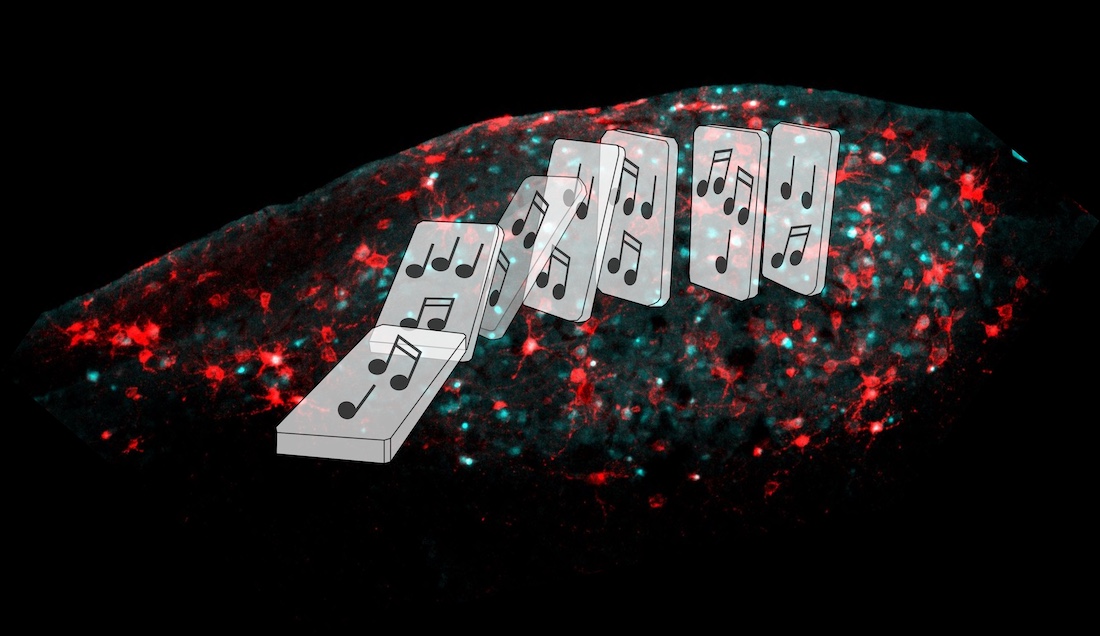
DALLAS – Jan. 28, 2026 – Like falling dominoes, a sequence of activity in an area of the zebra finch brain plays to completion once initiated, allowing these birds to produce their full courtship song, a study led by UT Southwestern Medical Center researchers shows. The findings, published in Nature, could lend insight into how the brain encodes the complex neural activity patterns behind certain motor behaviors – such as human speech.
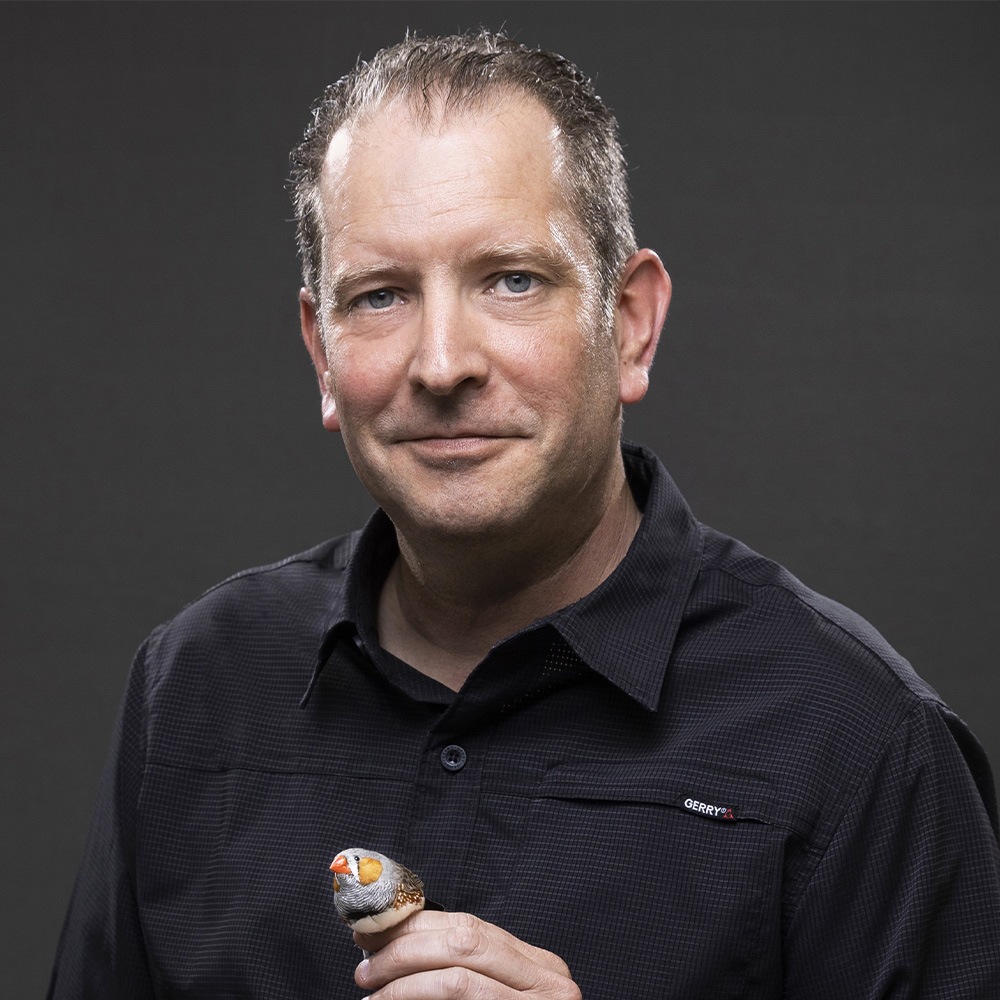
“Together, our results show that brain circuits learn to fuse sequential neuronal activity patterns for behaviors, ultimately achieving holistic control of naturally learned behaviors,” said Todd Roberts, Ph.D., Professor of Neuroscience and an Investigator in the Peter O’Donnell Jr. Brain Institute at UT Southwestern. “This type of learning can significantly reduce the conscious effort needed to produce well-learned behaviors, like speaking, typing, or playing your favorite musical instrument.”
Dr. Roberts co-led the study with first author Massimo Trusel, Ph.D., Instructor of Neuroscience.
There are about 4,000 songbird species worldwide. In about a third of these, males attract mates by singing a single song. These include zebra finches, a popular pet in the U.S. that learn their song from their fathers as juveniles and in adulthood sing their imitated melody thousands of times per day.
Each zebra finch song contains several “syllables” the birds repeat in the same order. But how these songs are generated in the brain has been unclear, Dr. Trusel explained. Research has shown that a brain region called HVC is critical for birdsongs – removing it blocks song generation. However, whether the chain of nerve cell activity necessary to organize the learned song is fully contained within HVC or instead requires outside input has been unknown.
To answer this question, the researchers engineered HVC neurons in zebra finches to be excited when exposed to light. They found that a milliseconds-long flash of light while a song was in progress resulted in the birds immediately stopping and then rapidly restarting their song from the beginning. This suggests the neural activity patterns necessary to generate the songs might be self-contained within HVC, Dr. Trusel said.
To confirm this idea, the researchers used similar genetic engineering to control the activity of neural inputs to HVC from other parts of the brain. They found that none of these circuits are needed for song completion. However, input from a brain region called the thalamus appears to be necessary to get a song started. Dr. Trusel said these results suggest that although some input is necessary to initiate singing, only neural activity within HVC is required for the birds to sing a complete song.
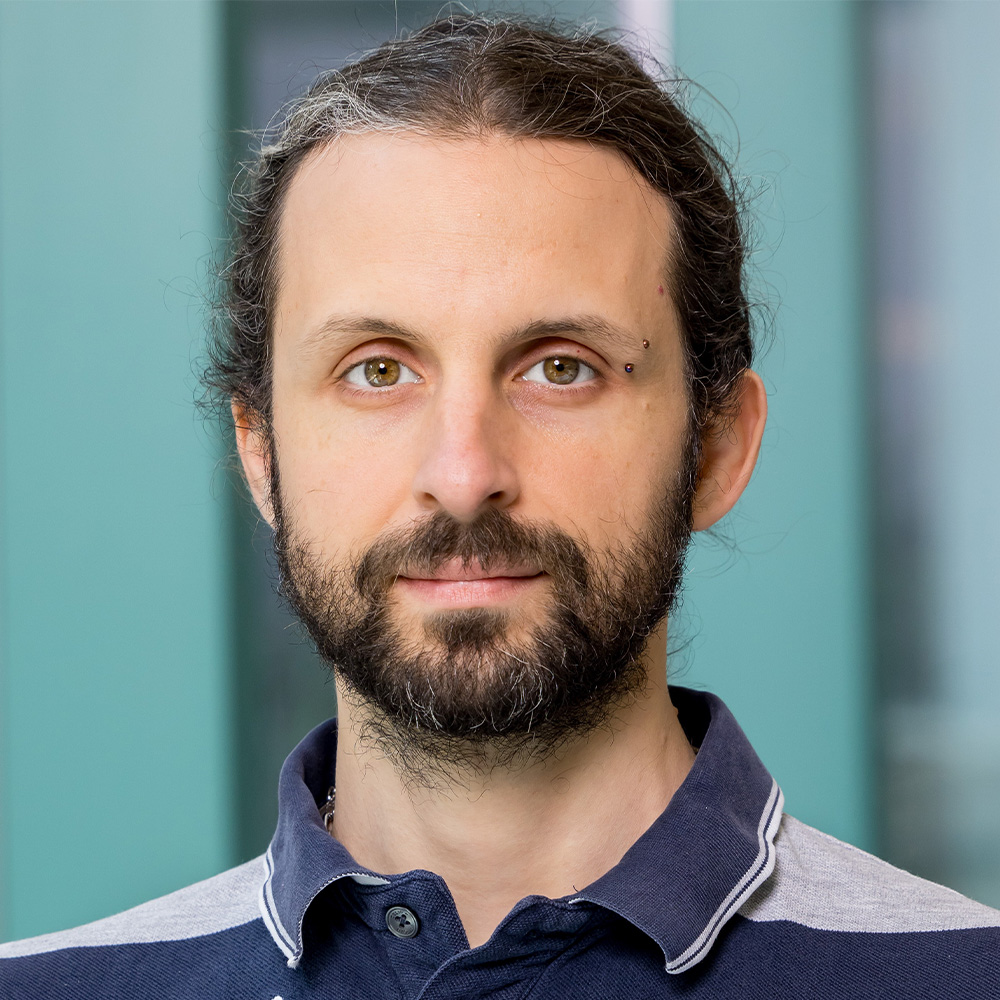
A closer look at the neural populations that make up HVC showed they are more strongly interconnected than previously realized and appear to work together for song generation. Using the findings they gathered in this study, the scientists created a computational model of how neural activity seems to flow through the brain to guide zebra finches’ songs, an effort led by Wenhao Zhang, Ph.D., Assistant Professor in the Lyda Hill Department of Bioinformatics and an Investigator in the O’Donnell Brain Institute. This model reproduced the same neural and animal behavior the researchers saw, lending support to the idea that HVC produces the complex neural activity patterns necessary to generate birdsong without additional inputs, other than an instigating signal.
“This study resolves a long-standing question about how interacting brain regions generate seamless motor behavior,” said William T. Dauer, M.D., Director of the O’Donnell Brain Institute and Professor of Neurology and Neuroscience. “By defining how initiation signals give rise to self-organized neural dynamics, it offers a new framework for understanding skilled actions like speech. The collaboration between Drs. Roberts and Zhang highlights the O’Donnell Brain Institute’s commitment to uniting experimental and theoretical neuroscience – an area central to OBI’s mission.”
Dr. Roberts said these findings suggest how the brain might direct a variety of complex motor behaviors with only a little conscious effort – such as speaking, playing a musical instrument, or driving a well-traveled route – by establishing patterns of neural activity in the brain and then stringing them together for seamless production of the full behavior. The researchers plan to continue studying this phenomenon in other songbird species that vary their songs, a system more akin to human speech.
Additional UTSW researchers who contributed to this study are Jie Cao, Ph.D., Instructor of Neuroscience; Harshida Pancholi, Ph.D., postdoctoral researcher; and Ethan Marks, B.S., and Ziran Zhao, B.S., graduate student researchers.
Dr. Roberts is a Thomas O. Hicks Scholar in Medical Research. Dr. Zhang is a Lupe Murchison Foundation Scholar in Medical Research.
This study was funded by grants from the National Institutes of Health (UF1NS115821, R01NS108424, and F99NS124172).
About UT Southwestern Medical Center
UT Southwestern, one of the nation’s premier academic medical centers, integrates pioneering biomedical research with exceptional clinical care and education. The institution’s faculty members have received six Nobel Prizes and include 28 members of the National Academy of Sciences, 26 members of the National Academy of Medicine, and 14 Howard Hughes Medical Institute Investigators. The full-time faculty of nearly 3,400 is responsible for groundbreaking medical advances and is committed to translating science-driven research quickly to new clinical treatments. UT Southwestern physicians in more than 80 specialties care for more than 143,000 hospitalized patients, attend to more than 470,000 emergency room cases, and oversee nearly 5.3 million outpatient visits a year.