
Most patients support AI to help read mammograms with doctor oversight
Results of UTSW study reinforce importance of patient-focused communication, interaction with providers
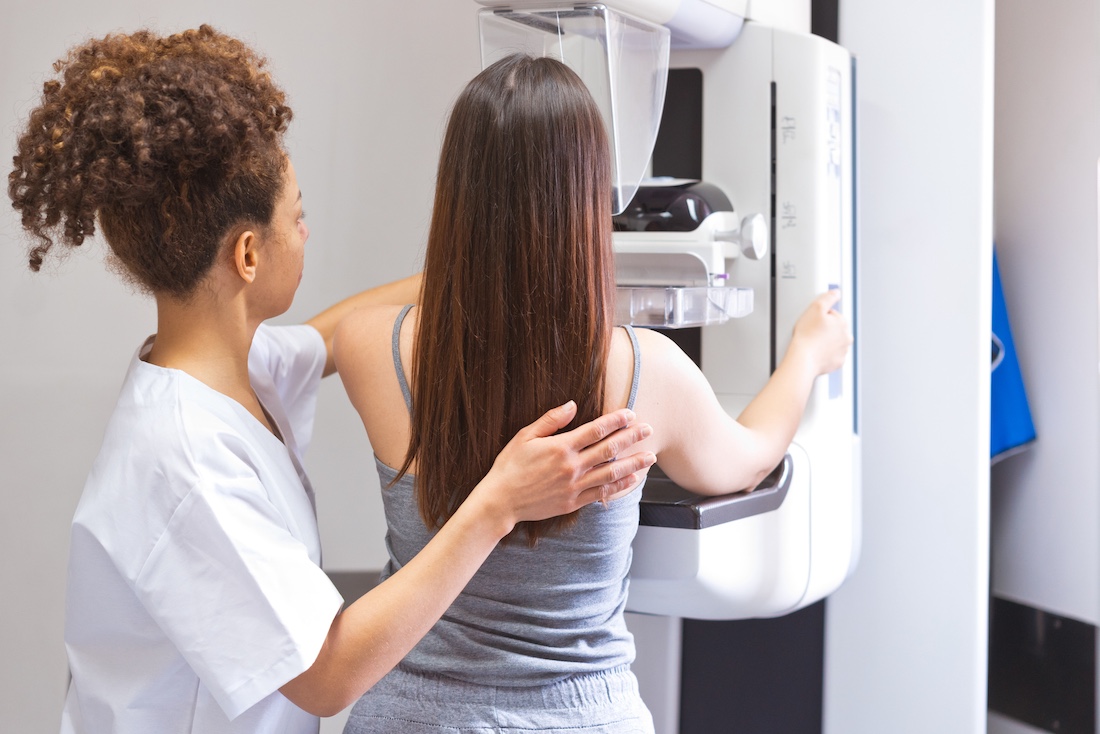
DALLAS – Jan. 20, 2026 – Artificial intelligence (AI) has become a go-to tool in health care, helping clinicians such as radiologists make diagnoses and personalize care. But what do patients think about this?
In a recent study, UT Southwestern Medical Center researchers found that most patients support the use of AI to help interpret mammograms as long as radiologists provide oversight in the imaging analysis, though perceptions varied among patient populations. The study, published in Breast Cancer Research and Treatment, highlights the importance of clear, patient-centered communication as clinicians incorporate AI-based tools into mammography interpretation.
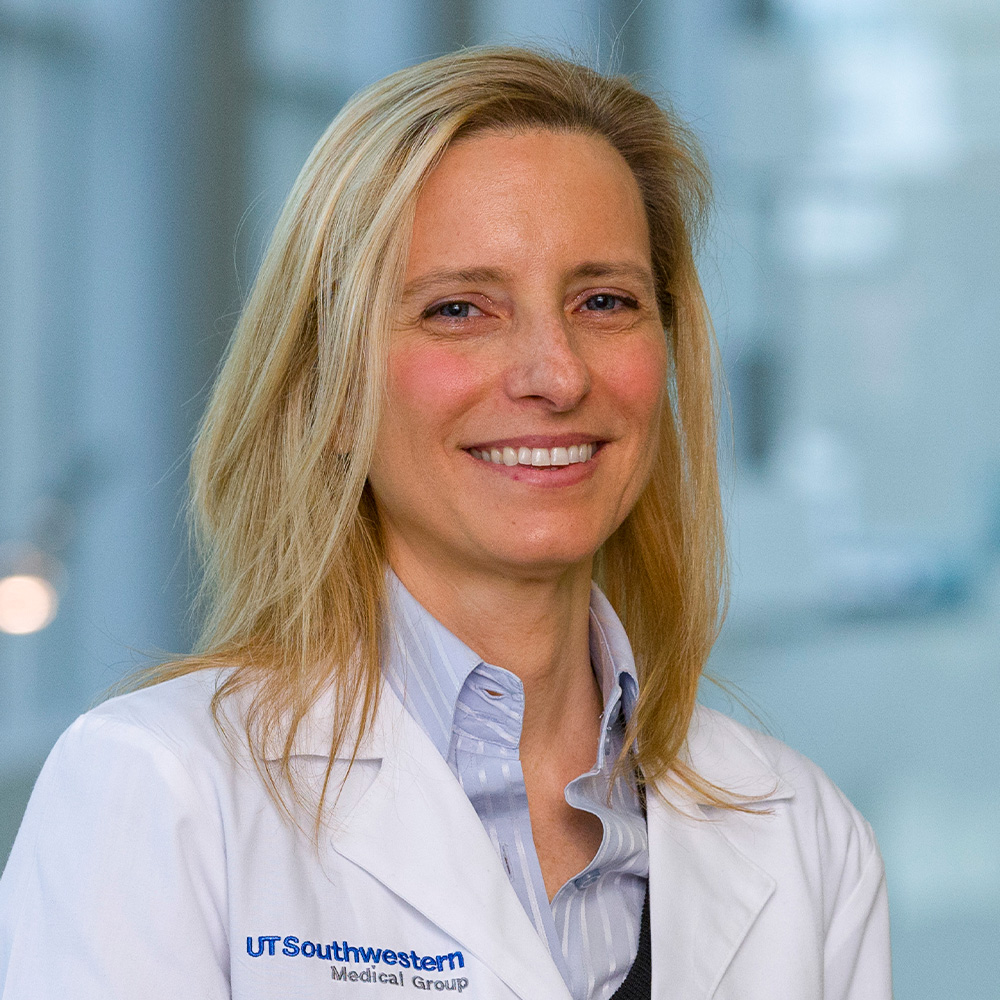
“This is the first study to measure patient perspectives on AI in mammography in different hospital settings,” said corresponding author Basak Dogan, M.D., Professor of Radiology, Director of Breast Imaging Research, and member of the Harold C. Simmons Comprehensive Cancer Center at UT Southwestern. “It reveals how demographic and socioeconomic factors shape acceptance, trust, and concerns about AI integration in breast cancer screening.”
The researchers surveyed 924 patients receiving mammograms at UT Southwestern’s William P. Clements Jr. University Hospital and Parkland Health, a public safety-net health system for the uninsured that serves as the primary teaching hospital for UTSW. Overall, 71.5% of participants supported the use of AI in mammogram interpretation, but only 6.6% supported AI as the sole reader. Nearly 60% said they would prefer to wait hours or even days for a radiologist’s interpretation rather than rely on immediate AI results, reinforcing the importance patients place on human oversight and provider-patient interaction.
Patient preferences were largely consistent across care settings. Although initial analyses showed lower approval of AI among individuals at Parkland Health, those differences disappeared after adjusting for demographic factors such as age, education, income, and race.
The survey also revealed strong expectations around transparency. Across both sites, 73.8% of participants indicated they would want to be informed or provide consent before AI is used to help read mammograms. Concerns about data privacy, bias, accuracy, transparency, and impacts on the doctor-patient relationship were common, with more than 80% of respondents reporting worry about at least one of these issues.
Among all participants, 84% wanted a radiologist to review an AI-identified abnormality, while only 44% wanted AI to review a radiologist-identified abnormality.
Non-Hispanic Black participants were less likely to accept AI and more likely to express privacy concerns, highlighting the need for culturally sensitive approaches as AI tools are introduced into clinical care, the researchers said. In addition, they stressed transparent communication and regulatory oversight as keys to helping build patient trust and acceptance of AI.
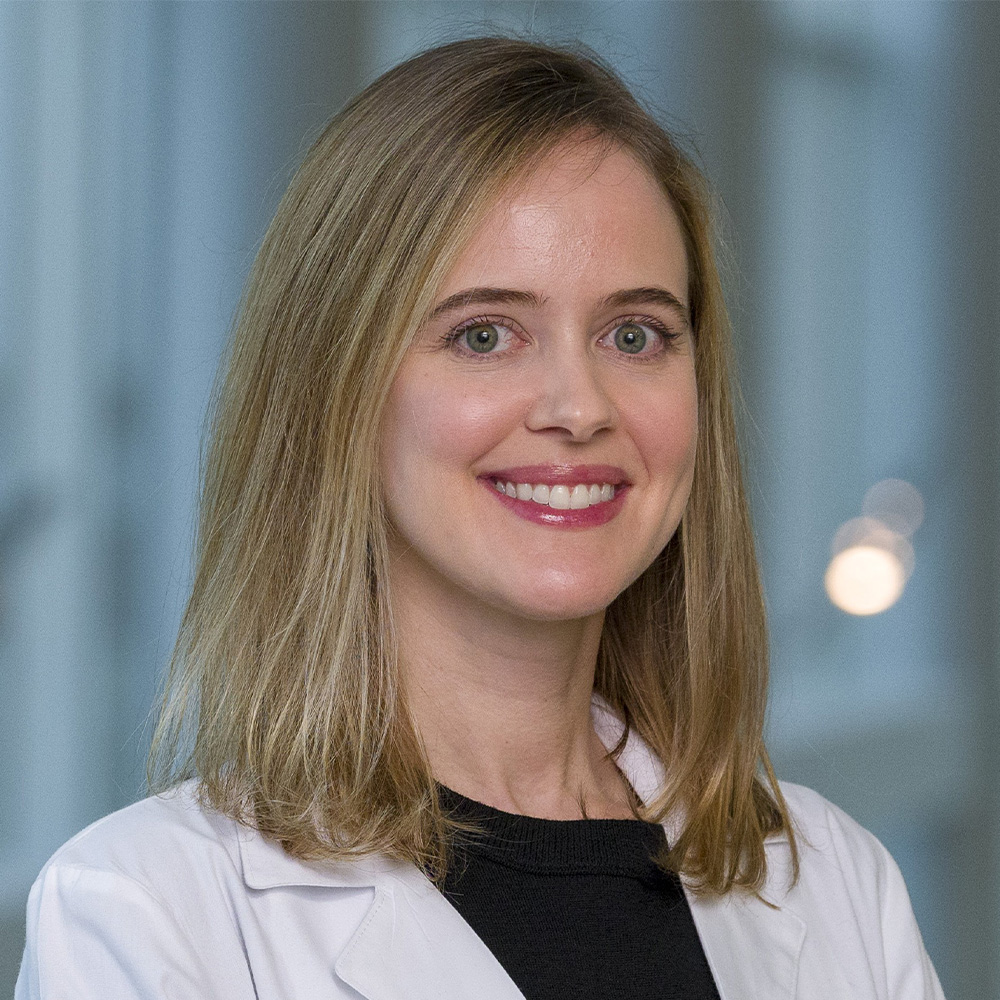
“As AI is increasingly used in breast imaging interpretation, attention should be paid to educate patients about the role of AI, obtain consent for its use, and provide safeguards to protect data privacy,” said study leader Emily Knippa, M.D., Associate Professor of Radiology and a member of the Breast Imaging Division.
AI was integrated into clinical mammography interpretation at UT Southwestern in early 2023, shortly before the study began. The technology is embedded directly within the Picture Archiving and Communication System (PACS), where AI outputs appear alongside mammogram images during routine reads by radiologists. Patients receive general consent language indicating that AI may be used to assist radiologists in interpreting images.
“This was not an entirely new process for us, as we had previously used computer-aided detection (CADx) systems, which functioned in a similar way by overlaying prompts on the images,” Dr. Dogan said. “Because of that prior experience, the transition to AI was relatively seamless.
“The key difference between CADx and AI is that CADx relied on rule-based algorithms that often produced a high number of false positives, whereas AI systems are trained on large datasets and use deep learning to provide more nuanced, case-specific outputs. This means AI can highlight suspicious regions with greater accuracy and consistency, reducing unnecessary callbacks and improving radiologist confidence,” she said.
The study builds on earlier research by Dr. Dogan’s team surveying patients on their views of integrating AI into mammography.
Other UTSW researchers who contributed to this study are co-first author Jenifer Chisom Ogu, M.D., UTSW Medical School graduate and UT Austin radiology resident interning at JPS Health Network in Fort Worth; co-first author B. Bersu Ozcan, M.D., Radiology research fellow; and Yin Xi, Ph.D., Associate Professor of Radiology.
Dr. Dogan is a Eugene P. Frenkel, M.D. Scholar in Clinical Medicine. The study was funded by her Eugene P. Frenkel, M.D., Scholar in Clinical Medicine Award from the Simmons Cancer Center.
About UT Southwestern Medical Center
UT Southwestern, one of the nation’s premier academic medical centers, integrates pioneering biomedical research with exceptional clinical care and education. The institution’s faculty members have received six Nobel Prizes and include 28 members of the National Academy of Sciences, 26 members of the National Academy of Medicine, and 14 Howard Hughes Medical Institute Investigators. The full-time faculty of nearly 3,400 is responsible for groundbreaking medical advances and is committed to translating science-driven research quickly to new clinical treatments. UT Southwestern physicians in more than 80 specialties care for more than 143,000 hospitalized patients, attend to more than 470,000 emergency room cases, and oversee nearly 5.3 million outpatient visits a year.
About Parkland Health
Parkland Health is one of the largest public hospital systems in the country. Premier services at the state-of-the-art Parkland Memorial Hospital include the Level I Rees-Jones Trauma Center, the only burn center in North Texas verified by the American Burn Association for adult and pediatric patients, and a Level III Neonatal Intensive Care Unit. The system also includes two on-campus outpatient clinics – the Ron J. Anderson, MD Clinic and the Moody Outpatient Center, as well as more than 30 community-based clinics and numerous outreach and education programs. By cultivating its diversity, inclusion, and health equity efforts, Parkland enriches the health and wellness of the communities it serves. For more information, visit parklandhealth.org.