Unit Achievements
9 Orange
Quality Highlight Summary for 9 Orange
Focus Area
- Practice Reliability and Prevention of High-Cost, High-Harm Events
- Documentation Accuracy
- Nursing Process Consistency
Overview
- In 2025, we advanced several quality initiatives focused on improving practice consistency, documentation accuracy, and frontline reliability. The goal is to continue this effort into 2026. Our primary quality focus in 2025 was decreasing reportable HAPUs and CAUTIs by reinforcing reliability in turning schedules, strengthening bedside validation, and coaching staff on accurate and timely skin integrity documentation. Using the evidence-based CAPREE™ methodology (Consistently Audit, Persistently Remind, Educate, Engage), we strengthened and standardized audit-feedback cycles, increased transparency of practice gaps, and supported leaders in reducing preventable harm across other inpatient units.
Key Accomplishments
- Used Standardized Audit-Feedback to decrease patient harm in hospital-acquired pressure injuries (HAPIs) and catheter-associated urinary tract infections (CAUTIs).
- Implemented a repeatable audit and feedback process for turning, Foley catheter care, consistent feedback to staff, and documentation accuracy of Foley catheter care and turning.
- Delivered real-time feedback and coaching to reduce documentation–practice mismatches.
- Helped maintain improved consistency of documentation in turning across other units with shared methodology and auditing.
- Cross-Department Collaboration
- Partnered with IR, Nursing Education, and unit leaders to align definitions, expectations, and workflows. In collaboration with Nursing Education and Wound Care staff, 9 Orange contributed to an Elsevier education module that was assigned housewide.
- Prevention of High-Cost, High-Harm Events Focused on leading indicators tied to AHRQ/CMS priorities, supporting reductions in:
- Reportable HAPIs – reportable to CMS, non-reimbursable costs, susceptible to additional grievance costs
- CAUTI
Outcomes and Impact
To date, our unit has had one reportable HAPI and one CAUTI in 2025.
- Enhanced staff engagement and accountability with bedside metrics.
- Improved reliability of documentation tied to harm prevention.
- Established a scalable framework for broader organizational adoption in 2026.
8 Orange
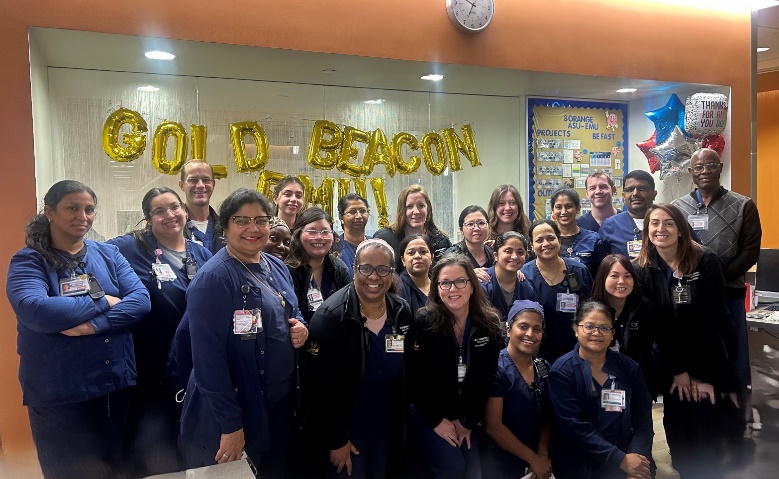
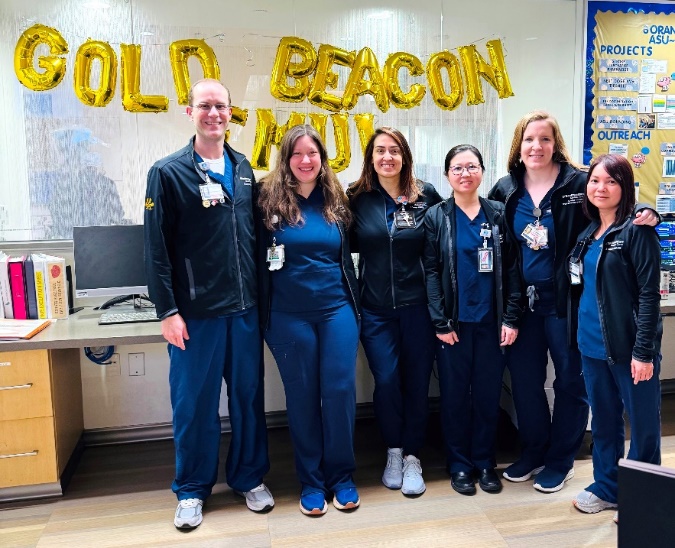
Gold Beacon Award
UT Southwestern's Epilepsy Monitoring Unit (EMU), on 8 Orange in Clements University Hospital, has achieved the Gold-Level Beacon Award for Excellence from the American Association of Critical-Care Nurses (AACN).
The Beacon recognizes units that distinguish themselves by providing high-quality patient care in a healthy work environment and whose consistent and systematic approach to evidence-based care and unit culture optimizes outcomes. This distinction is not only a tremendous honor, but it also spotlights the outstanding work performed by the entire EMU team of caregivers.
We are the first EMU in the nation to have received a gold-level Beacon Award!
National Presentations
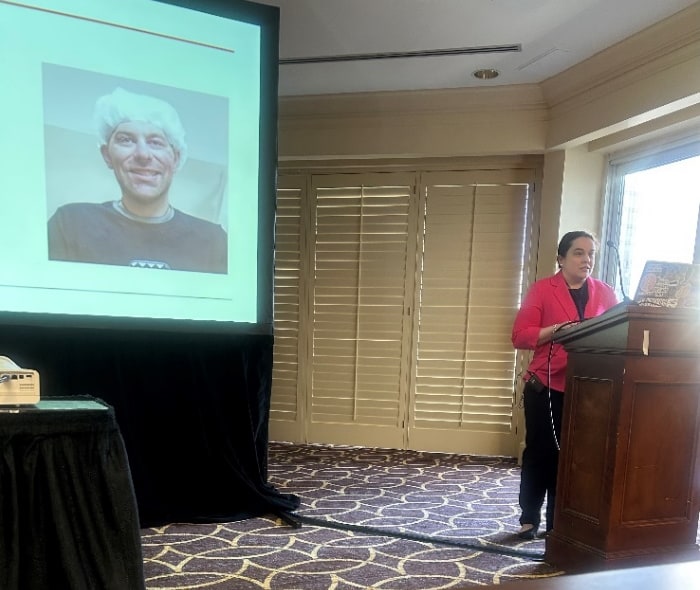
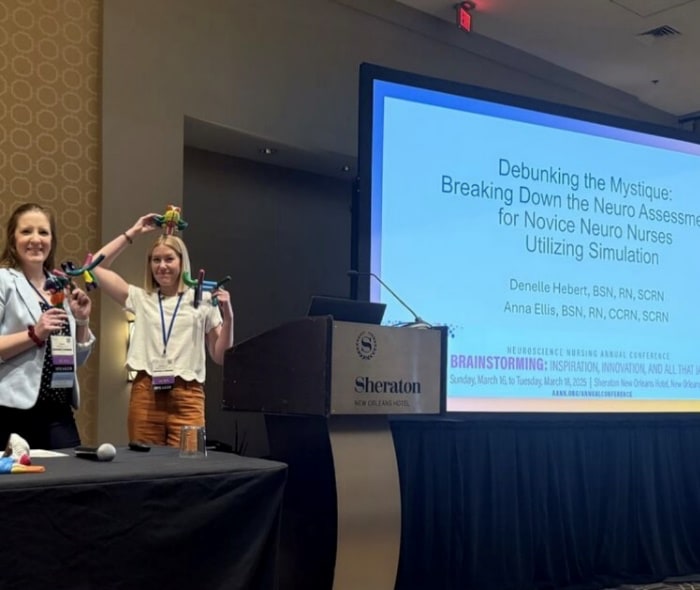
8 Orange had two poster presentations and two podium presentations at the 2025 American Association of Neuroscience Nursing Annual Conference.
2026 Nursing Thank You Event
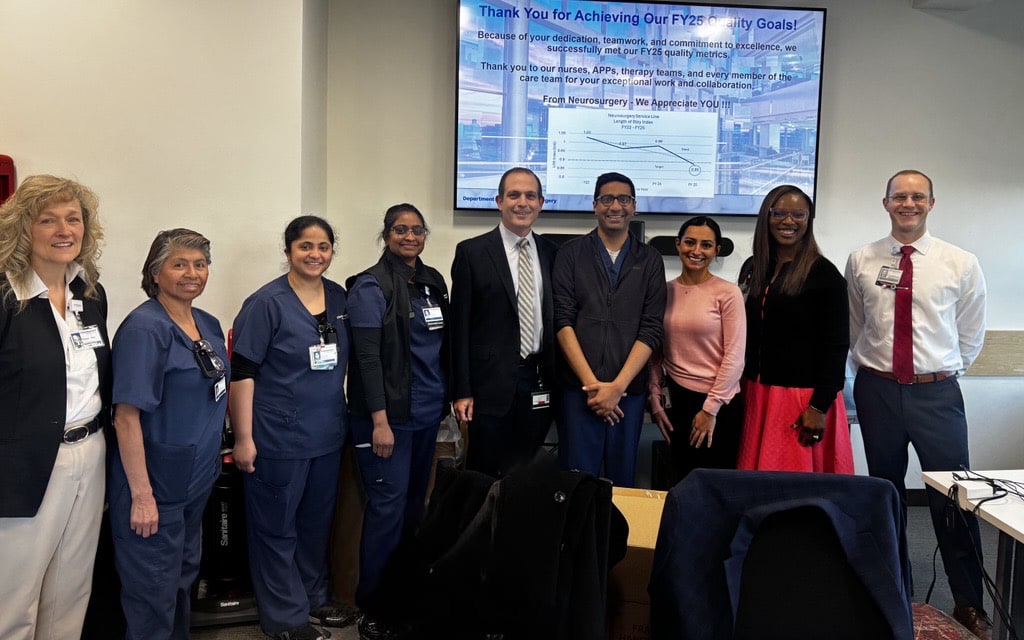
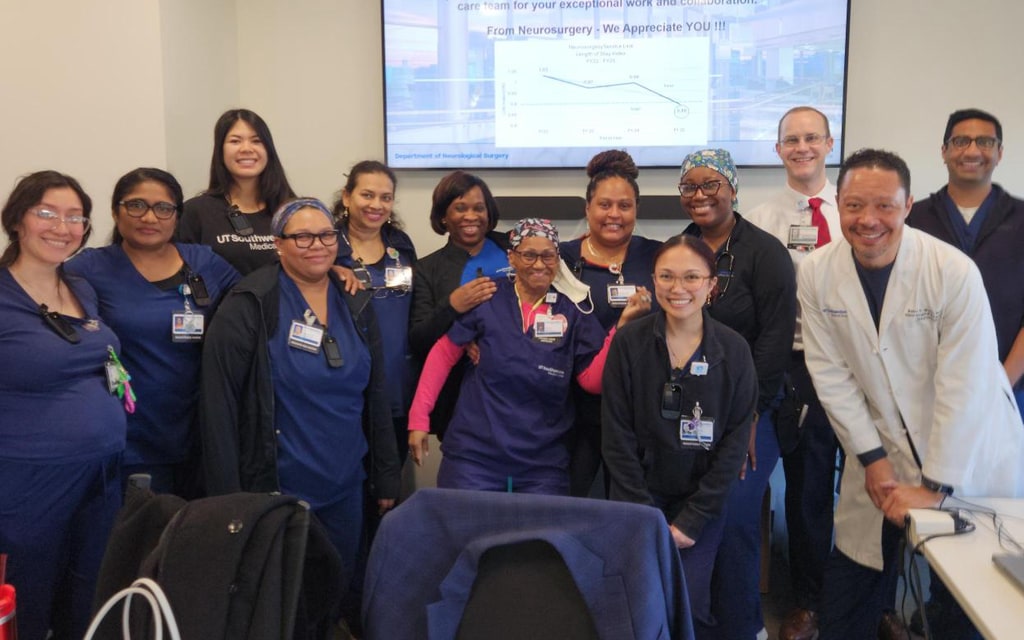
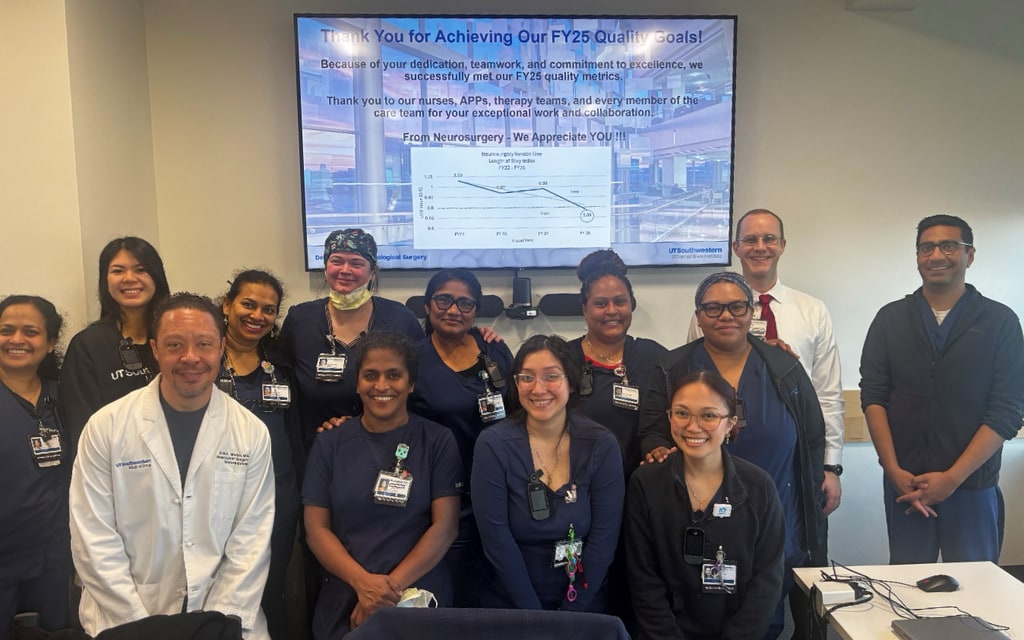
Our teams work tirelessly throughout the year, and achieving all of our quality metrics for FY25 was a significant accomplishment worth celebrating. To show our appreciation, we hosted a Nursing Thank You Event, where we provided breakfast, distributed gift bags, and recognized the hard work and dedication that made this success possible.
This achievement was not only driven by our nurses, but also by the collaborative efforts of our entire care team, including advanced practice providers (APPs), therapy staff, care coordination, and many others.