
News Highlights - October 13, 2026
Kudos

Thibodeau Chairs HFSA Annual Meeting
Jennifer Thibodeau, M.D., M.S.C.S., a Professor in the Division of Cardiology, Medical Director of Heart Failure, Medical Director of Extracorporeal Membrane Oxygenation (ECMO), and Associate Director of Clinical Operations for Cardiology at UT Southwestern, served as Chair of the Heart Failure Society of America (HFSA) Annual Scientific Meeting, held Oct. 9-12 in Phoenix.
The HFSA Annual Scientific Meeting is one of the leading national conferences dedicated to heart failure care, bringing together physicians, researchers, advanced practice providers, nurses, pharmacists, and other members of multidisciplinary heart failure teams to share the latest science, research findings, and advances in patient management. More than 30 faculty and trainees participated in the scientific presentations and educational sessions.
Serving as chair of the society’s flagship scientific meeting is a significant professional honor that recognizes leadership and expertise in heart failure care and research. Dr. Thibodeau specializes in heart failure, left ventricular assist devices, and cardiac transplantation. She joined the UT Southwestern faculty in 2011. ■
Dr. Thibodeau holds the Catherine Marie Bassett Distinguished Professorship in Heart Failure.
Cardiologists Contribute to National Heart Failure Report
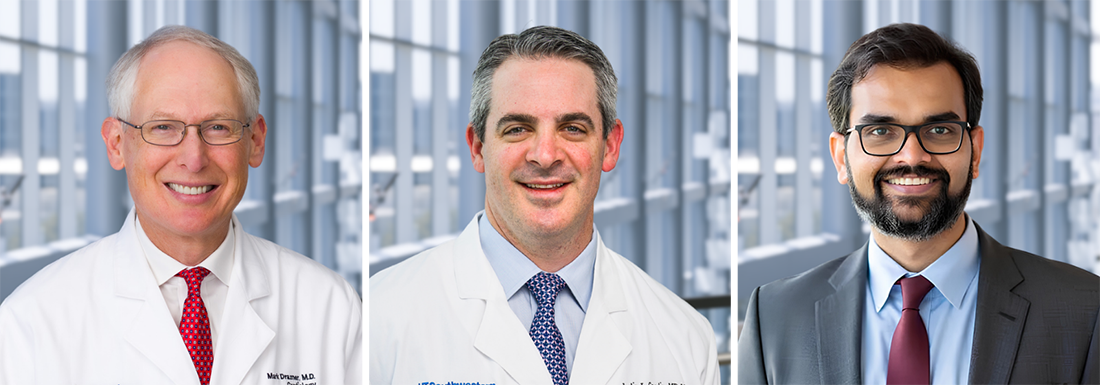
Three faculty members from the Division of Cardiology contributed to the 2026 edition of the Heart Failure Society of America’s annual HF STATS report, a comprehensive review of heart failure epidemiology, outcomes, treatment trends, and healthcare challenges in the U.S. Among the invited authors and contributors to the publication were Mark Drazner, M.D., M.Sc., Professor and Vice Chair of Clinical Affairs; Justin Grodin, M.D., M.P.H., Associate Professor and Medical Director of the Internal Medicine Clinical Trials Unit; and Ambarish Pandey, M.D., M.S.C.S., now a Professor and Director of the Center for Cardiometabolic Research at the University of Michigan who continues as a part-time member of the UT Southwestern faculty in a research role.
The report, published in the Journal of Cardiac Failure, summarizes the latest data on heart failure prevalence, mortality, hospitalizations, treatment utilization, costs, and disparities nationwide. Among its key findings, the authors report that nearly 1 in 4 Americans will develop heart failure during their lifetime, heart failure prevalence is projected to continue rising through 2050, and mortality rates have increased significantly over the past decade. The publication also highlights persistent racial, ethnic, geographic, and socioeconomic disparities in heart failure outcomes and identifies opportunities to improve access to evidence-based therapies.
HF STATS serves as a widely used reference for clinicians, researchers, and policymakers tracking the evolving burden of heart failure throughout the nation. ■
Dr. Drazner holds the James M. Wooten Chair in Cardiology.
Clinical Practice

Advanced Lung Disease Clinic Opens in Midland
The Division of Pulmonary and Critical Care Medicine has expanded access to specialized lung care in West Texas with the opening of the UT Southwestern Advanced Lung Disease Clinic at Midland Memorial Hospital.
The clinic is led by Joseph Crossno, M.D., Ph.D., an Associate Professor in the Division of Pulmonary and Critical Care Medicine who specializes in end-stage lung disease, lung transplantation, cardiopulmonary support, and pulmonary vascular disease. He joined the UT Southwestern faculty in 2024 after serving as Medical Director of Lung Transplantation at INTEGRIS Health Baptist Medical Center in Oklahoma City.
Patients with advanced or end-stage lung disease can be referred to the Midland clinic for treatment or evaluation for potential lung transplantation. Services include care for advanced emphysema, cystic fibrosis, interstitial lung disease, pulmonary hypertension and other pulmonary vascular diseases, as well as evaluation for lung volume reduction surgery and lung transplantation.
Patients are seen in Midland the third Monday of each month, giving people in West Texas access to specialized evaluation and ongoing management closer to home. For patients who require transplantation, UT Southwestern coordinates care from initial evaluation through the waiting period, surgery and follow-up after discharge. UT Southwestern’s lung transplant network also includes outreach clinics in Lubbock and Tyler, extending access to transplant screening beyond its Dallas campus. ■
Research Report

Nephrology Team to Contribute to National AKI Outcomes Study
UT Southwestern has been selected as a clinical site for the COPE-AKI Consortium, a multicenter research initiative focused on improving outcomes for patients recovering from acute kidney injury (AKI). Robert Toto, M.D., and Miguel Vazquez, M.D., both Professors in the Division of Nephrology, will lead UT Southwestern’s participation in the study, which will evaluate whether a coordinated care model that combines patient education, nephrology follow-up, pharmacy support, and care navigation can reduce hospitalizations and major adverse kidney events after discharge.
The COPE-AKI trial, led by the University of Pittsburgh, is enrolling adults hospitalized with persistent stage 2 or stage 3 AKI. Researchers will compare an enhanced, multidisciplinary intervention with usual care to determine whether the approach improves hospital-free days, reduces the risk of recurrent kidney injury, and supports better long-term recovery. The study aims to enroll 2,145 participants across multiple clinical sites.
“Participation in major NIH-supported research consortia is both essential and highly competitive,” said Samir M. Parikh, M.D., Professor and Chair of Internal Medicine. “These collaborations create opportunities for our trainees to pursue investigative careers and give our patients access to innovative research that has the potential to improve care.”
Acute kidney injury is a common complication of hospitalization and is associated with an increased risk of chronic kidney disease, cardiovascular disease, recurrent hospitalization, and kidney failure. The consortium’s work seeks to identify strategies that can improve recovery and long-term health for patients affected by the condition. ■
Dr. Toto is a Distinguished Teaching Professor and holder of the Mary M. Conroy Professorship in Kidney Disease. Dr. Parikh holds the Donald W. Seldin Distinguished Chair in Internal Medicine and the Ruth W. and Milton P. Levy, Sr. Chair in Molecular Nephrology.

Garg Receives $3.3 Million NIH Grant to Advance Lipodystrophy Research
Abhimanyu Garg, M.D., a Professor in the Division of Endocrinology and Program Director of the Nutrition and Metabolic Diseases Fellowship, has been awarded a $3.3 million grant from the National Institutes of Health to investigate the genetic and metabolic basis of familial lipodystrophies, a group of rare inherited disorders that impair the body’s ability to store and regulate fat. These conditions can lead to severe insulin resistance, diabetes, high triglyceride levels, fatty liver disease, and other metabolic complications.
An internationally recognized leader in the field, Dr. Garg has spent more than four decades studying lipodystrophy syndromes and their underlying genetic causes. His research has helped identify multiple forms of the disease and explain how abnormalities in adipose tissue contribute to metabolic dysfunction. He has discovered 10 previously unknown genes associated with lipodystrophy.
The new NIH-funded project will seek to identify additional genetic causes of familial lipodystrophy in patients whose disease remains unexplained. Using whole-genome sequencing and other advanced molecular approaches, the research team will examine how specific genetic variants contribute to insulin resistance and related metabolic disorders. Findings from the study are expected to deepen understanding of lipodystrophy and may provide insights into more common conditions, including obesity, diabetes, and metabolic disease. ■
Dr. Garg holds the Distinguished Chair in Human Nutrition Research.

NORC Pilot and Feasibility Grant Applications Due Nov. 11
Applications are now being accepted for the next cycle of Pilot & Feasibility Grants through the UT Southwestern Nutrition and Obesity Research Center (NORC). Proposals must be submitted by 11:59 p.m. Wednesday, Nov. 11. The program supports innovative research in nutrition, obesity, obesity-related disorders, and mechanisms underlying body weight homeostasis.
Up to four awards will be made, with each recipient receiving up to $50,000 for one year along with prorated access to NORC Metabolic Core facilities. Funding will begin Jan. 1, 2027. Applications will be reviewed by a panel of NORC faculty and internal and external physicians and scientists.
Eligible applicants must be independent investigators and faculty members at UT Southwestern. Postdoctoral fellows and their equivalents are not eligible. The program is intended for new investigators launching research careers focused on nutrition, obesity, and obesity-related complications who have not received extramural funding equivalent to an NIH R01, VA Merit Award, or P01 as principal investigator. Previous NORC Pilot & Feasibility grant recipients are not eligible.
Only one application may be submitted per faculty member, although collaborative projects are encouraged. Proposals must include an abstract, specific aims, research proposal, references, budget, NIH-format biosketch, and a letter of support from a department chair, division chief, or center director. Detailed criteria and guidelines are available online. ■

Study Finds County Indigent Care Programs Help Fill Gaps Left by Medicaid Restrictions in Texas
A new study led by Arthur Hong, M.D., M.P.H., Associate Professor in the Division of General Internal Medicine, found that county-funded indigent care programs provide an important source of health coverage for low-income Texans who are ineligible for Medicaid, but access to services varies widely across the state.
Published in Health Affairs Scholar, the study examined indigent care programs in all 254 Texas counties. The researchers found that while these programs can help uninsured residents access medical care, eligibility requirements, covered services, and public reporting differed substantially from county to county. Only 39 counties offered income eligibility at or above 138% of the federal poverty level, and just five counties met the study’s criteria for broad eligibility and comprehensive services. All five were located in metropolitan areas.
The analysis also identified gaps in program oversight and transparency. More than half of Texas counties had not submitted required annual reports, and researchers found 19 counties whose programs appeared inconsistent with at least one state requirement, including income eligibility standards or mandated benefits.
According to the authors, county indigent care programs represent an often-overlooked part of the health care safety net, particularly for people excluded from Medicaid because of income or immigration-related restrictions. The findings suggest that stronger state reporting requirements and oversight could help improve access to care and reduce geographic disparities, especially in rural areas. ■
Study Examines AI Software Use Among Commercially Insured Patients
A new study led by Arthur Hong, M.D., M.P.H., Associate Professor in the Division of General Internal Medicine, found that county-funded indigent care programs provide an important source of health coverage for low-income Texans who are ineligible for Medicaid, but access to services varies widely across the state.
Published in Health Affairs Scholar, the study examined indigent care programs in all 254 Texas counties. The researchers found that while these programs can help uninsured residents access medical care, eligibility requirements, covered services, and public reporting differed substantially from county to county. Only 39 counties offered income eligibility at or above 138% of the federal poverty level, and just five counties met the study’s criteria for broad eligibility and comprehensive services. All five were located in metropolitan areas.
The analysis also identified gaps in program oversight and transparency. More than half of Texas counties had not submitted required annual reports, and researchers found 19 counties whose programs appeared inconsistent with at least one state requirement, including income eligibility standards or mandated benefits.
According to the authors, county indigent care programs represent an often-overlooked part of the health care safety net, particularly for people excluded from Medicaid because of income or immigration-related restrictions. The findings suggest that stronger state reporting requirements and oversight could help improve access to care and reduce geographic disparities, especially in rural areas. ■
Education & Training
University of Tsukuba Faculty Visit Explores Research Collaborations
Three faculty members from the University of Tsukuba in Japan visited UT Southwestern in September to explore potential research and educational collaborations through the Office of Global Health.
Discussions centered on two areas with particular potential: improving how clinicians use diagnostic tests for infectious diseases and developing faster, on-site monitoring of antimicrobial drug levels for critically ill patients.
Hiroshi Ito, M.D., presented his work in diagnostic stewardship, which examines whether tests are being ordered appropriately and how unnecessary testing contributes to low-value care. His research has expanded to include health care utilization and social epidemiology, including the effects of loneliness and social isolation on chronic health conditions. He is interested in cross-national studies using large datasets and electronic health records.
“Diagnostic stewardship is an increasingly important part of delivering effective care while making thoughtful use of health care resources,” said Roger Bedimo, M.D., M.S., Professor of Internal Medicine in the Division of Infectious Diseases and Geographic Medicine and Infectious Diseases Section Chief for the VA North Texas Health Care System. “Dr. Ito’s work gives us an opportunity to consider these questions across different health systems and patient populations.”
Hideki Hashimoto, M.D., and Yuji Wakimoto, M.D., discussed an automated high-speed liquid chromatography system designed to measure antimicrobial drug levels from a small blood sample in about 30 minutes. The approach could allow clinicians to adjust antibiotic doses during the same morning’s rounds rather than waiting days for results from an outside laboratory. The technology could be particularly useful for patients with sepsis and others whose conditions make antimicrobial dosing difficult.
“The ability to measure antimicrobial drug levels quickly at the point of care could have a meaningful impact on how we treat critically ill patients,” Dr. Bedimo said. “This is the kind of technology that could help clinicians make more informed dosing decisions when timing matters most.”
The Office of Global Health will continue discussions with University of Tsukuba colleagues about opportunities to collaborate in diagnostic stewardship, antimicrobial therapeutic drug monitoring, and related educational activities. ■
In Case You Missed It

Study Identifies New Regulator of Intestinal Inflammation
Research led by Venuprasad Poojary, Ph.D., Associate Professor in the Division of Digestive and Liver Diseases and the Department of Immunology, has identified a previously unknown protein that helps protect the colon from chronic inflammation.
Published in Nature Immunology, the study found that the protein ZBTB44 acts as a key regulator of immune responses in the gut. Mice lacking ZBTB44 developed spontaneous colitis and other inflammatory conditions, driven by excessive production of interferon-gamma (IFN-γ), an immune signaling molecule implicated in inflammatory bowel disease (IBD).
The team discovered that ZBTB44 works with the transcription factor T-bet to suppress chronic IFN-γ production, preventing immune-mediated damage to the intestinal lining. The findings reveal a previously unrecognized mechanism that helps maintain immune balance in the colon.
The research is noteworthy because it identifies ZBTB44 as a critical checkpoint in controlling intestinal inflammation and provides new insight into how inflammatory bowel diseases such as Crohn’s disease and ulcerative colitis develop. The discovery establishes ZBTB44 as a potential therapeutic target for future treatments aimed at reducing harmful inflammation while preserving normal immune function. ■