
Radiation Oncology campus in Fort Worth marks construction milestone
Topping out ceremony brings UT Southwestern one step closer to enhancing cancer care in Tarrant County
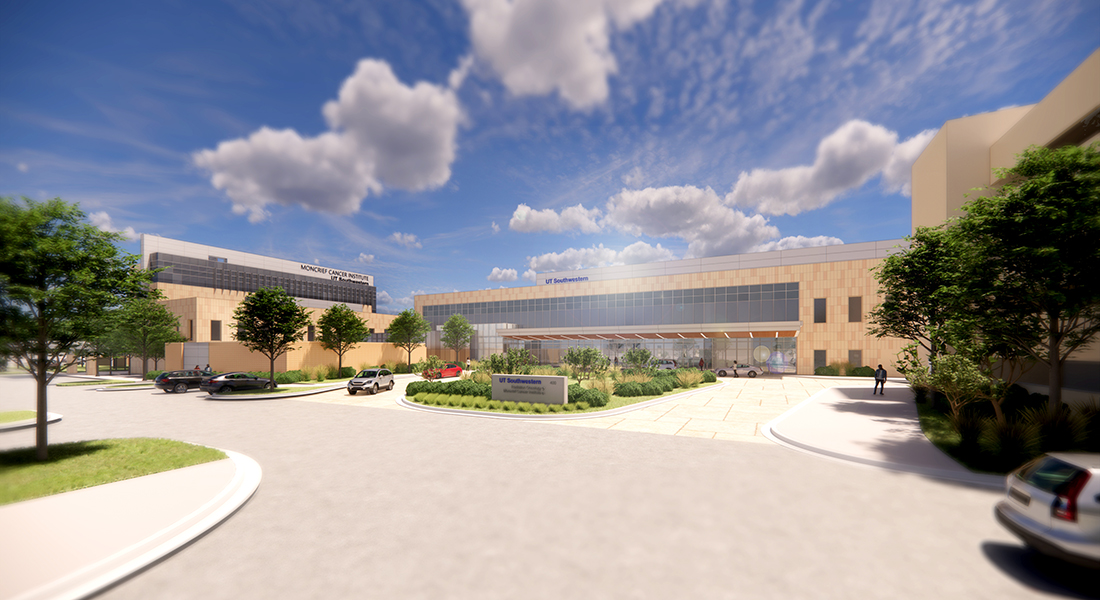
DALLAS – Nov. 16, 2026 – Fort Worth took a major step forward today toward a new era in advanced cancer care as UT Southwestern and community leaders gathered to celebrate the placing of the final beam atop the $177 million Radiation Oncology campus rising in the city’s Medical District.
Expected to open in 2028, the new campus will be the largest radiation oncology facility in Tarrant County and feature the first MRI-guided precision radiation treatment in the nation’s 10th-largest city.
“This milestone brings us closer to ensuring that Tarrant County residents can access the best possible cancer care, combining the latest advances in medical technology with the expertise of our clinicians and researchers, who are among the top cancer specialists in the country,” said Daniel K. Podolsky, M.D., President of UT Southwestern.
“We are grateful to UT Southwestern for their significant investment in our community,” said Fort Worth Councilwoman Elizabeth Beck. “This expansion brings world-class healthcare to our residents – eliminating the need to travel outside of Fort Worth to receive the most advanced cancer treatment options from an academic medical center.”
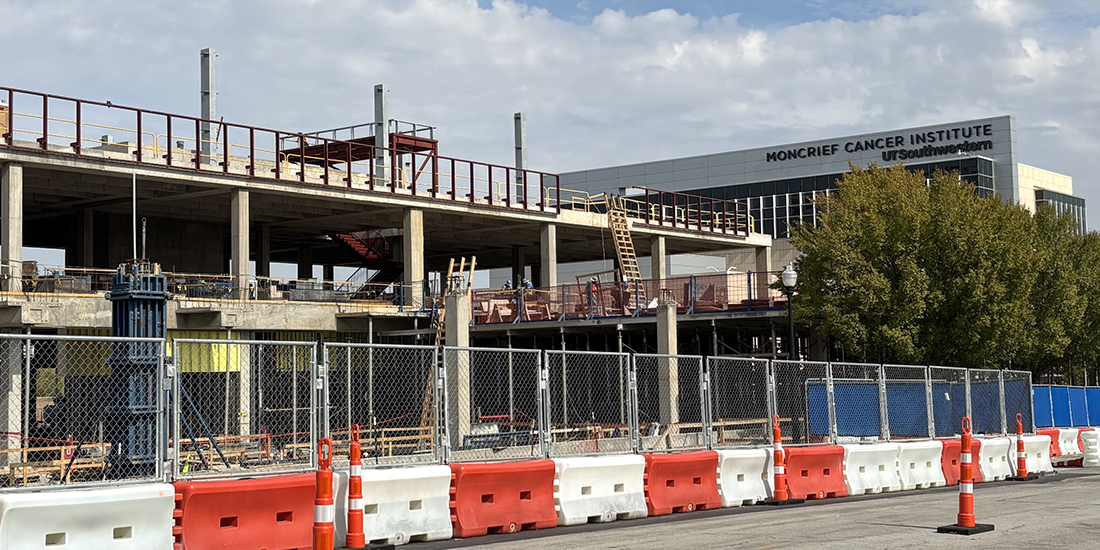
The 65,000-square-foot facility is designed to meet the growing demands for cancer care in Fort Worth and the surrounding area for decades to come. The campus will be connected to UT Southwestern’s Moncrief Cancer Institute, which has served Fort Worth since 1958 and has been a part of UT Southwestern since 1999.
As many as two-thirds of cancer patients need radiation therapy, and the UT Southwestern expansion will broaden access for patients living in Fort Worth and the surrounding area, who often require regular or daily trips for this lifesaving treatment.
In addition to the new MRI-guided precision radiation treatment, the facility will also include four linear accelerators (LINACs), with space to add two more in the future; positron emission tomography (PET) imaging, which is critical for accurately diagnosing and evaluating tumor growth; and a fully equipped brachytherapy suite to provide high-dose radiation treatments for prostate or gynecologic cancers.
Expanding care in Fort Worth
For more than a decade, UT Southwestern has been growing its presence in Fort Worth to provide a full spectrum of medical services for patients with cancer.
Moncrief Cancer Institute offers screening programs and educational and support services in more than 100 rural and medically underserved counties across North, Central, and East Texas. The Institute provides breast, cervical, colorectal, lung, and prostate cancer screenings for approximately 30,000 uninsured and underinsured Texans annually. In 2015, UT Southwestern expanded cancer care to Fort Worth, offering medical and surgical oncology services, imaging, and chemotherapy.
Patients can connect with physicians and other caregivers at the nearby UT Southwestern Monty and Tex Moncrief Medical Center at Fort Worth. This outpatient facility, which opened in 2017, offers specialty care clinics for cardiology, dermatology, endocrinology and endocrine surgery, hepatology and liver transplant, neurology and neurosurgery, ophthalmology, otolaryngology (ear-nose-throat), rheumatology, and urology, in addition to primary care services. There are also lab and imaging services including 3T MRI, two ultrasound units, CT, and fluoroscopy.
UT Southwestern has also recently launched surgical services at Texas Health Hospital Clearfork in southwest Fort Worth, making it possible for UTSW cancer patients to have surgeries performed in their community. As part of this expansion, UT Southwestern is in the process of adding physicians and expanding the number of specialties offered in the Fort Worth area.
“The new Radiation Oncology campus will give Fort Worth residents much-needed access to the latest innovations in cancer treatments, and aligns with our mission to bring cancer care in addition to preventive screenings into more Texas communities,” said Keith Argenbright, M.D., Director of the Moncrief Cancer Institute and Professor in the Harold C. Simmons Comprehensive Cancer Center and of Health Economics, Systems, and Policy in the Peter O’Donnell Jr. School of Public Health at UTSW.
UT Southwestern’s cancer program is ranked among the top 25 out of approximately 4,500 hospitals in the nation by U.S. News & World Report, and No. 1 in Dallas-Fort Worth. Its Simmons Cancer Center is the only National Cancer Institute-designated Comprehensive Cancer Center in North Texas and one of only 58 in the nation. UTSW also has the largest individual facility for radiation oncology in North Texas, with some of the most sophisticated treatment machines in the world. UTSW’s Department of Radiation Oncology specialists are pioneers in advanced therapies such as stereotactic ablative radiation therapy (SABR) and personalized ultrafractionated stereotactic adaptive radiotherapy (PULSAR), which have changed the standard of radiation therapy to make it more targeted and less damaging to healthy tissue.
Dr. Argenbright is a Distinguished Teaching Professor. Dr. Podolsky holds the Philip O’Bryan Montgomery, Jr., M.D. Distinguished Presidential Chair in Academic Administration and the Charles Cameron Sprague Distinguished Chair in Biomedical Science.
About UT Southwestern Medical Center
UT Southwestern, one of the nation’s premier academic medical centers, integrates pioneering biomedical research with exceptional clinical care and education. The institution’s faculty members have received six Nobel Prizes and include 28 members of the National Academy of Sciences, 26 members of the National Academy of Medicine, and 14 Howard Hughes Medical Institute Investigators. The full-time faculty of nearly 3,400 is responsible for groundbreaking medical advances and is committed to translating science-driven research quickly to new clinical treatments. UT Southwestern physicians in more than 80 specialties care for more than 143,000 hospitalized patients, attend to more than 470,000 emergency room cases, and oversee nearly 5.3 million outpatient visits a year.