
Presurgical vaccine may prevent orthopedic device infections
UTSW researcher helps develop biomaterial scaffold to stimulate immune system, protect patients from antibiotic-resistant infections such as MRSA
DALLAS – Dec. 1, 2025 – A UT Southwestern Medical Center researcher and his colleagues developed a novel presurgical vaccine strategy that may prevent dangerous infections in patients receiving hip, knee, and other joint replacements.
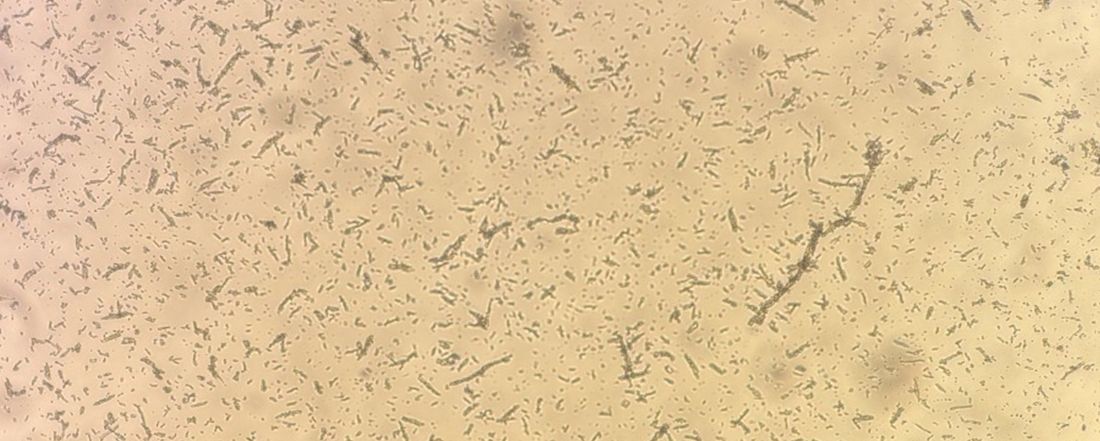
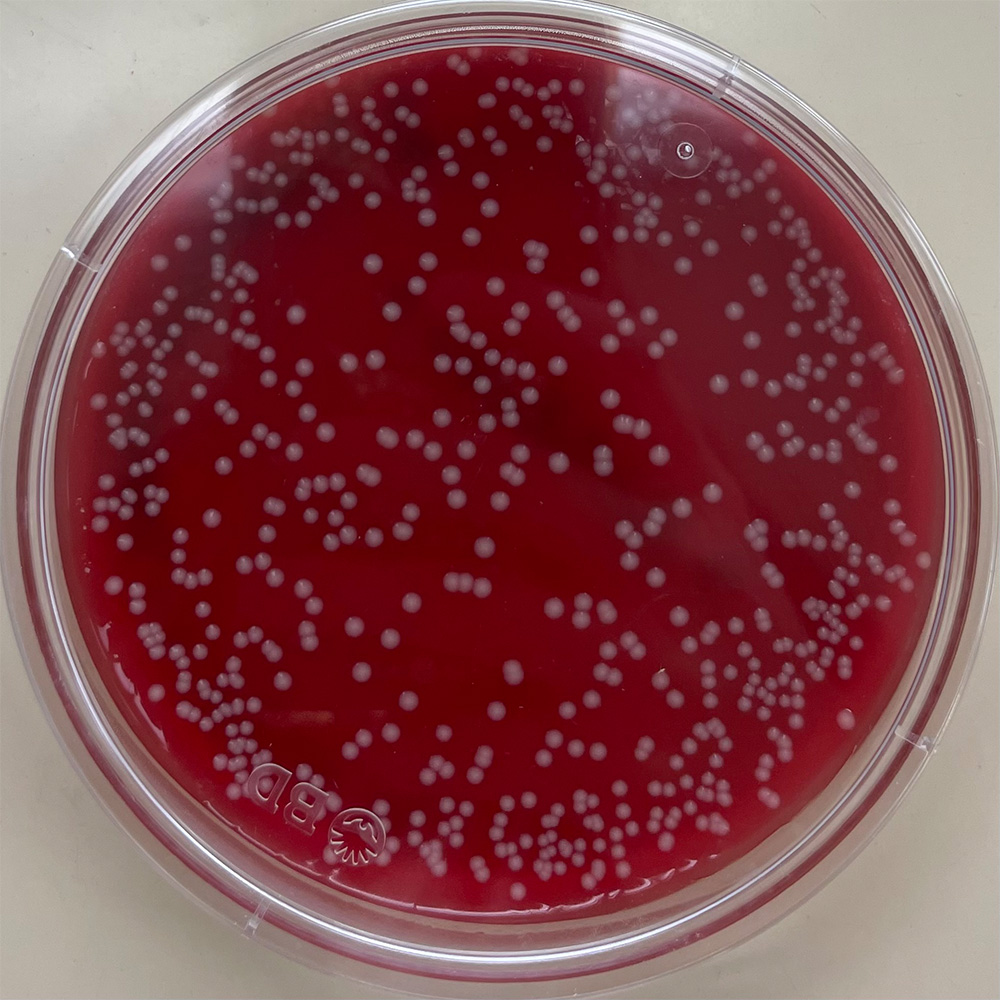
Alexander Tatara, M.D., Ph.D., Assistant Professor of Internal Medicine and Biomedical Engineering at UT Southwestern, and David Mooney, Ph.D., Professor of Bioengineering at Harvard University, led a multidisciplinary team that created an injectable scaffold designed to stimulate the immune system. The scaffold acts as a potent immunotherapy against bacterial infections of the bones and joints, including those caused by methicillin-resistant Staphylococcus aureus, the difficult-to-treat infection known as MRSA. Staphylococcus aureus is the leading cause of orthopedic device infections.
In the team’s study, published in Proceedings of the National Academy of Sciences (PNAS), the scaffold-based vaccine triggered a robust immune reaction in a mouse model, reducing bacteria levels over 100 times more than conventional soluble vaccine formulations.
“In the U.S. alone, orthopedic surgeons perform more than a million knee and hip replacements each year, and 2%-3% of those implanted devices become infected,” said Dr. Tatara, who joined UT Southwestern in 2024 from Harvard and served as first author of the study. “Those infections are the result of bacteria that attach to the surface of the replacement joint, producing a sticky, layered substance called biofilm that is resistant to most antibiotics.”
Because biofilms resist traditional treatments – and artificial joints made of metal or plastic lack blood flow to deliver immune cells – post-surgical infections can be difficult to control and even life-threatening, particularly for patients with weakened immune systems. Researchers believe a scaffold vaccination given in advance of surgery could prime the body’s natural immune defense and prevent the formation of biofilm.
“Orthopedic hardware infections often require multiple additional surgeries and long courses of antibiotics to treat, including lifelong oral antibiotics in some cases,” Dr. Tatara said. “Recovery can take up to a year, and successful treatment depends heavily on early intervention. If we can bring this technology from the laboratory to the patient, we can better protect those who benefit from orthopedic implants.”
Scaffold vaccinations work by creating a 3D framework made from porous, biocompatible materials such as cryogels or silica rods. These biomaterials are loaded with bacterial antigens to draw in and activate immune cells, stimulating the body’s natural response. As the immune response builds, the scaffold slowly degrades. The study found this localized, sustained approach to be far more effective than liquid vaccines, which disperse rapidly.
“With the rise in antibiotic resistance, treatments that don’t rely on traditional antibiotics are more important than ever,” Dr. Tatara said. “The scaffold vaccine works like a temporary construction platform, concentrating and training the immune system to recognize bacteria such as Staphylococcus aureus. It may allow us to ‘front-load’ immune protection before surgery, especially for patients at higher risk of infection.”
Dr. Tatara, a member of the Division of Infectious Diseases and Geographic Medicine, is building a new program at UT Southwestern that studies the use of biomaterials and immunotherapies – a growing field called immunoengineering – to prevent and treat medical device infections. Although Dr. Tatara conducted the experiments for this study with colleagues at Harvard’s Wyss Institute for Biologically Inspired Engineering and the John A. Paulson School of Engineering and Applied Sciences, he made data analysis revisions after arriving at UTSW.
He is continuing to work on this research in the Tatara Lab while collaborating with colleagues in Biomedical Engineering, Orthopaedic Surgery, and Burn, Trauma, Acute and Critical Care Surgery.
“We are inventing new ways of understanding why medical devices are so susceptible to infection and developing new approaches to protect our patients,” Dr. Tatara said. “Collaborative projects like this one bring out the best in our institution and tie together our clinical and research missions to best serve our patients.”
This study was funded by grants from the National Institutes of Health (NIH) (K08AI180362, T32AI007061), Harvard Catalyst|The Harvard Clinical and Translational Science Center (National Center for Advancing Translational Sciences, NIH) (UM1TR004408), the Wyss Institute, Harvard University, and the National Cancer Institute (K00CA253759).
About UT Southwestern Medical Center
UT Southwestern, one of the nation’s premier academic medical centers, integrates pioneering biomedical research with exceptional clinical care and education. The institution’s faculty members have received six Nobel Prizes and include 28 members of the National Academy of Sciences, 26 members of the National Academy of Medicine, and 14 Howard Hughes Medical Institute Investigators. The full-time faculty of nearly 3,400 is responsible for groundbreaking medical advances and is committed to translating science-driven research quickly to new clinical treatments. UT Southwestern physicians in more than 80 specialties care for more than 143,000 hospitalized patients, attend to more than 470,000 emergency room cases, and oversee nearly 5.3 million outpatient visits a year.