
IPE Strategic Plan 2018-2023
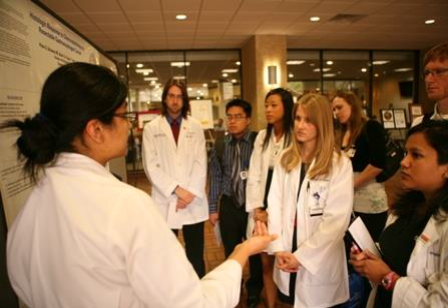
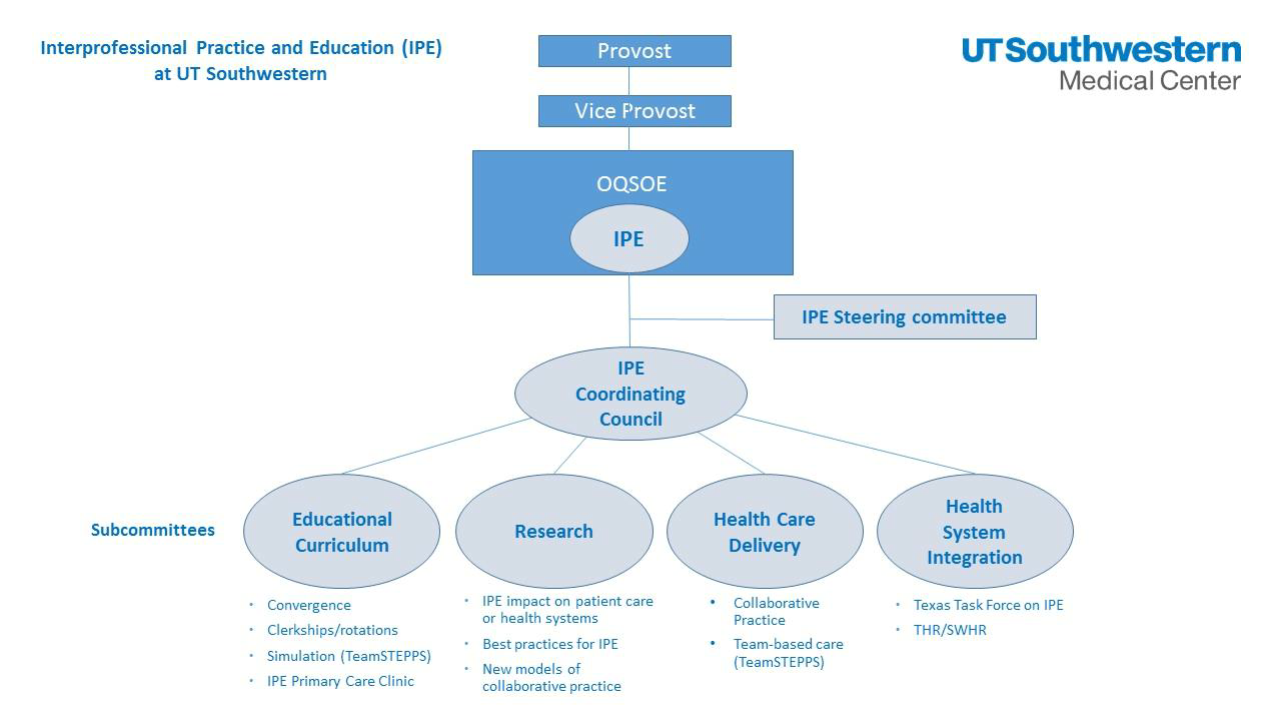
Interprofessional Practice and Education (IPE) at UT Southwestern functions as a centralized bridge fornm the schools (medical, health professions, graduate) to integrate and coordinate interprofessiona education and collaborative practice. The office for IPE coordinates activities such as Convergence, as well as enhancing specific IPE missions within each professional academic program (medical, physician assistant, physical therapy, etc.). The Director for IPE will bring together key stakeholders from across the campus (clinical, hospital, health system) in interprofessional practice and education to implement education, practice and innovation in a centralized manner in alignment with the institutional mission and goals.
Vision
UT Southwestern will be a leading innovator for interprofessional collaborative practice.
Mission
Improve health care by advancing interprofessional collaborative practice through innovation and education.
Strategic Directions
The four main strategic directions for Interprofessional Practice and Education (IPE) at UT Southwestern include:
- Promote the advancement of interprofesssional education and collaborative practice
- Provide interprofessional faculty and staff development including preceptor training and continuing education to preceptors who supervise UT Southwestern students
- Bridge the integration of collaborative practice models and education
- Foster innovation in the area of interprofessional collaborative practice and education
Background
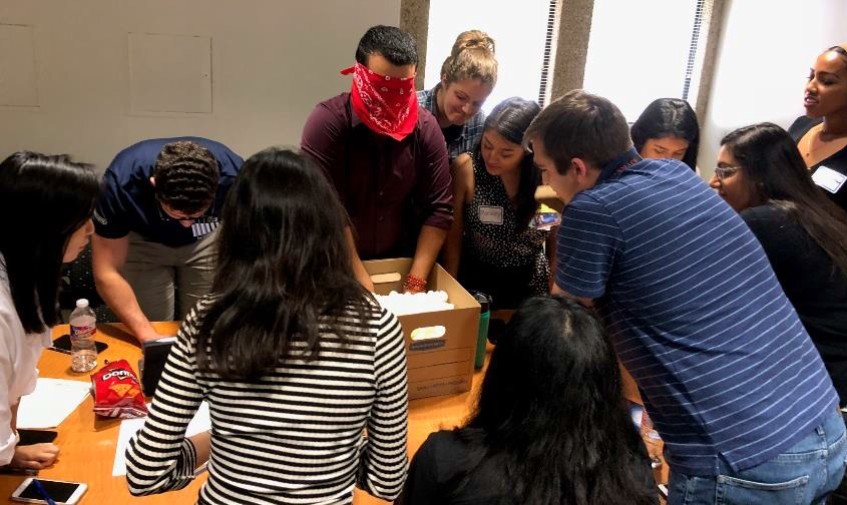
Efforts in interprofessional education have grown at UT Southwestern Medical Center over the past nine years. This growth requires centralized and coordinated interprofessional education activities within UT Southwestern, and in collaboration with other academic institutions. Interprofessional Practice and Education (IPE) functions as a centralized bridge for the schools (medical,
health professions, graduate) at UT Southwestern to integrate and coordinate interprofessional education and collaborative practice.
IPE coordinates activities such as Convergence, the program established to provide foundations in interprofessional education, as well as enhances specific IPE missions within each professional academic program (medical, physician assistant, physical therapy, etc.). IPE also brings together key stakeholders across the campus (clinical, hospital, health system) in interprofessional practice and education to implement education, practice and innovation in centralized manner in alignment with the institutional mission and goals.
The Quality, Safety and Outcomes Education Office (QSOEO) now houses a central, dedicated office for Interprofessional Practice and Education (IPE) that will efficiently support IPE developments at an institutional level to meet future requirements. In 2018, Kim Hoggatt Krumwiede, Ph.D., was appointed Director of Interprofessional Practice and Education for UT Southwestern Medical Center.
Strategic Planning Process
In 2017, Dr. Hoggatt Krumwiede, Interim Director for IPE, and organized an interprofessional steering committee with members from the academic, clinical, and system arenas at UT Southwestern and launched a strategic planning process. The committee met monthly over the course of a year in to order analyze the state of interprofessional practice and education at UT Southwestern and establish the direction and goals for the IPE for the next five years.
SWOT Analysis for Interprofessional Practice and Education
| Strengths | Weaknesses |
|---|---|
| Administrative Support | Organizational complexity |
| Good foundational IPE | Communication |
| Inter and intra school collaboration | Translating basic education to practice |
| Large clinical practice | Concurrent changes - competing priority |
| Having an office resource dedication to IPE | Need more student interaction between schools |
| Convergence IDEAL Course | Culture |
| Desire to educate | Not as many are aware IPE office exists |
| An interest/focus in/on improvement | New venture |
| Quality and flexible personnel | Clinical practice level IPE |
| UTSW known as innovator | Relative lack of support for educational programs |
| Aligned with organization Mission/Vision | Graduate Medical Education IPE |
| Target Excellence | Data and Research |
| Excellent patient care | Inertia |
| Within a bigger system with resources | Common knowledge of IPE |
| Hospital system where providers interact on some level | Students educated in an environment where preceptors are not |
| Pre-existing IPE system activities | Education at UTSW is siloed |
| UTSW offers education, clinics, hospitals, THR | Training largely done in separate silos |
| Patient centric | History of siloed practice patterns |
| Reputation | |
| Culture | |
| Professional practice continuing education for IPE |
| Opportunities | Threats |
|---|---|
| Provide structure/resources within the institution | Silos |
| Align educational objectives within varied accrediting bodies to avoid duplication of effort | Funding |
| Produce educational program for trainees and faculty | Loss of momentum |
| Research opportunities | RVUs (clinical sites) |
| Many possibilities for formal/curricular & informal/extracurricular interaction/education | Will need additional personnel for implementation |
| Consider new models that build on strengths | Varied logistical requirements across professions |
| Collaborative work with hospital partners Benchmark other IPE programs | Buy-in |
| Research collaborative practice models | “Mico” scrutiny |
| Set standards for IPE | Limited protected time for faculty |
| Centralize support for interprofessional activities & research | Not having a critical mass of champions |
| Address silos | Lack of support/buy-in from stakeholders |
| Become a leader in IPE | Inexperience |
| More IPE integration on clinical rotations | Administrative changes (Provost) |
| Develop innovative IPE/P techniques | Risk of failure |
| Better patient outcomes (care, satisfaction) | Changing focus midway through |
| Improve operational efficiencies | Time |
| Coordinate practice models & education | Curricular differences |
| Institutional resistance | Funding/Financial Support |
| Failure to get grassroots buy-in | |
| Lack of structure | |
| Preset expectation | |
| Lack of external benchmark - what are other IPEs doing | |
| Resistance to change/innovation |
Goals, and Action Items
The interprofessional steering committee identified four main strategic directions for Interprofessional Practice and Education (IPE) at UT Southwestern:
- Promote the advancement of interprofesssional education and collaborative practice
- Provide interprofessional faculty and staff development including preceptor training and continuing education to preceptors who supervise UT Southwestern students
- Bridge the integration of collaborative practice models and education
- Foster innovation in the area of interprofessional collaborative practice and education
- Strategic Direction 1 – Promote the advancement of interprofessional education and collaborative practice
Promote the advancement of interprofessional education and collaborative practice
Goals
- Establish organizational supporting bodies
- Provide structure/resources within the institution
- Align educational objectives within varied accrediting bodies to avoid effort duplication
- Explore possibilities for formal/curricular & informal/extracurricular interaction/education
- Benchmark other IPE programs
Timeline, Goals and Action Items for Strategic Direction 1
GoalAction ItemsYear 1Establish organizational supporting bodiesEstablish Advisory Board that meets quarterly
Provide structure/resources within the institution
Establish subcommittees (Education, Practice, Integration, Research) that meet monthly
Schedule monthly meeting for IPE Coordinating CouncilEstablish funding source through OQSOE
Align educational objectives within varied accrediting bodies to avoid effort duplication
Establish infrastructure within OQSOEContact educational programs for educational objectives relating to IPE
Explore possibilities for formal/curricular & informal/extracurricular interaction/educationContact and work with existing IPE intersections in education and student organizations for existing and potential interprofessional activitiesBenchmark other IPE programsReview IPE strategic plans from other institutions1-3 yearsCentralize support for interprofessional activities and research
Reconciled any duplication between academic programsBrand office and send out communications and resources to stakeholders
>3 Years - long termBecome a leader in IPEProvide centralized and coordinated support for presentations, publications, and research
Build out website for centralized IPE - Strategic Direction 2 – Provide Interprofessional faculty and staff development including preceptor training and continuing education
Provide Interprofessional faculty and staff development including preceptor training and continuing education
Goals
- Continue to produce and support existing faculty development for trainees and faculty
- Produce and support new faculty development for trainees, faculty
- Align educational objectives within varied accrediting bodies to avoid effort duplication
Timeline, Goals and Action Items for Strategic Direction 2
Goal Action Items Year 1 Continue to produce and support existing faculty development for trainees and faculty Produce Convergence facilitator development
Support IDEAL Interprofessional Symposium for Collaborative Practice
Support SCAETC faculty development symposium on HIV/AIDS IPE clerkship1-3 years Produce and support new faculty development for trainees, faculty, and staff Produce module on IPE facilitation for clinical preceptors
Produce online module for hospital staff on IPE
Support QEP (TeamFIRST) faculty developmentAlign educational objectives within varied accrediting bodies to avoid effort duplication Utilize TracDat system to identify IPE activities and align with academic programs for accreditation requirements >3 Years - long term Produce and support new faculty development for trainees, faculty, and staff Produce simulation training for preceptors on facilitating interprofessional groups of trainees in clinical settings
Support QEP faculty development (TeamFIRST) plans and incremental changes - Strategic Direction 3 – Bridge the integration of collaborative practice models and education
Bridge the integration of collaborative practice models and education
Goals
- Establish collaborative work with hospital and clinic partners
- Consider new models that build on strengths
- Set Standards for IPE at UTSW
- Identify and stratify areas of collaborative practice on campus according to set standards
- Integrate practice models and education
- Increase IPE integration on clinical rotations
- Increase collaborative practice on campus
Timeline, Goals and Action Items for Strategic Direction 3
Goal Action Items Year 1 Establish collaborative work with hospital and clinic partners Identify key individuals from hospital and clinics to form collaborative workgroup
Workgroup meets monthlyConsider new models that build on strengths Identify key strengths of UTSW
Identify models of collaborative practice1-3 years Set Standards for IPE at UTSW Identify and define standards for IPE education and practice/application at UTSW Identify and stratify areas of collaborative practice on campus according to set standards Review existing hospital units and clinical settings for good examples of collaborative practice that match set standards
List of hospital units and clinical settings that function as models of collaborative practice at UTSW>3 Years - long term Integrate practice models and education Coordinate interprofessional educational competencies and objectives to match collaborative practice expectations
Map competencies and proficiencies used in collaborative practice settings, in order to inform trainee preparedness in educational didactic and clinical environmentsIncrease IPE integration on clinical rotations Identify clinical clerkships/rotations that would benefit from IPE integration Increase collaborative practice on campus Offer consultation, resources, and support to units and clinics that could benefit from implementing a collaborative
Develop simulations for training interprofessional teams on collaborative practice competencies - Strategic Direction 4 – Foster innovation in the area of interprofessional collaborative practice and education
Foster innovation in the area of interprofessional collaborative practice and education
Goals
- Support faculty and students with innovative ideas for IPE
- Research collaborative practice models on and off campus
- Develop research opportunities
- Develop innovative IPE/P techniques
- Improve patient outcomes (care, satisfaction, value)
- Improve operational efficiencies and cost and reduce provider burnout
Timeline, Goals and Action Items for Strategic Direction 4
Goal Action Items Year 1 Support faculty and students with innovative ideas for IPE Work with students to create new Convergence activities
Research collaborative practice models on and off campus Review the literature and observe existing models on campus for innovation in collaborative practice
1-3 years Develop research opportunities Identify current state of operational efficiencies, cost, and provider burnout
Submit research proposals>3 Years - long term Develop innovative IPE/P techniques Identify innovative techniques and methods to teach or train the techniques to individuals or teams
Develop training modules and simulations teaching new IPE/P techniques
Develop innovative collaborative care models to enhance provider wellnessImprove patient outcomes (care, satisfaction, value) Identify key data sets for patient outcomes linked to collaborative practice, request permission to have access to data, and conduct data analysis
Design and implement research with a focus on possible links to collaborative practice and patient outcomesImprove operational efficiencies and cost and reduce provider burnout Identify key data sets for operational efficiencies, cost, and provider burnout linked to collaborative practice, request permission to have access to data, and conduct data analysis
Design and implement QA&I research projects including collaborative practice
Accountability Measures and Metrics
These tables match short- and long-term priorities for each of the four the strategic directions with measurable outcomes.
Strategic Direction 1 – Promote the advancement of interprofessional education and collaborative practice
| Priorities | Measurable Outcomes |
|---|---|
| 1-3 years | |
| Align educational objectives within varied accrediting bodies to avoid effort duplication | Map in TracDat of aligned educational objectives across programs |
| Explore possibilities for formal/curricular & informal/extracurricular interaction/education | 1-3 Coordinated activities between Convergence and the new SACS Quality Enhancement Plan (QEP) 1-3 Interprofessional Clerkships/Rotations 1 Interprofessional Volunteer Opportunity in Student Run Clinics 1 Interprofessional Global Health experience 1-3 Student Interprofessional leadership (ILC) activities 1 Resident interprofessional activity |
| >3 Years - long term | |
| Become a leader in IPE | 15+ IPE Presentations from UTSW faculty/students at local, national, and international levels 15+ IPE publications by UTSW faculty/students 25+ Citations on IPE publications by UTSW faculty/students Minimum of 1-2 funded grants per year for IPE education and research |
Strategic Direction 2 – Provide Interprofessional faculty and staff development including preceptor training and continuing education
| Priorities | Measurable Outcomes |
|---|---|
| 1-3 years | |
| Continue to produce and support existing faculty development for trainees and faculty | 85+ participants in Convergence facilitator development session Positive post Convergence evaluations (average 4 or above on 5pt Likert scale)on small group facilitation |
| Produce and support new faculty development for trainees, faculty, and staff | 20+ participants successfully complete (score 85% or higher) SCAETC module IPE facilitation for clinical preceptors 20+ participants successfully complete (score 85% or higher) online module on IPE available to hospital staff |
| >3 Years - long term | |
| Produce and support new faculty development for trainees, faculty, and staff | 10-20 clinical preceptors successfully participate in simulation training (score 85% or higher) for facilitation groups of trainees in clinical setting Positive student evaluations (average 4 or above on 5 pt Likert scale) of clerkship preceptors, who have participated in simulation training) regarding IPE facilitation |
Strategic Direction 3 – Bridge the integration of collaborative practice models and education
| Priorities | Measurable Outcomes |
|---|---|
| 1-3 years | |
| Set Standards for IPE at UTSW | Each IPE activity and corresponding assessment will define how it meets IPE standards as defined by UTSW. |
| Identify and stratify areas of collaborative practice on campus according to set standards | Identify at least 3 hospital units and clinical settings that are function as models of collaborative practice at UTSW |
| >3 Years - long term | |
| Increase collaborative practice on campus | 10+ units and clinics listed as using a model of collaborative practice model as defined by UTSW standards |
Strategic Direction 4 – Foster innovation in the area of interprofessional collaborative practice and education
| Priorities | Measurable Outcomes |
|---|---|
| 1-3 years | |
| Support faculty and students with innovative ideas for IPE |
Successful Convergence Riddle Room activity implementation (positive knowledge gains) and evaluations from students (average 4 or above on 5pt Likert scale) and facilitators (average 4 or above on 5pt Likert scale) |
| Develop research opportunities | Submission of 1 grant proposal for research on an IPE activity |
| >3 Years - long term | |
| Improve patient outcomes (care, satisfaction, value) | One funded grant per year for research with a focus on possible links to collaborative practice and patient outcomes 1-2 research publications reaching high impact with a focus on possible links to collaborative practice and patient outcomes |
Conclusion
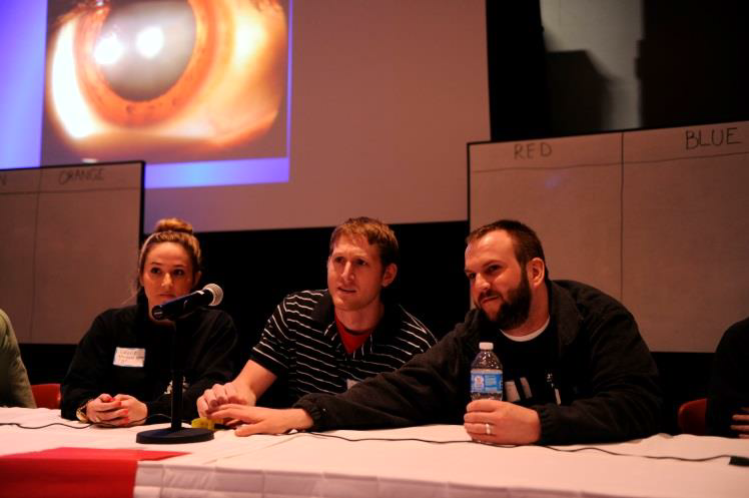
With a new centralized role, Interprofessional Practice and Education (IPE) is in a unique position integrate and coordinate interprofessional education and collaborative practice at UT Southwestern Medical Center. IPE will together key stakeholders across the campus (clinical, hospital, health system) in interprofessional practice and education to implement education, practice and innovation in centralized manner in alignment with the institutional mission and goals. The four strategic directions created through the strategic planning process and described in this report will provide a clear framework for the activities and priorities of IPE for the next five years.
As outlined in these strategic directions, IPE is committed to:
- Promote the advancement of interprofessional education and collaborative practice
- Provide interprofessional faculty and staff development including preceptor training and continuing education to preceptors who supervise UT Southwestern students
- Bridge the integration of collaborative practice models and education
- Foster innovation in the area of interprofessional collaborative practice and education
This strategic plan for 2018-2023 will provide a strategic framework for Interprofessional Practice and Education for UT Southwestern to achieve its mission to prepare health professionals of the highest quality to meet the needs of the health care system in Texas through interdisciplinary education and promotion of comprehensive health care.