
News Highlights - March 3, 2026
Kudos

Levine Helps Shape ACC Guidance Rejecting Universal ECG Screening Requirements
A new American College of Cardiology (ACC) societal statement formally opposes legislative mandates requiring electrocardiogram (ECG) screening for all competitive athletes, arguing that such laws would create more harm than benefit. The report, authored by a writing committee that included Benjamin Levine, M.D., a Professor in the Division of Cardiology and Director of the Institute for Exercise and Environmental Medicine at Texas Health Presbyterian Hospital Dallas, presents the ACC’s official policy position following growing interest among state legislatures in compulsory ECG testing.
The document, published in the Journal of the American College of Cardiology, explains that while ECGs can improve the detection of certain hidden cardiac conditions compared with history and physical examination alone, effective screening requires clinicians trained in athletic ECG interpretation and reliable access to downstream specialty care.
“The committee reported that these prerequisites are unevenly available across communities, particularly in underserved and rural areas, and that mandated programs would strain an already limited supply of sports and pediatric cardiologists,” Dr. Levine said. “This mismatch between policy and clinical capacity would increase false positives, lead to unnecessary testing, contribute to inequities, and impose significant financial and psychological burdens on families.”
Instead, the document emphasizes that the only intervention proven to save lives in cases of sudden cardiac arrest (SCA) is a well‑designed emergency action plan that ensures rapid CPR and defibrillation.
Anezi Uzundi, M.D., an Assistant Professor in the Division of Cardiology, is actively working with the Dallas Independent School District and other organizations to promote and disseminate knowledge about cardiopulmonary resuscitation (CPR), automated external defibrillators (AEDs), and emergency action plans, Dr. Levine said. “This underscores the document’s conclusion that legislative focus should prioritize emergency preparedness over mass ECG screening and that optional ECG use, when supported by proper expertise and infrastructure, remains reasonable for organizations that can implement it responsibly.”
Dr. Levine’s involvement in shaping this guidance reflects his longstanding leadership in sports cardiology and exercise physiology. His participation on the writing committee reinforces the report’s emphasis on evidence-based practice, resource stewardship, and equitable access to cardiovascular care for athletes nationwide. Together with Mark Link, M.D., a Professor in the Division of Cardiology, and Kamala Tamarisa, M.D., an Associate Professor in the Division of Cardiology, Dr. Levine is working with the Texas Legislature to develop mandatory reporting requirements for cardiac arrest in Texas, “which will be essential to perform high-quality research to ascertain whether a therapy like ECG causes more good than harm,” he said. ■
Dr. Levine holds the Distinguished Professorship in Exercise Medicine and the S. Finley Ewing Jr. Chair for Wellness and the Harry S. Moss Heart Chair for Cardiovascular Research at Presbyterian Hospital Dallas. Dr. Link holds the Laurence and Susan Hirsch/Centex Distinguished Chair in Heart Disease.

Thinwa Recognized for Excellence in Science and Mentorship
Josephine Thinwa, M.D., Ph.D., an Assistant Professor in the Division of Infectious Diseases and Geographic Medicine, has been selected for a 2026 Women Who STEAM Award from the Dallas Chapter of The Links. The honor recognizes women who advance Science, Technology, Engineering, the Arts, and Mathematics through their professional achievements and community impact.
The Links, an international nonprofit volunteer service organization founded in 1946 to enrich, sustain, and ensure the culture and economic well-being of people of African ancestry, celebrated Dr. Thinwa’s accomplishments in a social media post.
“From Kenya to UT Southwestern, Dr. Thinwa’s journey reflects her unwavering commitment to tackling infectious diseases and advancing global health,” the organization said in announcing the award. “Her passion for both medicine and research is matched only by her dedication to inspiring the next generation of scientists.”
Dr. Thinwa’s work resonates far beyond her laboratory. She leads innovative research exploring how the innate immune system defends the brain against viral infections, directs a dynamic research team supported by federal and foundation funding, and has introduced more than 1,000 young people to careers in science and medicine through mentorship programs and her collaborations with Girls Empowered by Mavericks.
“In every facet of her work, Dr. Thinwa embodies the spirit of Serve, Teach, Excel, Aspire, and Mentor—uplifting her community, advancing scientific discovery, and inspiring young women to see themselves in STEAM fields,” according to the organization. ■

Karp Presents Atkinson Lecture at Washington University
David Karp, M.D., Ph.D., Professor and Chief of the Division of Rheumatic Diseases, delivered the annual John P. Atkinson lecture at Washington University in St. Louis, where he previously earned both his medical degree and doctorate in cellular and integrative biology.
A specialist in systemic lupus erythematosus, spondyloarthropathy, and related autoimmune conditions, Dr. Karp highlighted key findings from the SMILE trial (Study of Anti-Malarials in Incomplete Lupus Erythematosus). The study offers important insight into caring for patients with, or at elevated risk for, autoimmune disease progression.
Dr. Karp joined the UT Southwestern faculty in 1991. His research focuses on the mechanisms that drive immune system function and dysfunction. ■
Dr. Karp holds the Fredye Factor Chair in Rheumatoid Arthritis Research and the Harold C. Simmons Chair in Arthritis Research.
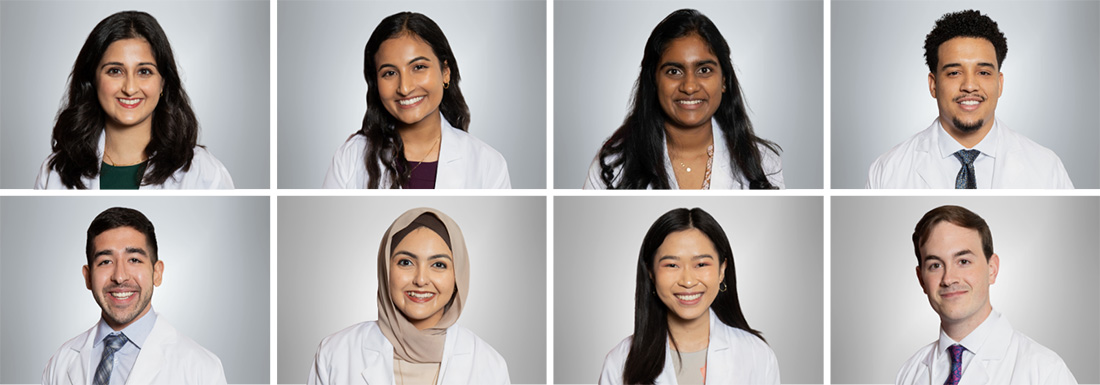
Medical Students Receive Endowed Scholarships
Each academic year, an average of 240 medical students in their second and third year of medical school rotate through the required internal medicine clerkship. The following scholarship recipients are graduating seniors who have chosen a career in internal medicine and excelled in the clerkship and other internal medicine electives.
Tanvi Ingle, Priya Sarlashkar, and Yukta Sunkara (top row, from left) received the Hemphill-Gojer Award in Internal Medicine, which was established by Ross H. and Anne Seymour Hemphill in honor of their son and daughter-in-law, Dr. and Mrs. Seymore Hemphill; their daughter and son-in-law, Dr. and Mrs. Bernard Gojer; and Anne Hemphill’s parents, E. Clyde and Florine Allen Seymour. Dr. Hemphill and Dr. Gojer are both UTSW Medical School alumni.
Corbin Foster (top row, far right), and (bottom row, from left) Felipe Gonzalez Gutierrez, Marium Khan, and Margaret Vo received the Richard Mays Smith Award, which is given annually to medical students who excel academically during clinical rotation and exhibit an interest in and compassion for patients.
Grant Tucker (bottom row, far right) received the Herbert S. Salomon, M.D., Class of 1967, Memorial Scholarship Award, which recognizes a UT Southwestern medical student who demonstrates excellence in internal medicine. The scholarship is named after Dr. Herbert Salomon, who earned his medical degree from UT Southwestern in 1967 and completed a partial residency in cardiology at Parkland Hospital before dying of a rare form of cancer in 1971, at the age of 30. ■
Learn More About the Scholarship Recipients
Staff Members Take on New Roles
We congratulate the following staff members who recently took on new positions within the Department:
- Ruth Ikpefan – Research Nurse, Research Administration
- Monique Johnson – Division Coordinator, Rheumatic Diseases
- An Khong – Sr. Financial Analyst, Department Administration
- Lorien Shropshire – Sr. Research Associate, Hypothalamic Research
- Katherine Tran – Clinical Research Coordinator II, Cardiology
Clinical Practice
Preventive Cardiology Program Releases New Educational Video Series
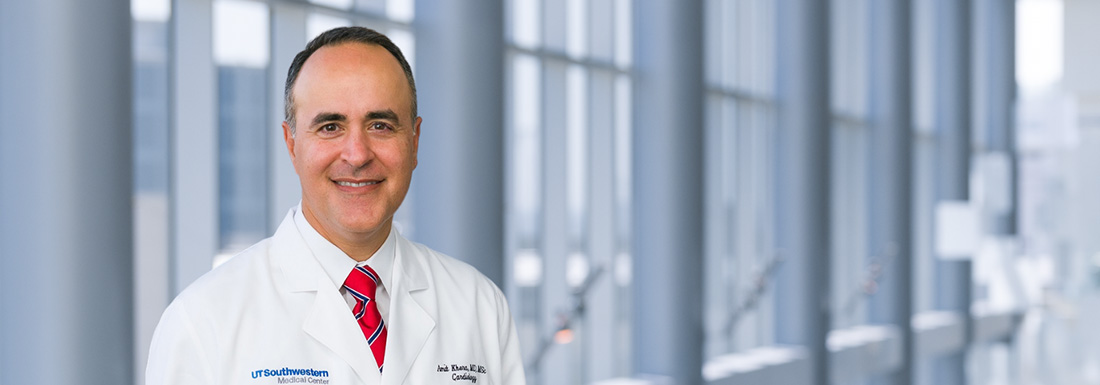
The Preventive Cardiology program, led by Amit Khera, M.D., M.Sc., a Professor in the Division of Cardiology and Director of Preventive Cardiology, has launched the first four donor-funded educational videos designed to empower individuals with reliable, accessible information on heart health.
The videos cover key topics in cardiovascular prevention: Understanding Heart Disease and Heart Attack Risk, Cholesterol and Heart Disease Risks, Coronary Artery Calcium, and Explaining Lipoprotein(a). The full set is available on YouTube.
During a recent promotional segment on WFAA-TV’s Good Morning Texas, Dr. Khera highlighted the videos as sources of trusted health information and discussed how preventive strategies can reduce risk and improve long-term heart outcomes. ■
Dr. Khera holds the Dallas Heart Ball Chair in Hypertension and Heart Disease.
Education & Training
GI Fellows Earn National Recognition Through Training Programs
Two UT Southwestern gastroenterology fellows have been selected for competitive national training opportunities, highlighting the strength of the Division’s fellowship program and its rising physician leaders.
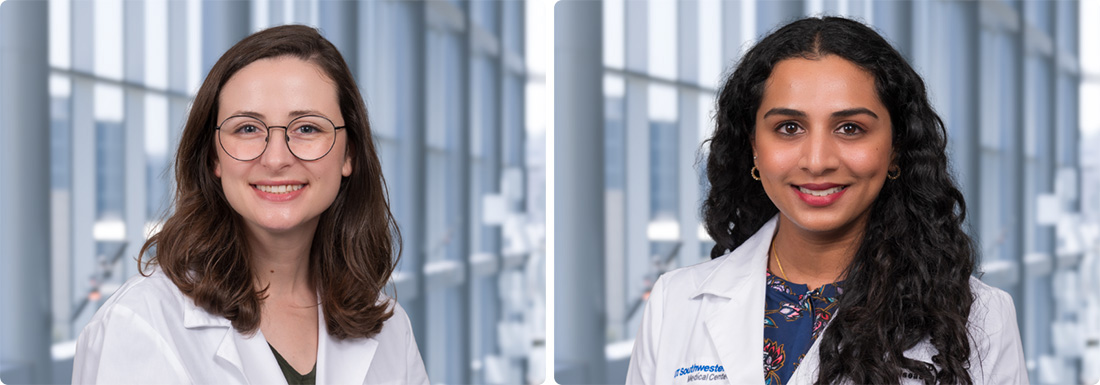
Sarah Rotondo‑Trivette, M.D., (left) a fellow on the advanced IBD track, has been accepted into the inaugural Intestinal Ultrasound Training and Certification Pathway for Fellows through iUSCAN and the American Gastroenterological Association (AGA) for the 2026-2027 year. The new program delivers a rigorous, competency‑based curriculum for advanced IBD fellows beginning their training in July 2026, as well as senior adult and pediatric GI fellows entering their second or third year. Participants gain hands-on experience in performing and interpreting intestinal ultrasound to support evidence-based management of Inflammatory Bowel Disease.
Dr. Rotondo-Trivette has also been named an AGA Innovation Fellow, a yearlong program that provides insight into the innovation process while offering networking opportunities with innovators, key opinion leaders, and industry executives advancing new technologies in gastroenterology.
Manasa Narasimman, M.D., a rising chief fellow, has been selected to represent UT Southwestern at the ACG Chief Fellows Course this May in Washington, D.C. Only one chief fellow per institution may attend, and just 120 programs nationwide are chosen each year. The course provides chief fellows with leadership development, guidance on fellowship administration, and career-planning resources.
“Both selections reflect the exceptional commitment and emerging expertise of our GI trainees,” says Ariel Aday, M.D., an Assistant Professor in the Division of Digestive and Liver Diseases and Program Director for the GI Fellowship. ■
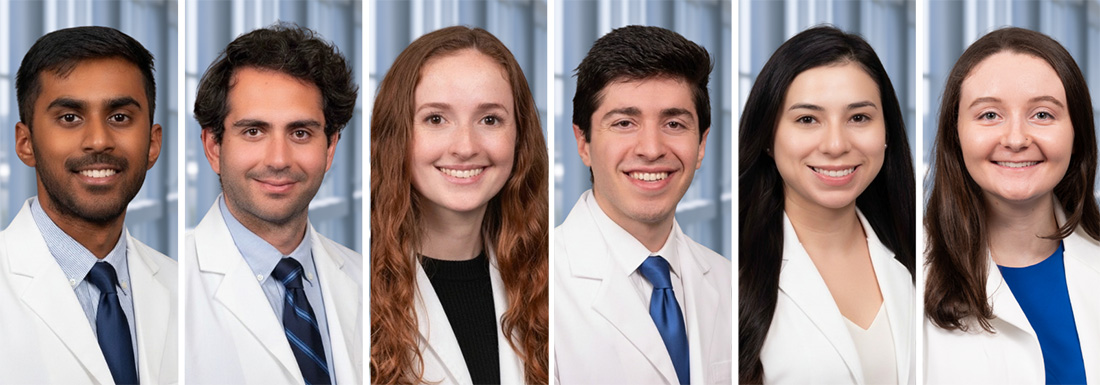
Chief Residents for 2027-2028 Announced
The Chief Residents for 2027-2028 have been selected, representing both the resident body as well as a range of skill sets.
“This is a group who will truly advocate for, and support, the needs of our residents,” said Salahuddin Kazi, M.D., a Professor in the Division of Rheumatic Diseases, Vice Chair of Education, and Program Director for the Internal Medicine Residency. “They will be well-being warriors, innovators, and true representatives of our program.”
The incoming chiefs are, from left, Raj Dalal, M.D., a second-year resident from Chicago who earned his medical degree from Northwestern University; George Doumat, M.D., a second-year resident and international medical graduate from Beirut, Lebanon, who holds a medical degree from the American University of Beirut; Gabriella Gerlach, M.D., a second-year resident from Hillsborough, North Carolina, who earned her medical degree from Florida International University; Adam Saleh, M.D., a second-year resident from Houston who earned his medical degree from Texas A&M; Esmeralda Segura, M.D., a second-year resident from Kissimmee, Florida, who holds a medical degree from the University of Miami; and Alexa Wilden, M.D., a second-year resident from Clinton, Iowa, who earned her medical degree at UT Southwestern.
“I’m confident this team will elevate the resident experience in meaningful ways,” Dr. Kazi said. “Their leadership, insight, and dedication will strengthen our program and continue the tradition of excellence our residents deserve.” ■