
Search
https://kcp.utsw.edu/wp-content/uploads/2026/09/4TYLegacy_Program_Patient_Event_TYJBPK-final1.pdf
The Legacy Program Immunology research through tissue donation Tao Yue, PhD Kidney Cancer Program Center for the Genetics of Host Defense Department of Immunology UT Southwestern Medical Center SEPTEMBER 20, 2026 The tumor’s immune neighborhood The image shows immune cells interacting with can…
Kidney cancer drug shows promise against dangerous calcium imbalance caused by tumors: Newsroom - UT Southwestern, Dallas, Texas
https://www.utsouthwestern.edu/newsroom/articles/year-2025/oct-kidney-cancer-drug.html

Elevated calcium levels in the blood – a complication of kidney cancers known as hypercalcemia – may be successfully treated with a class of medications called HIF-2 inhibitors developed by UT Southwestern Medical Center, a new study shows. The findings, published in Cancer Discovery by a team at UTSW, could offer hope to patients who develop this condition.
Study uncovers how biomolecular condensates cause some kidney cancers: Newsroom - UT Southwestern, Dallas, Texas
https://www.utsouthwestern.edu/newsroom/articles/year-2025/june-biomolecular-kidney-cancers.html

A genetic mutation that fuses two genes drives several different cancer types by forming networks of protein interactions that alter gene expression in cells, a study by UT Southwestern Medical Center researchers suggests.
UTSW builds AI-driven system to improve data collection : Newsroom - UT Southwestern, Dallas, Texas
https://www.utsouthwestern.edu/newsroom/articles/year-2025/july-ai-model-speeds-medical-data-extraction.html

A multidisciplinary team at UT Southwestern Medical Center has developed an artificial intelligence (AI)-enabled pipeline that can quickly and accurately extract relevant information from complex, free-text medical records. The team’s novel approach, featured in npj Digital Medicine, could dramatically reduce the time needed to create analysis-ready data for research studies.
Clinical Trials: Clinical Research - UT Southwestern, Dallas, Texas
https://www.utsouthwestern.edu/research/clinical-research/domains/clinical-trials.html
As a crucial part of the clinical research process to develop new treatments, improve diagnosis, and help prevent diseases, UT Southwestern conducts clinical studies and clinical trials.
Intellectual Property 101: Technology Development - UT Southwestern, Dallas, Texas
https://www.utsouthwestern.edu/about-us/administrative-offices/technology-development/intellectual-property/
Learn the details of intellectual property from the Office for Technology Development.
Privacy Policy - UTSW Kidney Cancer Program
https://kcp.utsw.edu/privacy-policy/
Home About Us Mission Fact Sheet Highlights KCP Report Community Leadership Staff Our Experts Kidney Cancer Experts Collaborating Physicians Research SPORE Award Investigator Impact Advisory Board Patient Resources Overview Clinical Trials Community Support Advocacy Newsroom News Videos Support Us Do…
Terms and Conditions - UTSW Kidney Cancer Program
https://kcp.utsw.edu/terms-and-conditions/
Home About Us Mission Fact Sheet Highlights KCP Report Community Leadership Staff Our Experts Kidney Cancer Experts Collaborating Physicians Research SPORE Award Investigator Impact Advisory Board Patient Resources Overview Clinical Trials Community Support Advocacy Newsroom News Videos Support Us Do…
Artificial intelligence predicts kidney cancer therapy response: Newsroom - UT Southwestern, Dallas, Texas
https://www.utsouthwestern.edu/newsroom/articles/year-2025/april-ai-kidney-cancer-therapy.html
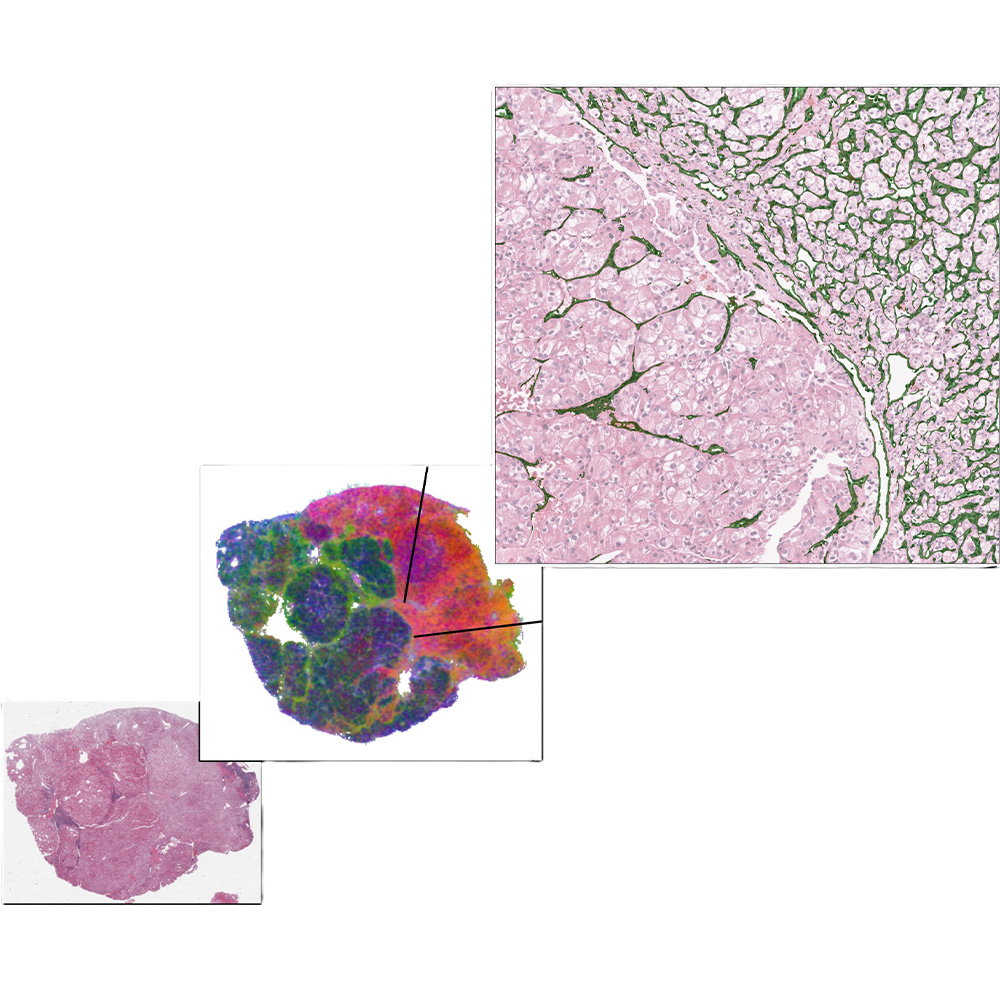
An artificial intelligence (AI)-based model developed by UT Southwestern Medical Center researchers can accurately predict which kidney cancer patients will benefit from anti-angiogenic therapy, a class of treatments that’s only effective in some cases.
Education & Training: Department of Pediatrics – UT Southwestern, Dallas, Texas
https://www.utsouthwestern.edu/departments/pediatrics/education-training/
One of the Department of Pediatric’s three major missions is the education of medical students, residents, postdoctoral fellows and other health care professions.