
Search
Postdoc Won takes first place in NAA oral abstract competition: Honors & Awards - CT Plus - UT Southwestern, Dallas, Texas
https://www.utsouthwestern.edu/ctplus/honors-awards/oral-abstract-won.html
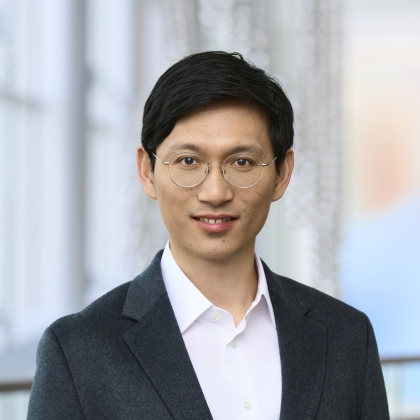
Junyeon Won, Ph.D., a postdoctoral research fellow in the Department of Neurology at UT Southwestern and the Institute for Exercise and Environmental Medicine (IEEM) at Texas Health Presbyterian Dallas, won first place in the oral abstract competition at the 2025 North American Artery (NAA) Conference.
Martin honored for highest levels of achievement in supply chain leadership: Center Times Plus, UT Southwestern, Dallas, TX
https://www.utsouthwestern.edu/ctplus/honors-awards/ahrmm-fellow-martin.html
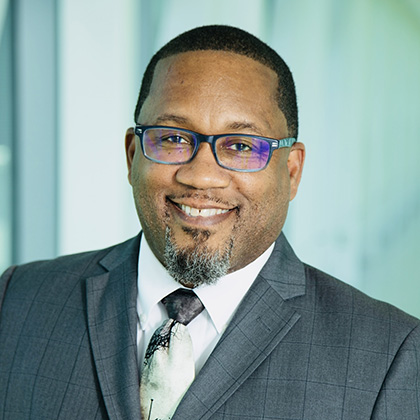
Tim Martin, co-Interim Associate Vice President of Supply Chain Management and Director of Purchasing, has been named a Fellow of the Association for Health Care Resource & Materials Management (AHRMM).
Course Descriptions: Genetics and Development Graduate Program – UT Southwestern, Dallas, TX
https://gsbs.utsouthwestern.edu/programs/genetics-and-development/course-descriptions.html
Read about the course descriptions for the Genetics and Development Graduate Program at UT Southwestern Medical Center.
It's a match: A celebration in photos
https://www.utsouthwestern.edu/ctplus/videos/2020-match-social-photos.html

Photo video of shared student images from Match Day 2020
My UT Southwestern story: WNBA draftee joins Medical School Class of 2024
https://www.utsouthwestern.edu/ctplus/videos/wnba-med-student.html
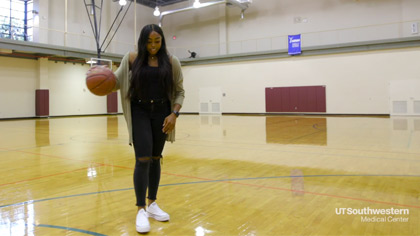
In April, Erica Ogwumike, then a star basketball player at Rice University, was drafted into the WNBA. But the athlete, who had her eye on medical school since her sophomore year of college, decided to join UT Southwestern’s Medical School Class of 2024 instead. In the video, hear how factors including the COVID-19 pandemic and a desire to improve racial inequity in health care played a part in her decision to pursue a medical career.
Therapy dogs comfort hospital staff during Mental Health Awareness Month - CT Plus Gallery
https://www.utsouthwestern.edu/ctplus/galleries/2020-therapy-dogs.html
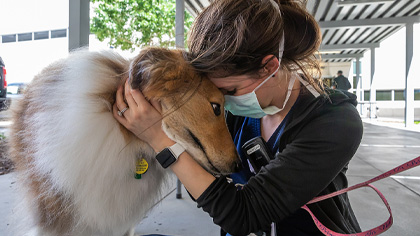
Therapy dogs comfort hospital staff during Mental Health Awareness Month Published on: May 04, 2020 By: Staff Reports Tags: Life @UTSW Share: Share on Facebook Share on Twitter Share on Pinterest Share on Google Plus Share on LinkedIn Registered Nurse Carla Jenkins spends quality time with therapy do…
Faculty: Molecular Biophysics Graduate Program - UT Southwestern, Dallas, TX
https://gsbs.utsouthwestern.edu/programs/molecular-biophysics/program-faculty.html
Learn about the faculty members of the Molecular Biophysics Graduate Program at UT Southwestern Medical Center and their research interests.
Match Day 2020 is coming
https://www.utsouthwestern.edu/ctplus/videos/2020-match-day.html
On March 20, UT Southwestern fourth-year medical students will find out what residency programs the placed with on Match Day. It’s an event held every March at medical schools across the U.S. to celebrate the important milestone for students.
Scientist behind COVID-19 vaccine discusses drug development
https://www.utsouthwestern.edu/ctplus/videos/kizzmekia-corbett.html
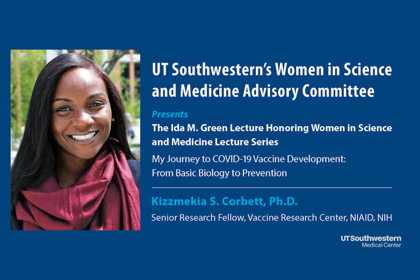
Dr. Kizzmekia Corbett, who was at the forefront of developing the NIH-Moderna vaccine to combat COVID-19 discussed her journey in vaccine development and the important role of women in science and medicine.
Rodriguez-Baez recognized nationally as a master educator - CT Plus - UT Southwestern
https://www.utsouthwestern.edu/ctplus/honors-awards/rodriguez-baez-award.html
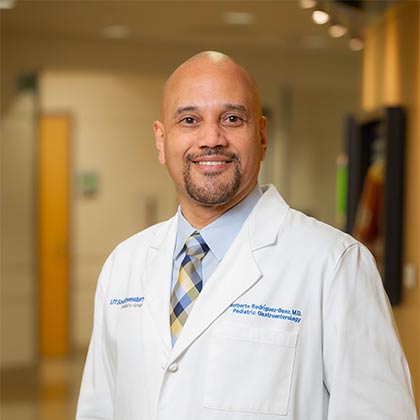
Pediatric liver disease expert Norberto Rodriguez-Baez, M.D., recently received the 2022 Education Excellence Award from the North American Society for Pediatric Gastroenterology, Hepatology, and Nutrition (NASPGHAN).