
Search
Amy Whitaker Profile: Mechanisms of Disease Track - UT Southwestern, Dallas, TX
https://gsbs.utsouthwestern.edu/programs/mechanisms-of-disease/student-profiles/amy-whitaker-profile.html
Amy Whitaker is studying Transcriptional Regulation in Macrophage Inflammatory Response in the Mechanisms of Disease graduate track at UT Southwestern
Roy Garcia Profile in Targeting Tryptophan Metabolism in Colorectal Cancer: Mechanisms of Disease and Translational Science (MoDTS) Graduate Track - UT Southwestern, Dallas, TX
https://gsbs.utsouthwestern.edu/programs/mechanisms-of-disease/student-profiles/roy-garcia-profile.html
Roy Garcia is studying Targeting Tryptophan Metabolism in Colorectal Cancer in the Mechanisms of Disease and Translational Science (MoDTS) Graduate Track at UT Southwestern
Grain
https://www.utsouthwestern.edu/ctplus/videos/valentines-grain.html
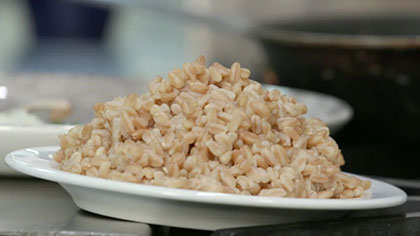
Executive Chef Chris Hensel at UT Southwestern in Dallas prepares heart healthy recipes for Valentine's Day
Salmon
https://www.utsouthwestern.edu/ctplus/videos/valentines-salmon.html
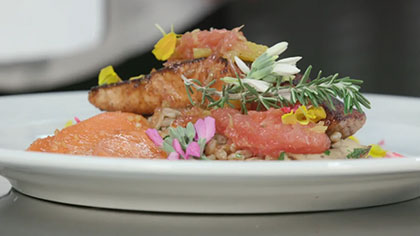
Executive Chef Chris Hensel at UT Southwestern in Dallas prepares heart healthy recipes for Valentine's Day
2022-nanocourses.html
https://gsbs.utsouthwestern.edu/programs/nanocourses/2022.html
Nanocourses 2027 2026 2025 2024 2023 2022 2022 nanocourses Spring 4/11-4/12: Architectures and Applications of Deep Learning Summer 5/9-5/10: Introduction to R for Beginners 5/19-5/20: Introduction to Next Generation Sequencing Analysis 6/13 and 6/16: Advanced Concepts of Deep Learning 6/27-6/28: Adv…
2023-nanocourses.html
https://gsbs.utsouthwestern.edu/programs/nanocourses/2023.html
Nanocourses 2027 2026 2025 2024 2023 2022 2023 nanocourses Spring 2/14-2/15: Single Cell Genomics 3/8-3/9: Programming for Beginners (with MATLAB) Summer 6/13-6/14: Advanced Concepts of Deep Learning 6/23-6/24: L++, A Programming Language for Building and Executing In Silico organisms Fall 9/7-9/8: D…
A Valentine's meal for you...
https://www.utsouthwestern.edu/ctplus/videos/valentines-meal.html
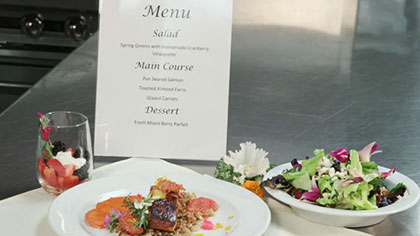
UTSW head chef prepares a heart healthy recipe for Valentine's Day
Pioneering ear surgery removes tumors, improves hearing
https://www.utsouthwestern.edu/ctplus/videos/acoustic-neuroma-surgery.html
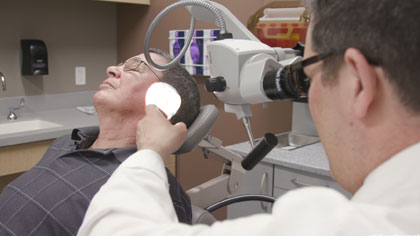
Lloyd Griffith relished the noise that comes from a love of fixing cars and racing until the day a tumor in his ear caused his hearing to go from garbled to silent. Today his hearing is much improved, thanks to a pioneering minimally invasive procedure at UT Southwestern Medical Center – one of the highest-volume acoustic neuroma programs in Texas.
Medical Mysteries: Dr. Drazner (Answer)
https://www.utsouthwestern.edu/ctplus/videos/medical-mysteries-drazner-a.html
After a successful hysterectomy, a patient developed chest pains and her heart ultimately went into cardiogenic shock. She was brought to William P. Clements Jr. University Hospital. Upon arrival, she also had evidence of acute renal failure and shocked liver. Can you solve UT Southwestern's Medical Mystery? Watch the video, look at the imaging tests, and share your diagnosis in the comments field. Return in 28 hours to find out how our physicians solved this Medical Mystery.
Hennessy wins nurse-driven Golden Pager Award
https://www.utsouthwestern.edu/ctplus/honors-awards/hennessy-golden-pager.html
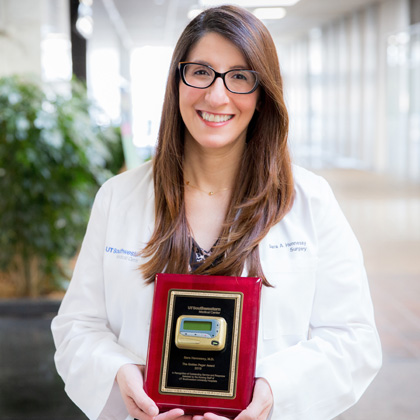
Dr. Sara Hennessy, Assistant Professor of Surgery and Director of the Surgical Intensive Care Unit (SICU) at William P. Clements Jr. University Hospital, received the 2018 Golden Pager Award for her dedicated efforts to empower intensive care unit (ICU) nurses.