QI Academy

Courses for Students

QI Boot Camp

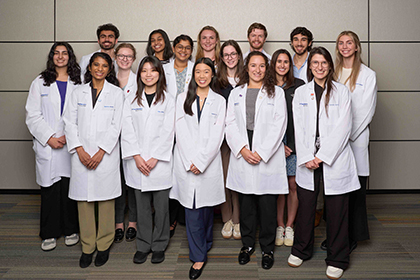
QI Boot Camp is an intensive, five-day course that provides medical students and others with a focused introduction to quality improvement and patient safety principles, methodologies, and practical tools. The Boot Camp is required for all students pursuing the Doctor of Medicine with Distinction in Quality Improvement and Patient Safety. It is strongly recommended for any student planning to undertake QI projects. Students seeking the Distinction designation receive priority registration.

  • Timing: Annually in late spring, immediately following the MS1 spring semester
  • Format: Five consecutive full-day sessions employing team-based and problem-based learning
  • Commitment: Full attendance is mandatory
  • Preparation: Accepted participants will receive access to all course materials in advance
  • Transition to Practice: The Summer QI Fellowship begins the first Monday after Boot Camp concludes. Leaners will work with their Faculty Mentors on their QI projects

This foundational experience equips future physicians with the knowledge and skills to lead meaningful safety and quality initiatives throughout their careers.

Apply Here

Summer Fellowship

The Summer Fellowship in Quality Improvement (QI) is an immersive, paid eight-week program that begins the week after QI Boot Camp and extends through the summer, with a stipend awarded to qualifying participants.

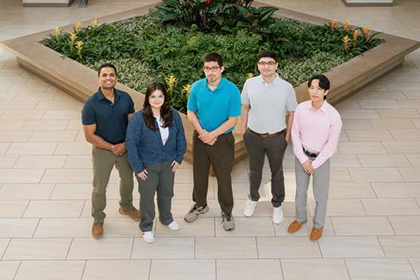
Open to medical students, engineering students, and select advanced learners, the fellowship pairs each participant with a dedicated faculty mentor to design, implement, and lead authentic quality-improvement and patient-safety projects across various clinical environments. Throughout the program, fellows receive weekly structured coaching and expert guidance from faculty and QI professionals.

By the conclusion of the fellowship, participants will have applied core QI methodologies and systems engineering tools to their projects, conducted rigorous data analysis with appropriate visual displays, and produced high-quality scholarly abstracts and storyboards that meet SQUIRE reporting guidelines and are ready for submission to regional or national conferences.

Scholarly Activity in QI

Practical knowledge of quality improvement (QI) methodology is a core competency for every physician. The Scholarly Activity in QI provides medical students with rigorous training and mentored, hands-on experience in healthcare QI and patient safety, with projects tailored to individual interests and career objectives.

Learning Objectives

Upon completion, students will be able to:

  • Articulate the background and problem statement and formulate concise aim statements for QI projects
  • Select and define appropriate process, outcome, and balancing measures
  • Design, conduct, and iterate small-scale tests of change using Plan-Do-Study-Act (PDSA) cycles
  • Appropriately apply core QI tools (run charts, Pareto diagrams, fishbone diagrams, etc.)

Structure and Format

  • Duration: one 12-week block (maximum 20 students per block)
  • Blended curriculum: Virtual and in-person meetings for coaching and ongoing project facilitation while students work full-time on real QI projects
  • Each student works closely with a faculty mentor

Project Options

Students may join established institutional QI initiatives or propose and lead original projects, tailored in collaboration with the track director.

Deliverables and Evaluation

  • A 5–10-page scholarly summary (excluding references/figures) describing project aims, methods, results, recommendations, and lessons learned
  • Formal presentation to faculty and peers
  • Encouraged dissemination of findings at local, regional, or national meetings
  • Pass/fail grading based on the final paper, evaluated using uniform UT Southwestern scholarly activity criteria

QI Electives 

QSOE offers an MS4 elective to allow students to pursue self-directed study of quality improvement or patient safety topics of interest under the direction of UTSW faculty.  Contact the UTSW medical school course catalogue for instructions.

Foundational QI Courses for the School of Health Professions

Foundations, Application, Methodology, and Effectiveness in Quality Improvement (FAME-QI) for the School of Health Professions is an intensive, interactive coaching and project facilitation series developed by UT Southwestern's Office of Quality, Safety, and Outcomes Education. Concise live didactics supplemented by on-demand video training introduce QI concepts and tools. Following the live didactic training, the seven weekly virtual sessions guide participants in practicing and applying the tools, frameworks, and supplementary materials to work on QI projects in their clinical environments. FAME QI supports participants with structured feedback, iterative project development, and real-world application to progress towards measurable improvements or develop actionable recommendations to implement in their selected projects. The course emphasizes experiential learning through real-world QI projects. The course culminates in a storyboard workshop, preparing participants to showcase their work at national or regional venues.

Courses for Working Professionals

The courses below are designed for all working professionals, healthcare executives, clinical leaders, and healthcare researchers.

QI Methodology: On-Demand

QI Methodology is a comprehensive, self-paced digital library of video modules addressing foundational and advanced quality improvement methodologies and tools, team science, and systems thinking. Designed for on-demand access, these modules allow learners to progress at their own pace and earn a certificate of completion. Physicians and nurses are eligible to receive Continuing Medical Education (CME) and Continuing Professional Development credits.

Faculty Development: QI Methodologies Overview: On-Demand

The Office of Quality, Safety, & Outcomes Education, in collaboration with the Office of Faculty Development, encourages UT Southwestern faculty to learn more about quality improvement within the Quality Improvement (QI) Methodologies course in Taleo. By completing the QI Methodologies course, you will earn a certificate of completion and 1 APEX point applied to the education category in the Academy for Performance Excellence (APEX), our institutional program that honors commitment to continuous learning, improvement, and leadership in patient safety and quality. This course is accessed within Taleo Learn; a UT Southwestern VPN or campus connection is required.

QI Basics: Mixed Live and Virtual Sessions

QI BASICS is a rigorous, project-based course offered by UT Southwestern’s Office of Quality, Safety, and Outcomes Education. Designed for healthcare professionals and teams with no prior QI experience, the program teaches participants to lead effective improvement using the Plan-Do-Study-Act (PDSA) cycle and essential QI tools and apply them to their real-world projects. Each of the four monthly full-day in-person sessions builds on the previous one, guiding participants step by step through the improvement process. Between sessions, three virtual sessions provide individualized faculty feedback, coaching, and project facilitation. Throughout, participants develop concrete deliverables, including aim statements, process maps, run charts, Driver diagrams, and tests of change, which are immediately applied to their own real-world clinical or operational projects. Participants must attend all classes and complete a quality improvement project concurrent with the course. The course culminates in a final presentation, including a storyboard/poster. No prior experience in quality improvement is required. Up to 23.5 CPD for nurses and 21 CME credits are awarded commensurate with completion of coursework and attendance.

Apply Here

Advanced QI Course: Mixed Live and Virtual Sessions

Systems Thinking, Application, Leadership, and Teamwork in Quality Improvement (SALT-QI) is the advanced course developed by the Office of Quality, Safety, and Outcomes Education at UT Southwestern. The course builds on the concepts, tools, and methodologies learned in the introductory course. It is designed for healthcare professionals and teams engaged in leading real-world quality improvement and patient safety initiatives. Building on foundational knowledge, participants deepen their expertise by integrating systems thinking, high-reliability principles, human factors and error-prevention strategies, team science, and implementation science.

Delivered through monthly live virtual sessions combined with structured interim project work, the course emphasizes practical application, multidisciplinary collaboration, and progressive skill-building. Scheduled virtual sessions between in-person meetings incorporate coaching, feedback, and project facilitation to build participant independence while sustaining progress in quality improvement (QI) endeavors. Throughout the virtual sessions, the focus remains on clarifying concepts and facilitating their application to individual or organizational projects.

Apply Here