Skip to Main

Maternal-Fetal Medicine Fellowship

The major goal of UT Southwestern Medical Center's three-year, ACGME-accredited Maternal-Fetal Medicine (MFM) Fellowship Program is to provide clinical and basic science experience leading to certification by the Maternal Fetal Medicine Division of the American Board of Obstetrics and Gynecology (ABOG).

Our MFM fellowship prepares candidates for careers in both academic medicine and community practice through a combination of hands-on patient care experiences, various research opportunities, interdisciplinary learning, and mentorship by nationally recognized faculty.

Program Structure

The academic year is divided into 13 four-week blocks. Fellows rotate through:

  • Parkland Health High-Risk Pregnancy Unit. 7A is the 36-bed inpatient, high-risk pregnancy unit at Parkland. The fellow is expected to round on the antepartum service with the residents and run the weekly antepartum conference.
  • Parkland Labor & Delivery/Extended Care Unit. While rotating on L&D and the ECU, the fellow is expected to be a resource for the upper-level residents in the management of the highest acuity patients on the labor floor.
  • Parkland Ultrasound. Fellows develop skills in both scanning and image interpretation in this busy unit that performs more than 35,000 ultrasounds per year. Time in pediatric cardiology is integrated into this rotation.
  • UT Southwestern Maternal-Fetal Medicine Clinics. The fellows perform outpatient consultations on complex maternal patients and enhance their ultrasound diagnostic skills in the main campus (Dallas) and Plano UT Southwestern MFM clinics. In 2025, these clinics performed nearly 10,000 ultrasounds and 40 chorionic villus samplings.
  • Parkland Medical Intensive Care Unit (MICU). Our MFM fellows are integrated into the MICU rounding team and care for any obstetrical patients in the unit. They are responsible for participating in the education of residents through formal didactics.
  • Research: The fellows have a minimum of 13 blocks of protected research time with potential for a maximum of 15, based on the flexible use of 2 blocks allowed for electives.
  • Genetics: The fellows have a minimum of two blocks of protected time in Genetics to rotate with our genetic counseling team and to complete the SMFM sponsored Genetics for course for MFM fellows.

Sample Rotation Schedule

Fellowship Year7A High Risk (1)L&D / ECU (2)Ultrasound (3)UTSW MFM (4)MICU (5)Research (6)Genetics (7)TOTALS
MFM – 1 3 blocks 3 blocks 3 blocks 0 blocks 1 block 3 blocks 0 blocks 13
MFM – 2 2 blocks 1 block 2 blocks 3 blocks 0 blocks 5 blocks 0 blocks 13
MFM – 3 1 block 1 block 1 block 1 block 0 blocks 7 blocks 2 blocks 13
TOTALS 6 blocks 5 blocks 6 blocks 4 blocks 1 block 15 blocks 2 blocks 39

Clinical Experience

Fellows receive clinical training at the UT Southwestern Health System hospitals and clinics and Parkland Health.

UT Southwestern Health System

UT Southwestern's William P. Clements Jr. University Hospital is a 751-bed, maternity level IV hospital that has 16 family-oriented birthing suites, three obstetrical specialty surgical suites, and 30 neonatal intensive care rooms.

The UTSW practice is small compared to the large volume of the Parkland maternity service, but it is uniquely complex because it is enriched by referrals from the community, North Texas region, and neighboring states. Clements University Hospital has just over 1,500 deliveries per year. In addition to diagnostic and consultative services, our MFM practice is open to obstetrical patients delivered by our faculty.

The UTSW MFM clinics are located on UTSW's main campus in Dallas, as well as in Irving, Las Colinas, and at Texas Health Presbyterian Hospital in Plano.

Parkland Health

Parkland is our primary teaching facility with approximately 13,500 deliveries annually. This volume offers a remarkable diversity of pathology and obstetric complications.

Facilities for high-risk patients at Parkland include:

  • A 36-bed high-risk antepartum unit for patients with complications that may require long-term hospitalization such as diabetes, multiple pregnancy, hypertension, cardiac disease, renal disease, and pre-term labor
  • Three 36-bed units for postpartum admissions and short-term antepartum care
  • A sonography lab where more than 35,000 ultrasounds are performed annually
  • Specialized daily obstetric complications clinics that have more than 45,000 patient visits annually, including:
    • Multiple Gestation
    • Gestational Diabetes
    • Genetics/Fetal Anomalies
    • Endocrine disorders
    • Placenta Accreta Spectrum
    • Infectious Disease
    • Psychiatry
    • Hepatology
    • Chronic Hypertension

Research Opportunities

Thirteen blocks of the three-year fellowship are dedicated to research, and two others are available for other academic endeavors such as post-graduate courses and clinical rotations on other services. Some fellows may choose to use these flexible blocks as additional protected research time for a maximum of 15 blocks of research.

To fulfill ABOG requirements, each fellow must complete an original research project leading to a thesis. The thesis must be completed and accepted by the MFM division faculty before graduation.

There are ample opportunities for fellows to collaborate with department faculty as well as faculty in the Cecil H. and Ida Green Center for Reproductive Biology.

Currently, the Maternal-Fetal Medicine Division has four collaborative research projects ongoing with the Green Center's Solmonson Lab, led by Dr. Ashley Solmonson. These projects are in postpartum metabolic phenotypes, placental imaging and metabolism, syphilis and placental response, and hemosonics/postpartum hemorrhage.

Program Faculty & Mentors

Fellows are mentored throughout the research process and their clinical training.

MFM faculty have extensive experience in the conditions and complications associated with high-risk pregnancies.

Fellows also have access to interdisciplinary mentorship from faculty specializing in Genetics, Neonatology, Pathology, Radiology, Critical Care, and other fields.

Fellow Life

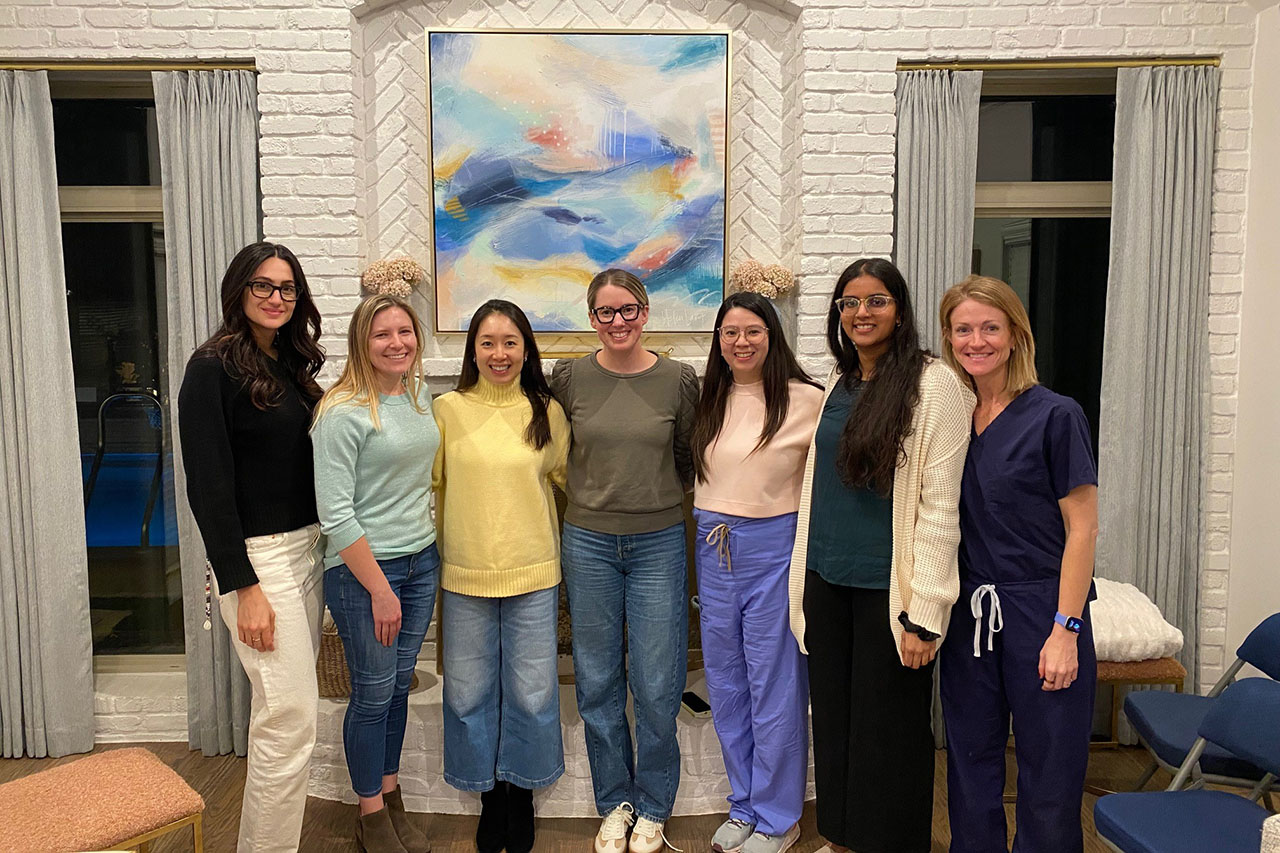
Our Maternal-Fetal Medicine Fellowship is an immersive and challenging, yet highly rewarding opportunity. With exposure to a variety of clinical environments and access to internationally renowned experts in our field for both research and mentoring opportunities, our fellows graduate as well-rounded, empathetic, and highly skilled specialists. Follow along as our fellows take us through a week in their life.

How to Apply

Application deadline: April 28

Important Dates

  • April 28, 2025 – Application deadline
  • May 19, 2025 – Single date notification for interviews
  • May 27, 2025 – Deadline to accept or decline interviews
  • June 25, 2025 – Match opens
  • July 16, 2025 – Ranking opens
  • September 17, 2025 – Ranking closes
  • October 1, 2025 – Fellowship Match Day

The MFM fellowship accepts three fellows per year through the Electronic Residency Application Survey (ERAS).

Requirements:

  • 3 letters of recommendation
  • CREOG scores, including those from PGY4 level, if the candidate has already completed residency.

Interviews are by invitation only. Additional information is available from the Society for Maternal-Fetal Medicine.