
News Highlights - November 10, 2026
Kudos

Tamirisa Named Chair-Elect of ACC Board of Governors
Kamala Tamirisa, M.D., an Associate Professor in the Division of Cardiology and Director of Electrophysiology Research, has been named the next Chair-elect of the American College of Cardiology’s Board of Governors (BOG).
Dr. Tamirisa, who currently serves as Governor of the ACC Texas Chapter, will assume the Chair-elect role in April 2027 following the organization‘s annual meeting in Houston. She will serve as Chair of the Board of Governors from 2028 to 2029.
The BOG represents ACC members through its chapters and provides a conduit between cardiovascular professionals and the College’s national leadership. As Chair, Dr. Tamirisa will help guide the board’s work and bring perspectives from ACC chapters into the organization’s broader priorities.
Her appointment builds on extensive leadership within the cardiovascular community. She is a member of the ACC BOG Steering Committee for 2026-2027 and serves on the Heart Rhythm Society Board of Trustees. She also founded and formerly hosted ACC’s Women in Cardiology Practice Made Perfect podcast and serves as an editorial consultant for JACC: Advances.
“Dr. Tamirisa represents the very best of ACC leadership, a commitment to service, an ability to connect people, and belief in the power of collaboration across the College,” said Renuka Jain, M.D., Chair of the Board of Governors. “I am excited for the perspective, energy and dedication she will bring to the board.”
Dr. Tamirisa earned her medical degree at the Institute of Medical Sciences at Banaras University in India. She completed internal medicine residency training at St. Louis University Medical Center, where she served as Chief Resident, and then obtained fellowship training in cardiology, cardiac electrophysiology, and cardiac MRI at the University of Michigan Medical Center.
She joined the UT Southwestern faculty in 2026. ■

Levine to Receive ACSM’s Highest Honor
Benjamin Levine, M.D., a Professor in the Division of Cardiology and Director of the Institute for Exercise and Environmental Medicine (IEEM), has been chosen to receive the Honor Award from the American College of Sports Medicine (ACSM), the organization’s most prestigious individual honor. The award recognizes a distinguished career of outstanding scientific and scholarly contributions to ACSM’s mission across basic, applied or clinical science, allied health, and education.
Dr. Levine founded IEEM in 1992 and has developed an internationally recognized research program examining how the cardiovascular system adapts to exercise training, deconditioning, aging and extreme environments, including high altitude and spaceflight. His work encompasses exercise physiology, sports cardiology and space medicine, with studies ranging from cardiovascular adaptations in athletes to the physiological effects of prolonged spaceflight.
A prominent sports cardiologist, Dr. Levine has cared for athletes with cardiovascular conditions and has served as a consultant to organizations including the NCAA, NFL, NBA, NHL, Major League Baseball, U.S. Olympic Committee, USA Track & Field and FIFA. He also has helped shape national guidance for the evaluation and management of athletes with cardiovascular disease. Most recently, he served as co-vice chair of the writing group for an American Heart Association/American College of Cardiology scientific statement updating clinical considerations for competitive athletes with cardiovascular abnormalities or disease.
ACSM is the world’s largest sports medicine and exercise science organization, representing nearly 50,000 members and certified professionals worldwide. Its mission is to educate and empower professionals to advance the science and practice of health and human performance. Previous recipients of its Honor Award include many of the foundational figures in exercise and cardiovascular physiology, among them Jere Mitchell, M.D., under whom Dr. Levine trained during his cardiology fellowship at UT Southwestern.
Dr. Levine will receive the award at the organization’s annual meeting in June 2027. ■
Dr. Levine holds the Distinguished Professorship in Exercise Medicine and the S. Finley Ewing Jr. Chair for Wellness and the Harry S. Moss Heart Chair for Cardiovascular Research at Presbyterian Hospital Dallas.

Zhang Receives Obesity Society Innovation Award
Zhao Zhang, Ph.D., an Associate Professor in the Division of Endocrinology and the Center for the Genetics of Host Defense, has received the Jules Hirsch Innovation Award from The Obesity Society, recognizing his research into the biological mechanisms that regulate appetite, body weight, and metabolism.
Dr. Zhang’s laboratory uses forward genetics to investigate unusual variations in food intake, energy balance, and related metabolic traits. Rather than beginning with a known gene or biological pathway, the researchers start with an observable trait and work backward to identify the genes responsible, an approach that can uncover mechanisms that might otherwise be overlooked.
“We start with unusual variations in these traits, then work backward to identify the responsible genes and understand how they work,” Dr. Zhang said. “This approach, called forward genetics, helps us uncover mechanisms we might not have thought to look for.”
The Obesity Society presents the Jules Hirsch Innovation Award to early-career investigators pursuing novel research with the potential to significantly advance the understanding or treatment of obesity. The recognition highlights Dr. Zhang’s work to identify previously unknown genetic pathways governing food intake and energy regulation, research that could deepen understanding of the biological drivers of obesity. ■
Visit the Zhang Lab to Learn More
Khalaf McStay Receives Healthcare Communication Teaching Award
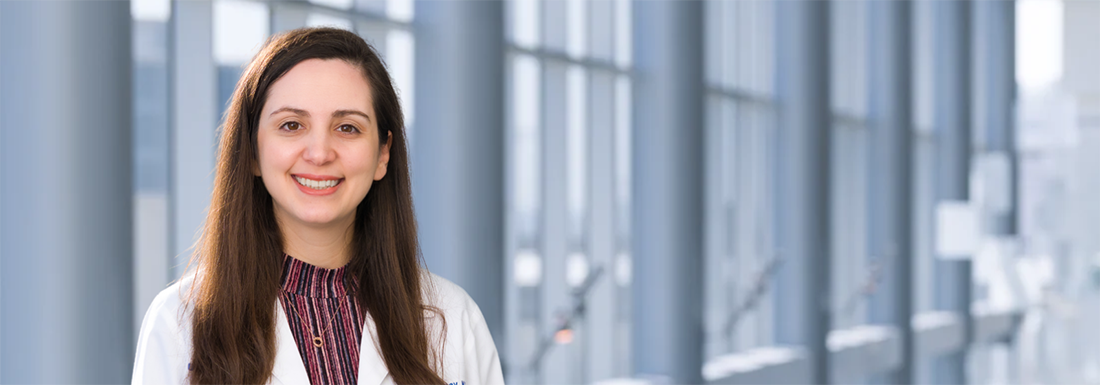
Carla Khalaf McStay, M.D., M.S., an Assistant Professor in the Palliative Medicine Section of General Internal Medicine and Program Director for the Hospice and Palliative Medicine Fellowship, has received the Healthcare Communication Teaching Excellence Award from the Academy of Communication in Healthcare.
The national award recognizes educators who advance healthcare communication through teaching with impact beyond their own institution, original or innovative approaches to communication education, or training conducted in particularly challenging clinical environments. Recipients are also evaluated for evidence that their teaching, curricula, or educational resources have had a sustained impact.
Dr. Khalaf McStay specializes in caring for patients with serious illness and holds a master’s degree in medical education from the University of Pittsburgh’s Institute for Clinical Research Education. Her scholarly work has included clinical teaching and communication-related topics such as providing formative feedback and improving advance care planning in resident clinics. She joined the UT Southwestern faculty in 2021. ■
Timofte Among Finalists for SPARK Award
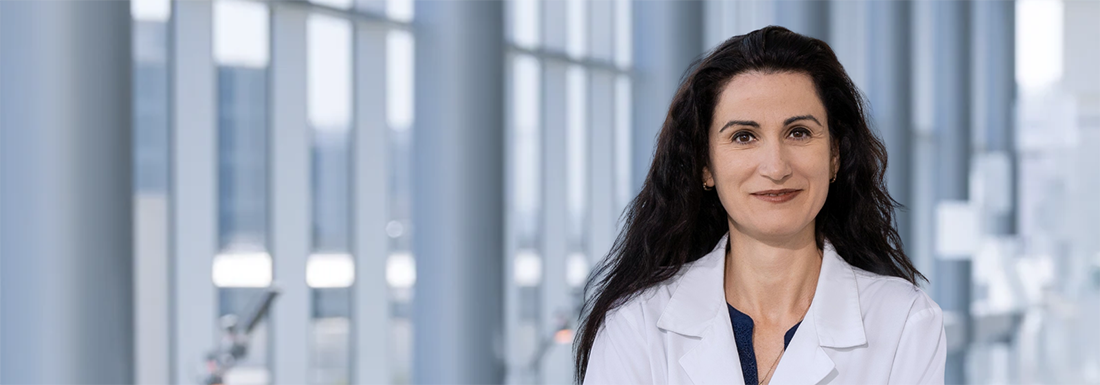
Irina Timofte, M.D., Associate Professor in the Division of Pulmonary and Critical Care Medicine and Program Director of the Lung Transplant Fellowship, was among 16 finalists recognized by the DFW Alliance of Technology and Women for its 2026 SPARK Awards, which honor women using technology to make a meaningful difference in their communities.
The finalists represented seven areas of impact, including educational opportunity, professional development, environmental sustainability, healthcare equity, accessibility, community safety and social justice, and biotechnology innovation. Dr. Timofte’s recognition also reflects a collaboration with The University of Texas at Dallas (UTD) that uses technology not simply to advance research, but to develop practical solutions that can improve patients’ lives. The finalists were honored Oct. 23 during the organization’s 25th anniversary gala.
“I am grateful for this recognition and for the opportunity to collaborate with my colleagues at UTD, whose partnership played an instrumental role in fostering the work that made this achievement possible,” Dr. Timofte said. “Hearing what the other nominees have accomplished was both humbling and energizing. Their work shows that innovation is not simply about what technology makes possible, but what we choose to do with those possibilities.” ■
Research Report

McNutt Contributes to NEJM Report on Investigational PKU Therapy
Markey McNutt, M.D., Ph.D., an Associate Professor in the Division of Clinical Genetics, was a contributing author to a correspondence published Oct. 29 in The New England Journal of Medicine examining an investigational treatment for phenylketonuria (PKU), a rare inherited metabolic disorder in which the body cannot properly metabolize the amino acid phenylalanine. The report, “SLC6A19 Inhibitor Repinatrabit and Phenylalanine Levels in Phenylketonuria,” included investigators from UT Southwestern and other academic centers in the United States and Germany.
The correspondence reports findings involving repinatrabit, formerly known as JNT-517, an investigational oral small-molecule drug that selectively inhibits SLC6A19, a transporter involved in the absorption and reabsorption of phenylalanine. By targeting this pathway, researchers are studying whether the drug can lower phenylalanine levels in people with PKU, for whom maintaining adequate control of the amino acid is important to preventing neurological complications.
Dr. McNutt, who specializes in genetics and inherited metabolic disorders, was also a member of the JNT517-101 Trial Investigators Group. The NEJM correspondence adds to ongoing clinical investigation of repinatrabit as a potential new treatment approach for PKU; a global Phase 3 study of the drug is now underway in adults. ■
Doctors, Practices Shape Clinical Trial Enrollment More Than Patient Factors
Chanchuan “Charles” Jiang, M.D., an Assistant Professor in the Division of Hematology and Oncology, and colleagues found that physicians and oncology practices may have greater influence over who enrolls in advanced cancer clinical trials than the patient characteristics commonly associated with participation.
In the study, published in JAMA Network Open, researchers examined clinical trial participation among more than 205,000 patients with advanced cancer treated by 1,664 oncologists at 107 U.S. practices. Only 5.2% of patients enrolled in a clinical trial. Enrollment also varied considerably among physicians: approximately one-quarter of oncologists accounted for 84% of enrollments, while nearly 30% enrolled no patients.
The findings suggest that efforts to broaden clinical trial participation should address not only patient awareness and access but also differences among physicians and oncology practices. Greater physician engagement and stronger research infrastructure may help more patients gain access to clinical trials while making study populations more representative of the patients ultimately treated in routine cancer care.
Other Internal Medicine researchers who contributed to the study include Chuan Angel Lu, M.D., Ph.D.; Joshua Liao, M.D., M.Sc.; and Tian Zhang, M.D., M.H.S. ■

National AHA Hospital Data Now Available to UTSW Researchers
UT Southwestern researchers now have access to more than a decade of national hospital-level data through the American Hospital Association Annual Survey Database.
Jointly supported by the Vice Provost’s Office of Clinical Research, Peter O’Donnell Jr. School of Public Health, and Department of Internal Medicine, the resource provides information on hospital characteristics, resources, and services. Researchers can use the data to compare hospitals and examine how differences in their organization and resources relate to healthcare delivery.
The subscription currently includes annual survey data from 2014 through 2024, with 2025 data expected to be added in December. Data extracts are available at no charge for UTSW faculty-led projects, subject to review and applicable data-use restrictions. Specific years and variables will be confirmed as part of the request process.
Researchers can review the AHA Annual Survey information page for survey instruments and additional details.
Education & Training
UT-StARR Helps Advance Research Careers
Residents considering a career as a physician-scientist can gain dedicated time to develop their research through UT-StARR, UT Southwestern’s NHLBI-funded Resident Research Training in Heart, Lung, and Blood Disorders program.
Beginning July 1, 2027, selected Internal Medicine and Pediatrics residents may devote 80% of their time for one to two years to basic, translational, or clinical research related to cardiovascular, pulmonary, or hematologic disorders. Participants receive faculty mentorship and structured research training while maintaining limited clinical responsibilities or pursuing additional training opportunities.
The program accepts up to two residents annually and provides salary and fringe support, research and training funds, travel funding, and opportunities to engage with investigators and other research trainees across UT Southwestern.
Residents must be in good standing and meet NIH training grant eligibility requirements. Applications are due Dec. 15, 2026. ■
For more information, visit the UT-StARR website. Questions? Contact the Jean Wilson Society.
In Case You Missed It
Ying Helps Develop Soft Robot to Navigate Small Intestine
Binbin Ying, Ph.D., an Assistant Professor in the Division of Digestive and Liver Diseases and the Department of Biomedical Engineering, served as the lead co-first author of a study describing a soft robotic device designed to navigate the small intestine and perform procedures used to diagnose and treat disease. Published in Science Robotics, the research could eventually improve care for patients with gastrointestinal bleeding, Crohn’s disease and other forms of inflammatory bowel disease, tumors, and other conditions affecting the small intestine.
“The small intestine is about 20 feet long, tightly folded, and lined with slippery tissue, making it particularly difficult to examine,” Dr. Ying explained. “Current double-balloon enteroscopy can reach deep into the small intestine and perform biopsies and other interventions, but the procedure is technically demanding and requires extensive training.”
To address these challenges, Dr. Ying and his collaborators developed BIOSENTER, a flexible robotic system inspired by snake movement and scales. Inflatable chambers allow the robot to elongate and steer, while expandable surfaces based on kirigami, the Japanese art of cutting and folding paper, help it grip intestinal tissue with limited expansion. A central channel accommodates tools for imaging, biopsy, and localized delivery of fluids that could eventually include therapeutic agents.
In preclinical animal studies, BIOSENTER traveled 2 to 3 meters through the small intestine in 11 minutes and demonstrated real-time visualization, tissue biopsy, and localized fluid delivery. The researchers observed no visible tissue damage under the tested conditions, and microscopic examination found no differences in inflammation or tissue integrity between treated and control tissues.
Dr. Ying began developing BIOSENTER during his postdoctoral training at MIT and Brigham and Women’s Hospital and has continued refining the technology since joining UT Southwestern in 2025. His lab is now exploring artificial intelligence to improve the robot’s kirigami structures and locomotion, with the longer-term goal of developing systems capable of autonomous navigation.
The technology remains preclinical. Further engineering and validation are needed before human testing, including studies of longer-distance performance, safety, usability, and comparisons with current double-balloon enteroscopy. The researchers ultimately envision BIOSENTER technology complementing existing endoscopic procedures while potentially lowering training barriers and expanding access to examinations and treatments deep within the small intestine. ■