
News Highlights - September 29, 2026
Kudos
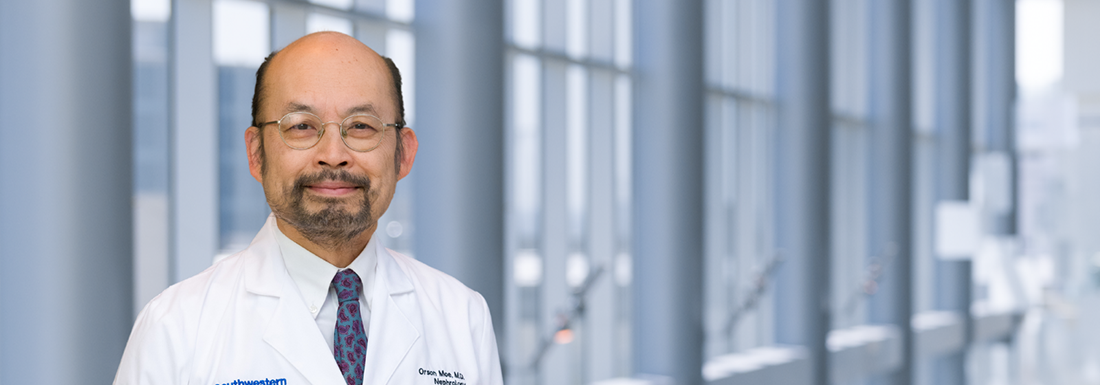
Moe Elected At-Large Councilor for American Society of Nephrology
Orson Moe, M.D., a Professor in the Division of Nephrology, has been elected At-Large Councilor of the American Society of Nephrology (ASN). His four-year term begins in January 2027.
As a member of the ASN Council, Dr. Moe will help guide the society’s work and advance its vision of creating a world without kidney diseases. The nine-member council serves as the organization’s governing board and helps shape the strategic direction of the world’s largest professional organization devoted to kidney health.
Dr. Moe will join Samir M. Parikh, M.D., Professor and Chair, on the ASN Council. Dr. Parikh will serve as Immediate Past President in 2027. Together, their service will give UT Southwestern an unprecedented level of representation within the leadership of the world’s leading kidney professional society.
Dr. Moe is an internationally recognized physician-scientist whose research focuses on kidney stone disease, mineral metabolism, and renal physiology. His election reflects his longstanding leadership and contributions to the field of nephrology. ■
Dr. Moe holds the Donald W. Seldin Professorship in Clinical Investigation.
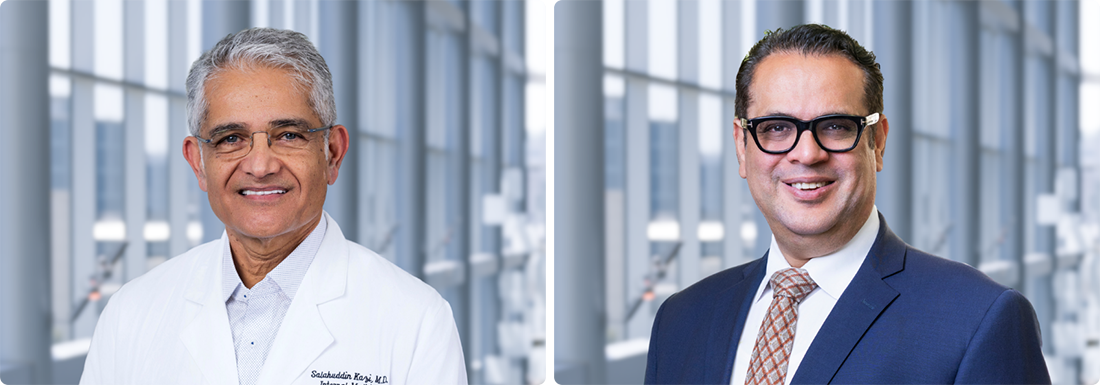
Kazi, Omer to be Honored by Whitetulip Health Foundation
Salahuddin "Dino" Kazi, M.D., a Professor in the Division of Rheumatic Diseases and Vice Chair of Education, and Saad Omer, M.B.B.S., M.P.H., Ph.D., Dean of the Peter O'Donnell Jr. School of Public Health and a Professor in the Division of Infectious Diseases and Geographic Medicine, will be honored by the Whitetulip Health Foundation, a nonprofit organization that supports healthcare professionals through education, mentorship, scholarships, and community service initiatives.
Dr. Kazi will be presented the organization’s Lifetime Achievement in Medical Education award; Dr. Omer will receive the Leadership in Global Public Health award.
Vlad Zaha, M.D., Ph.D., Associate Professor in the Division of Hematology and Oncology and Section Chief of Cardio-Oncology, will present the keynote address at the appreciation dinner, schedule for Thursday, Oct. 22, at 5:45 p.m. in the Faculty Club. ■
Dr. Kazi is a Distinguished Teaching Professor. Dr. Omer holds the Lyda Hill Deanship for the School of Public Health.
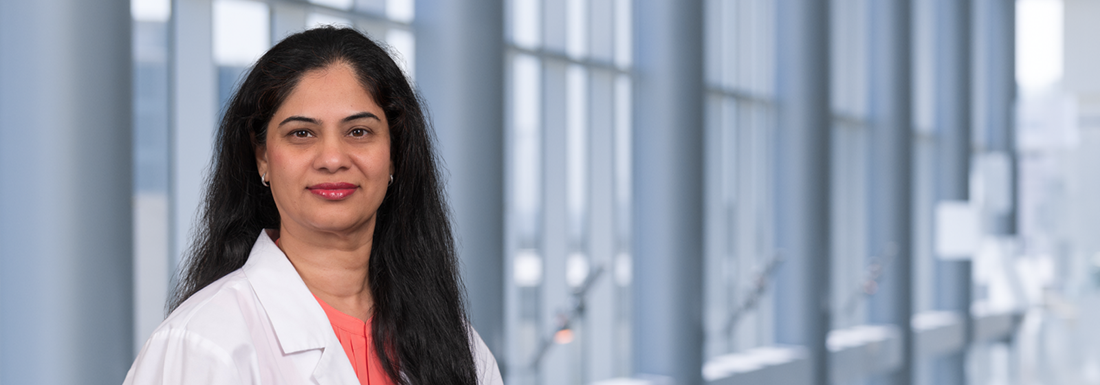
Vemulapalli Elected Executive Secretary for Texas Society of Gastrointestinal Endoscopy
Roopa Vemulapalli, M.D., Clinical Associate Professor, Clinical Chief of the Division of Digestive and Liver Diseases, and Director of Endoscopy Operations at Clements University Hospital, has been elected executive secretary of the Texas Society for Gastrointestinal Endoscopy (TSGE).
TSGE is a statewide professional organization that supports education, advocacy, and collaboration among gastroenterologists and gastrointestinal endoscopy professionals across Texas. In her new role, Dr. Vemulapalli will help support the organization’s governance and activities while advancing its mission to promote excellence in digestive health care and endoscopic practice.
Dr. Vemulapalli specializes in the diagnosis and treatment of small bowel disorders and has expertise in celiac disease, hereditary gastrointestinal cancer syndromes, and advanced endoscopic procedures. She has been a member of the UT Southwestern faculty since 2010. ■
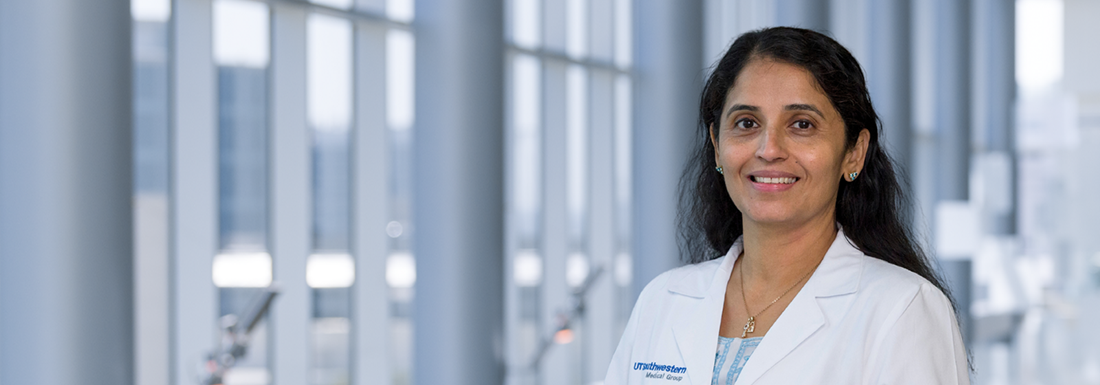
Jagan Receives APP Outstanding Achievement Award for Teaching
Ampili Jagan, D.N.P., APRN, AGACNP-BC, an Advanced Practice Nurse in the Division of Endocrinology, has received UT Southwestern’s Advanced Practice Provider (APP) Outstanding Achievement Award for Teaching. The award recognizes an APP who demonstrates excellence in teaching through respectful, professional, challenging, and supportive engagement with learners, including precepting APP students, delivering clinical education, and onboarding new APP colleagues. Award recipients were selected through a rigorous review process led by UT Southwestern’s APP Recognition Committee.
Dr. Jagan specializes in comprehensive diabetes management, including Type 1 and Type 2 diabetes, post-transplant diabetes, gestational diabetes, and the use of advanced insulin technologies. In addition to her clinical practice, she is committed to educating future health care professionals and promoting evidence-based medicine.
Dr. Jagan earned a bachelor’s degree in nursing from SRM University in Chennai, India; a master’s degree in nursing from The University of Texas at Arlington; and a Doctor of Nursing Practice degree from Aspen University. She is an active member of the American Diabetes Association and the American Association of Clinical Endocrinology. ■
Research Report
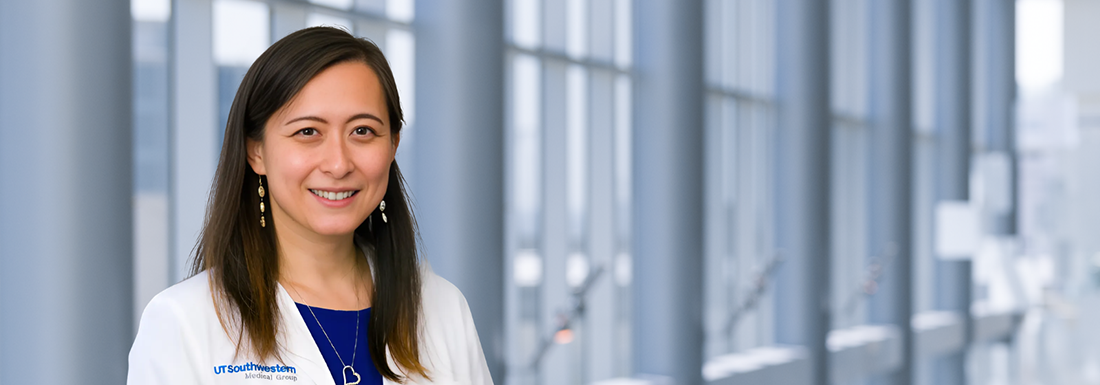
Zhang Receives Federal Grant Supporting Clinical Research Leadership
Tian Zhang, M.D., M.H.S., a Professor in the Division of Hematology and Oncology, has received an R50 Research Specialist Award from the National Cancer Institute to support her efforts as a clinician-scientist and research leader in the Simmons Comprehensive Cancer Center (SCCC).
Since 2018, Dr. Zhang has led the Alliance for Clinical Trials in Oncology’s Phase 3 PDIGREE study in advanced kidney cancer, which enrolled more than 1,100 patients. The award will support her efforts on planned correlative studies stemming from the trial, with results expected to be reported in an upcoming manuscript.
The grant also supports Dr. Zhang’s role as site principal investigator for the Alliance MODERN trial in bladder cancer, her work as Associate Director of Clinical Research facilitating NCTN trial enrollments in the SCCC, and her leadership as co-chair of the renal cancer cadre within the Alliance Genitourinary Committee.
The R50 Clinician Scientist award is designed to support clinical researchers who conduct research within established programs while contributing specialized expertise and leadership. The award provides stable salary support and protected research time, allowing recipients to pursue key scientific and operational activities without relying solely on other grant sources. ■

Study Provides Design Framework for Long-Lasting Mucosal Adhesives
Alexander-Hoi Nguyen, B.S.A., a Research Technician I in the laboratory of Juan Manuel Povedano Selfa, Ph.D., an A study led by Binbin Ying, Ph.D., an Assistant Professor in the Division of Digestive and Liver Diseases and the Department of Biomedical Engineering, provides new insights into how electrically activated hydrogels can form strong, long-lasting adhesion to wet mucosal tissues.
Published in Proceedings of the Royal Society A, the study builds on the team’s previous development of e-GLUE, an electroadhesive hydrogel reported in Science Translational Medicine that can achieve prolonged retention on gastrointestinal mucosa. The new work investigates the fundamental mechanisms underlying this adhesion.
The researchers developed a mathematical model showing how a small electrical signal drives charged polymer chains toward and into the tissue, where ionic complexation and polymer chain entanglement work together to strengthen adhesion. Experiments supported the model, providing a quantitative framework for predicting and optimizing electroadhesive performance.
These findings could guide the design of future bioadhesive systems for localized drug delivery, biosensing, and tissue-interfacing medical devices. The work was led by the Ying Lab at UT Southwestern, with collaborators at Syracuse University, the University of Pennsylvania, and Worcester Polytechnic Institute. ■
Study Reveals How the Gut Protects Itself From Infection and Damage
Researchers led by Hans-Christian Reinecker, M.D., Associate Professor in the Division of Digestive and Liver Diseases, have uncovered a new way the intestine responds when its protective lining is damaged. Published in Nature Communications, the study shows that intestinal cells use a built-in molecular switch to detect injury and activate defenses against harmful bacteria.
The intestinal lining acts as a barrier that keeps bacteria and other potentially harmful substances inside the gut and out of the bloodstream. The researchers found that a protein called ARHGEF2 helps maintain that barrier. When the barrier is disrupted, intestinal cells switch from one form of ARHGEF2 to another, triggering a process called autophagy, which allows cells to break down damaged components and help eliminate invading microbes.
Using mouse models and human intestinal organoids, the team showed that loss of the normal ARHGEF2 form weakens the gut barrier, causes inflammation, and activates immune defenses. They also found that infection with Listeria monocytogenes, a foodborne bacterium, triggers the same molecular switch, suggesting that the response is part of the intestine's natural defense system against infection.
The findings are particularly important because problems with the intestinal barrier and autophagy have been linked to inflammatory bowel diseases, including Crohn's disease and ulcerative colitis. By revealing how intestinal cells sense damage and launch protective responses, the study provides new insight into the biological processes that help keep the gut healthy and may point to future approaches for treating inflammatory and infectious diseases of the intestine.
The study was co-first authored by Shuyuan Chen, M.D., M.S.; and Alka Diwaker, Ph.D. Other UT Southwestern researchers who contributed to the study include Xi Li, Ph.D.; Abdulmajeed Salamah; Lei Guo, Ph.D.; Neethu Alex, Ph.D.; Ashutosh Shukla, Ph.D.; Mary-Joe Touma, Ph.D.; Yassin El-Najjar; Lin Xu, Ph.D.; Jianyi Yin, M.D., Ph.D.; Ezra Burstein, M.D., Ph.D.; Marcel Mettlen, Ph.D.; Andrew Lemoff, Ph.D.; Suraj Patel, M.D., Ph.D.; and Josephine Ni, M.D. ■
Education & Training
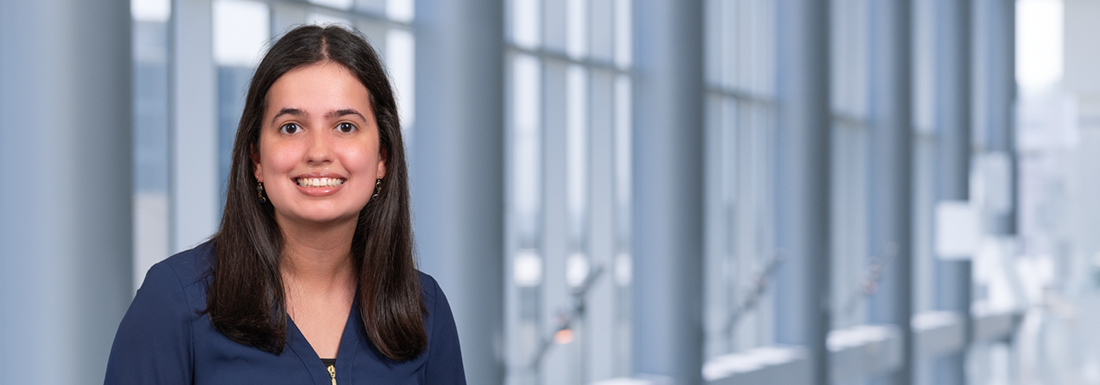
Martinez to Participate in Harvard Course for Future Educators
Rosa Martinez, M.D., a resident physician in the Community and Population Healthcare track, has been accepted to the Harvard Macy Institute’s Program for Post-Graduate Trainees: Future Academic Clinician-Educators, a competitive professional development program designed for residents and fellows pursuing careers in academic medicine. The three-day intensive course helps participants strengthen teaching and leadership skills through project-based learning, small-group collaboration, and mentorship in health professions education.
The Harvard Macy program supports future clinician-educators from all specialties and focuses on applying learning theory, educational scholarship, feedback, and project development to improve teaching and learning. Participants complete the program with an educational project supported by a faculty mentor and gain access to a network of educators and leaders in medical education.
For her project, Dr. Martinez will be mentored by Madeline Rodriguez, M.D., an Assistant Professor in the Division of General Internal Medicine and Associate Program Director for the Internal Medicine Residency.
Originally from Waukegan, Illinois, Dr. Martinez earned a bachelor’s degree from Rice University and received her medical degree from The University of Texas at Austin. Her professional interests include hematology and oncology, palliative care, value-based care, and health equity.
Dr. Martinez's selection supports her development as a clinician-educator and her interest in academic medicine. ■
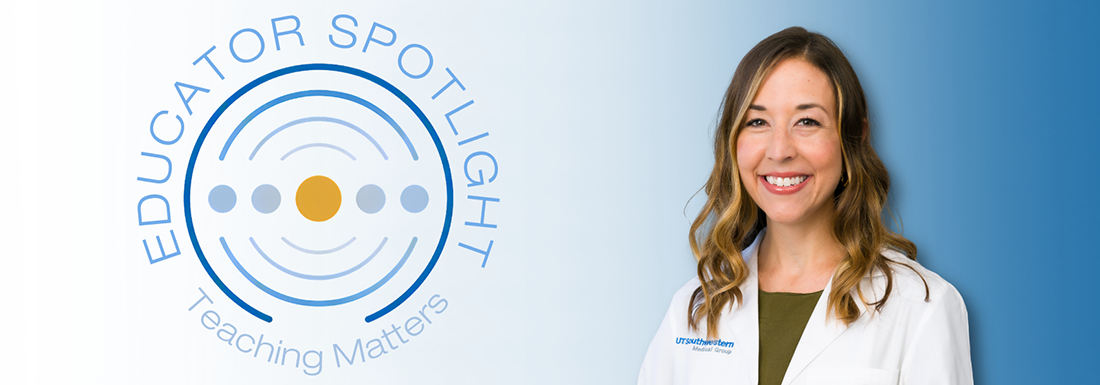
In the Spotlight: Lisa VanWagner
Editor’s Note: Lisa VanWagner, M.D., M.Sc., is an Associate Professor in the Division of Digestive and Liver Diseases who joined the UT Southwestern faculty in 2022. She earned her medical degree from the University of Virginia School of Medicine and completed residency training at Northwestern University, where she served as Chief Resident, and where she also received fellowship training in gastroenterology and hepatology, as well as transplant hepatology. Her clinical research laboratory utilizes human population-based approaches, large electronic health record data analysis, and health services research methods to define and characterize cardiometabolic disease risk prediction, prevention, and treatment approaches in patients with chronic liver disease. She serves as Associate Program Director in the Internal Medicine Residency, where she oversees resident research.
What part of the resident experience do you help lead or support?
I help residents develop research skills, connect with mentors and collaborators, and turn great ideas into meaningful scholarly work. I also serve as Director of Clinical Research for the Division of Digestive and Liver Diseases, which allows me to connect trainees with clinical research opportunities across a wide range of disciplines.
What are you always happy for a resident to reach out to you about?
Academic medicine mentorship. I have the opportunity to care for patients, pursue clinically relevant scientific research questions, collaborate with colleagues, teach, write, speak, and continue learning. Whether a resident is considering a career in academic medicine, looking for research opportunities, searching for mentors, or considering career options, I'm always happy to talk through the possibilities and help identify a path that aligns with their interests.
What is your favorite part of being an APD or working with our residents?
Without question, it's the residents. Our trainees bring curiosity, creativity, and fresh perspectives that continually challenge me to think differently. Many of the most innovative ideas I've encountered have come from resident-led projects, and it's rewarding to help those ideas develop into meaningful scholarship and successful careers.
What clinical, educational, or professional interests or projects are you especially excited about right now?
I'm especially excited about our new academic skills lecture series, which is designed to help residents navigate research, scholarship, and career development opportunities at UTSW. I also look forward to our monthly resident Works-in-Progress (WIP) sessions at the Faculty Club. These discussions highlight the quality of resident-led projects and often spark new ideas, collaborations, and mentoring relationships. ■