
News Highlights - September 22, 2026
Kudos

Singal Elected to Lead International Liver Cancer Organization
Amit Singal, M.D., M.S., Professor and Interim Chief of the Division of Digestive and Liver Diseases, has been elected President-Elect of the International Liver Cancer Association (ILCA). He will serve as President-Elect from January 2027 through December 2027 and as President from January 2028 through December 2029.
The ILCA is the only international organization devoted exclusively to liver cancer research. Its mission is to lead a global community of physicians, scientists, and allied health professionals through education and research to improve the prevention and treatment of liver cancer. Founded in 2007, the organization brings together experts from around the world to advance research, develop clinical guidance, and improve outcomes for patients with liver cancer.
Dr. Singal is an internationally recognized expert in hepatocellular carcinoma, the most common form of liver cancer. His election reflects his longstanding leadership in liver cancer research, prevention, early detection, and patient care. ■
Dr. Singal is a Dedman Family Scholar in Clinical Care and holder of the Willis C. Maddrey, M.D. Distinguished Chair in Liver Diseases.
Research Report
Ying Receives Pardee Foundation Grant for Colorectal Cancer Research
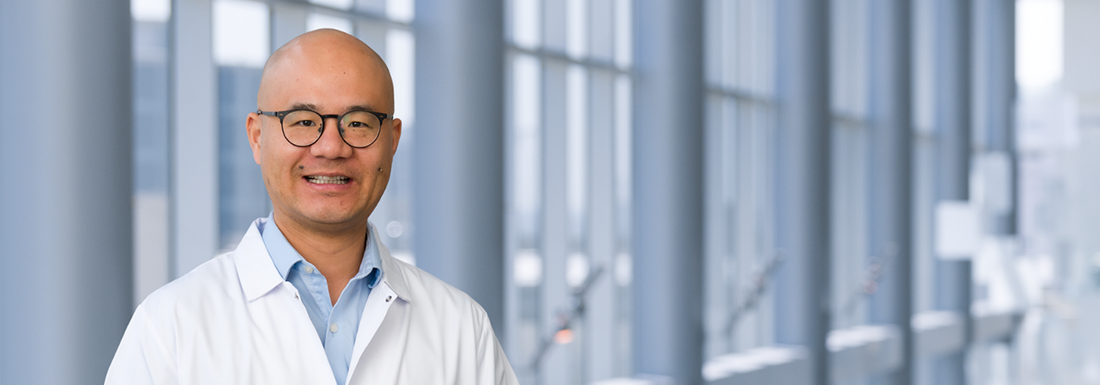
Binbin Ying, Ph.D., an Assistant Professor in the Division of Digestive and Liver Diseases and the Department of Biomedical Engineering, has received a $50,000 grant from the Elsa U. Pardee Foundation for his project, “An Electroadhesive Hydrogel Platform for Prolonging Local Treatment of Residual Colorectal Cancer after Radiation Therapy.” Combined with a $50,000 Early-Stage Research Grant from the Cary Council awarded earlier this summer, the support will help advance the project’s next phase of development.
Dr. Ying’s research focuses on developing soft, flexible materials called hydrogels that can gently adhere to tissue. In collaboration with Andrew Wang, M.D., Professor of Radiation Oncology, his team is investigating how these materials could be used to deliver treatment directly to colorectal cancer cells that remain after radiation therapy, helping medications stay in contact with the cancer site longer.
The project aims to make these hydrogels stronger, longer lasting, and more adaptable to the body’s tissues. By improving how local treatments are delivered, the research could lead to more effective therapies for patients with residual colorectal cancer and help reduce the risk of the disease returning. ■
Dr. Wang holds the A. Kenneth Pye Professorship in Cancer Research.

Endocrinology Researchers Develop Platform to Reveal Drug Resistance Mechanisms
Alexander-Hoi Nguyen, B.S.A., a Research Technician I in the laboratory of Juan Manuel Povedano Selfa, Ph.D., an Assistant Professor in the Division of Endocrinology, worked with collaborators to develop a genetic screening platform that helps scientists identify how cancer drugs work and how cancer cells become resistant to treatment.
Published in ACS Chemical Biology, the study describes an inducible system that increases the number of mutations in cancer cells. The researchers combined two changes that affect how cells copy and repair DNA, creating an “ultramutator” state that produced many more drug-resistant cells than either change alone.
The team first tested the platform using bortezomib, a drug with a well-understood target. The screen identified recurring mutations linked to drug resistance, including one that had not been detected in previous studies using similar approaches.
Researchers then applied the platform to lurbinectedin, a drug used to treat small cell lung cancer. All seven drug-resistant cell lines carried mutations in genes involved in nucleotide excision repair, a process cells use to repair damaged DNA. The findings suggest that this repair pathway plays a central role in how lurbinectedin kills cancer cells and how resistance to the drug develops.
“We drew inspiration from human genetics,” Dr. Povedano Selfa said. “By recreating these two complementary defects in cancer cells, we were able to uncover genetic changes that mismatch repair-deficient screens alone can miss.”
According to the researchers, studying mutations that allow cancer cells to survive treatment can help reveal how drugs work, identify potential resistance mechanisms, and provide clues about compounds whose biological targets are not yet known.
The platform has been tested in engineered mouse cancer cells and is now being evaluated in additional cell lines and with other compounds. Researchers say its flexible design could make it a useful tool for studying drug action and resistance across a variety of cancer types.
Other contributors from the Division of Endocrinology included Vicky Li, former Medical Scientist Training Program student; Jacob Kimberg, Research Technician I; and co-corresponding author David McFadden, M.D., Ph.D., Associate Professor. ■
Researchers Identify Gaps in Follow-Up Care for Moderate Aortic Stenosis
A new study led by researchers in the Division of Cardiology found that many patients with moderate aortic stenosis do not receive the follow-up heart imaging recommended by clinical guidelines.
Published in Circulation, the study analyzed records from more than 94,000 U.S. adults who had received a diagnosis of moderate aortic stenosis between 2018 and 2023. Current guidelines recommend a repeat echocardiogram every one to two years to monitor whether the condition is worsening. The researchers found that only 61.7% of patients received a follow-up echocardiogram within two years.
Among patients who had a follow-up exam, nearly 35% progressed to severe aortic stenosis, a serious narrowing of the heart valve that can lead to severe illness and death if left untreated. About 23% underwent aortic valve replacement during the study period.
The study also identified factors linked to lower rates of follow-up care. Patients were less likely to receive recommended imaging if their condition was diagnosed during a hospital stay or if they did not have a primary care physician or cardiologist listed in their medical record. Follow-up rates were also lower among patients facing social or access-to-care challenges.
“Moderate aortic stenosis can progress over time, making regular follow-up critical,” said Dharam Kumbhani, M.D., Professor of Internal Medicine in the Division of Cardiology and senior author of the study. “Our findings suggest that many patients are not receiving the surveillance recommended by clinical guidelines. Improving follow-up and care coordination could help identify disease progression earlier and ensure patients receive appropriate treatment at the right time.”
Additional researchers from the Division of Cardiology who contributed to the study include Joseph Kassab, M.D., M.S.; Musa Ali Rizvi, M.D.; Ambarish Pandey, M.D.; Saket Girotra, M.D.; Mujeeb Basit, M.D.; Amit Goyal, M.D.; Gail Peterson, M.D.; Gloria Ayuba, M.D.; James de Lemos, M.D.; and Amil Shah, M.D. ■
Education & Training
In the Spotlight: Dawn Zhao
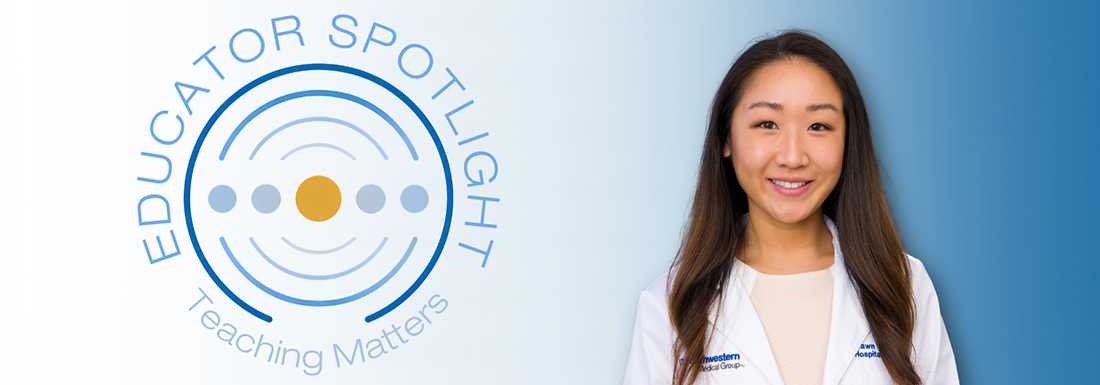
Editor’s note: Dawn Zhao, M.D., is a Clinical Assistant Professor in the Division of Hospital Medicine who joined the Parkland hospitalist group in 2021. She earned her medical degree from UT Health San Antonio and completed residency training at Montefiore Einstein, where she served as Chief Resident. At Parkland, she works with residents, medical students, and physician assistant students across the inpatient wards. In the conversation that follows, she shares her approach to teaching, the value of mentorship, and what she finds most rewarding about working with learners.
What do you enjoy most about teaching our learners?
Our learners are most often motivated to expand their knowledge. I have also learned that every patient can teach our learners something – from bread-and-butter medicine to structural competency to bedside communication. Supervising a wards team is fun when you can cultivate an atmosphere of contagious excitement for learning!
What’s one teaching practice you use that takes less than two minutes but makes a meaningful difference?
I use the one-liner as a tool to assess each learner. As part of my beginning rotation expectations, I explain that a one-liner should be a dynamic frame for a patient with only pertinent past medical history and the reason for admission and/or reason for ongoing hospitalization. For example, “60-year-old man with a history of uncontrolled insulin dependent diabetes and PAD admitted for diabetic foot infection pending angiogram with Vascular Surgery.” Hearing how a learner has framed a patient at any point of the admission can clue me into their progress as a reporter, interpreter, or manager and can be a way to commit to a diagnosis for new admissions.
How do you give useful feedback when clinical time is limited?
During rounds, I take notes on things each learner has done well or what can be improved upon and refer to these notes immediately before feedback and while writing evaluations. Additionally, using the clerkship clinical exercise surveys has been a useful frame from which to provide feedback to the students. Not only does it remind me to take a few minutes to give feedback, but it is an effective tool to give constructive feedback to students who are not as receptive.
What’s something you’ve changed about your teaching because of something you learned from a learner?
As I have become further removed from training, I have started learning a few Epic tricks from residents. Now, especially when working with a wards team in the first half of the academic year, I have a chalk talk about Epic "hacks" where we all share our Epic tips and tricks to help each other optimize our workflow.
What’s one thing our faculty could try with their learners tomorrow?
Try using a dynamic one-liner! ■