
News Highlights - September 15, 2026
Announcements
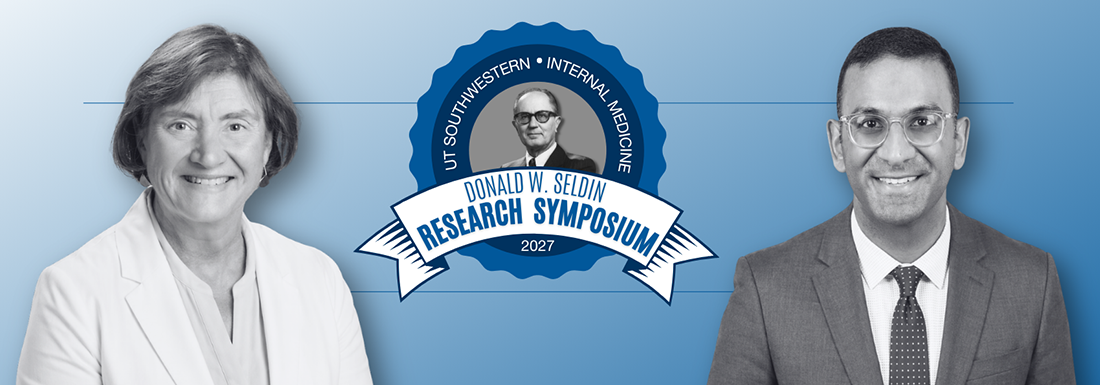
Speakers Announced for Twelfth Annual Seldin Symposium
Christine Seidman, M.D., Professor of Medicine at Harvard Medical School and Director of the Cardiovascular Genetics Center at Brigham and Women’s Hospital, and Vijay Sankaran, M.D., Ph.D., Professor of Pediatrics at Harvard Medical School and investigator at the Broad Institute of MIT and Harvard, will headline the Department’s 12th Annual Donald W. Seldin Research Symposium in April.
Dr. Seidman will deliver the symposium keynote during Internal Medicine Grand Rounds at 8 a.m. Friday, April 2, in D1.502. Her work transformed cardiomyopathy from a disease described by heart anatomy into a disease understood through genetics, molecular biology, and precision medicine. Dr. Seidman’s discoveries led directly to genetic diagnosis, family screening programs, risk prediction strategies, mechanistic understanding of disease, and the first targeted drug therapy for an inherited heart muscle disorder.
Dr. Sankaran will present the Seldin-Smith Physician Scientist Lecture at noon Friday, April 16, in D1.502. He helped discover the genetic switch that turns off fetal hemoglobin after birth and showed how reactivating fetal hemoglobin could treat sickle cell disease, laying the foundation for the first CRISPR-based therapies now helping patients with sickle cell disease and beta thalassemia.
The symposium also will feature research presentations by faculty, fellows, residents, and students. Trainees will present mentored projects during poster sessions on April 16, with selected participants named Foster Fellows by a panel of faculty judges.
The symposium will conclude during Internal Medicine Grand Rounds at 8 a.m. Friday, April 30, in D1.502, when Foster Fellows will present their research and one trainee will be selected as the 2027 Seldin Scholar. ■
Drs. Seidman and Sankaran are Howard Hughes Medical Institute (HHMI) Investigators.
Kudos
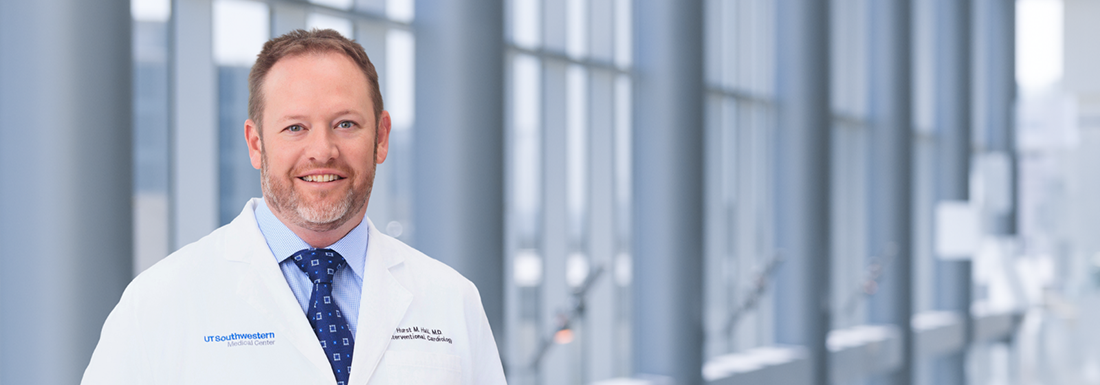
Hall Begins Two-Year Term as AHA Dallas Division President
Hurst (Lanny) Hall, M.D., Associate Professor in the Division of Cardiology, has begun a two-year term as president of the American Heart Association (AHA) North Texas/Dallas Division executive board, succeeding Sandeep Das, M.D., M.P.H., M.B.A., Professor in the Division of Cardiology.
Dr. Hall has been an active leader within the AHA at both the regional and national levels. His new role positions him to help guide the organization’s efforts to improve cardiovascular health, advance research, promote prevention, and support community education across the Dallas-Fort Worth area.
At UT Southwestern, Dr. Hall serves as Medical Director of Inpatient Cardiology at Clements University Hospital. An interventional cardiologist, he has led initiatives focused on quality improvement and cardiovascular care delivery and, as physician leader, was instrumental in helping the institution achieve Comprehensive Cardiac Center Certification from The Joint Commission and the American Heart Association. ■
Research Report

Rothermel Awarded Grant to Study Heart Defects in Down Syndrome
Beverly A. Rothermel, Ph.D., a Professor in the Division of Cardiology, has received a one-year, $125,000 award from the Harry S. Moss Heart Trust* to explore why congenital heart defects are so common in people with Down syndrome.
The project builds on ongoing research from Dr. Rothermel’s laboratory that uses induced pluripotent stem cells, or iPSCs, to study the earliest stages of human development. Her team has found that stem cells derived from individuals with Down syndrome have fewer primary cilia, tiny structures on the surface of cells that help guide important developmental signals.
“We discovered that stem cells with Down syndrome show unusually high mitochondrial activity.” Dr. Rothermel said. “As a result, the cells divide more quickly than typical stem cells, leaving less time for primary cilia to form. The loss of these structures appears to interfere with the cells’ ability to develop into early nervous system tissue.”
The newly funded study will examine whether the same shortage of primary cilia may also play a role in congenital heart defects, which affect about half of babies born with Down syndrome. By connecting what is seen in stem cells to what happens during development, the research could provide new insight into the biological processes that contribute to heart abnormalities.
“I am profoundly grateful to the Trust for their support and the opportunity to tie our observations in iPSCs to actual developmental events,” Dr. Rothermel added.
The award follows the acceptance of a new manuscript from the Rothermel laboratory describing a previously unrecognized link between cellular metabolism, primary cilia formation, and early development in Down syndrome. In laboratory studies, the team identified several approaches that restored primary cilia and improved the cells’ ability to move toward a normal developmental pathway. While additional research is needed, the findings provide a new framework for understanding how developmental differences arise in Down syndrome and may point toward future therapeutic strategies. ■
*Harry S. Moss Heart Trust, Bank of America, N.A.

Liu Receives NIH Grant Renewal to Advance Obesity Research
Chen Liu, Ph.D., Associate Professor in the Center for Hypothalamic Research, has received a competitive renewal of his National Institute of Diabetes and Digestive and Kidney Diseases R01 grant, with recommended support totaling $3.2 million. The project, “Transcriptional Control of Melanocortin 4 Receptors and Obesity Risk,” will examine how gene regulation in the brain influences appetite and body weight and may help identify new treatment approaches for genetically driven forms of obesity.
The research program grew from a chief-nominated Department of Internal Medicine pilot award in 2019. That early support helped generate preliminary data and research tools that led to the original R01 award and a program that now includes three active NIH R01 grants.
Recent findings from the Liu laboratory helped establish the scientific foundation for the renewal. In a 2025 study published in Science Translational Medicine, Dr. Liu and collaborators identified rare variants in the transcription factor Orthopedia (OTP) associated with severe obesity and demonstrated that OTP regulates expression of the appetite-controlling melanocortin 4 receptor (MC4R). The investigators also showed that setmelanotide, an MC4R-targeting therapy approved for certain rare genetic forms of obesity, reversed weight gain in mice carrying a patient-associated OTP variant, providing rationale for future clinical investigation.
A subsequent study published in Neuron in 2026 found that OTP directs a developmental switch between satiety-promoting POMC neurons and hunger-promoting AgRP neurons. The researchers demonstrated that disrupting OTP in specific neuronal precursors reduced consumption of high-fat foods and protected mice from diet-induced obesity, revealing a previously unrecognized developmental role for the protein.
Baijie Xu, Ph.D., now an Instructor of Internal Medicine in the Liu Lab, and Li Li, Ph.D., now an Assistant Professor at the University of Wyoming, played leading roles in these studies. Both investigators received American Heart Association Career Development Awards and first-place Basic Science Awards at the Department’s Donald W. Seldin Research Symposium.
The renewed grant will explore whether restoring OTP or MC4R function in specific hypothalamic neurons can reverse obesity in mouse models of OTP deficiency. The team will also investigate the DNA sequences and regulatory proteins that control this pathway, with the goal of informing future therapies tailored to genetic causes of obesity.
“The Department’s pilot award provided critical support when this was still a high-risk idea,” Dr. Liu said. “That early investment helped us build a research program connecting brain biology to human obesity. We are grateful for its support of our science and trainees.” ■
Education & Training
Education Initiative to Focus on Teaching Excellence
Great clinical educators shape not only what learners know, but who they become as physicians. To recognize the faculty members who make a lasting impact through teaching, mentorship, advising, assessment, and clinical instruction, the Department is launching “Educator Spotlight: Teaching Matters.”
The new feature, developed in partnership with Undergraduate Medical Education and Graduate Medical Education, will highlight outstanding educators from across the Department while sharing practical teaching approaches that colleagues can apply in their own educational settings.
Each spotlight will introduce a faculty member whose commitment to learner development exemplifies excellence in medical education. In addition to recognizing their contributions, the series will explore teaching philosophies, mentoring practices, and strategies that support student, resident, and fellow success.
By showcasing the people and practices that strengthen medical education across the department, “Educator Spotlight: Teaching Matters” aims to foster a culture of continuous learning and provide a forum for sharing ideas that enhance the educational experience for both learners and faculty.
Look for the first Educator Spotlight in the September 22 issue of Medicine Minute. ■